

University of Bristol astrophysicists are helping shed new light on an Earth-sized exoplanet 40 light years away where liquid water in the form of a global ocean or icy expanse might exist on its surf...
Read More


Until we recognize the essential role of biology, our attempts to truly unify the universe will remain a train to nowhere. ~Robert Lanza Read More

Good health is not something we can buy. However, it can be an extremely valuable savings account. ~Anne Wilson Schaef Read More

The only way forward, if we are going to improve the quality of the environment, is to get everybody involved. ~Richard Rogers Read More

To raise new questions, new possibilities, to regard old problems from a new angle, requires creative imagination and marks real advance in science. ~Albert Einstein Read More

Old Newtonian physics claimed that things have an objective reality separate from our perception of them. Quantum physics, and particularly Heisenberg's Uncertainty Principle, reveal that, as our perception of an object changes, the object itself literally changes. ~Marianne Williamson Read More

Astronomy compels the soul to look upwards and leads us from this world to another. ~ Read More
September 9, 2025,
 Astronomy/Space
University of Bristol astrophysicists are helping shed new light on an Earth-sized exoplanet 40 light years away where liquid water in the form of a global ocean or icy expanse might exist on its surf...
Read More
September 8, 2025,
Health/Medical, Biology/Biotechnology

Researchers at the Weizmann Institute of Science traced a neural mechanism that explains why humans explore more aggressively when avoiding losses than when pursuing gains. Their work reveals how neuronal firing and noise in the amygdala shape exploratory decision-making.
Human survival has its origins in a delicate balance of exploration versus exploitation. There is safety in exploiting what is known, the local hunting grounds, the favorite foraging location, the go-to deli with the familiar menu...
Read More
September 7, 2025,
Physics, Technology/Electronics

Scientists have uncovered a surprising advantage in next-generation solar technology—the hotter it gets, the better it can store energy. Traditionally, heat has been seen as the enemy of solar power. Standard solar panels lose efficiency as temperatures rise.
But a new study, published in The Journal of Chemical Physics, shows that in special “solar-plus-storage” devices, heat can actually boost performance by speeding up the internal chemical reactions that store energy.
The team studied ...
Read More
September 7, 2025,
Astronomy/Space
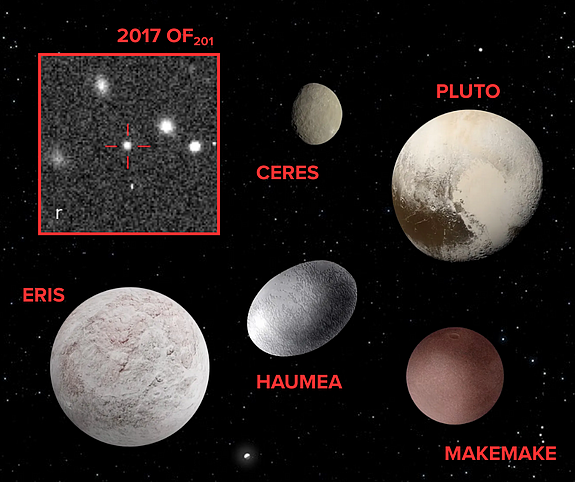
Astronomers have uncovered a massive new trans-Neptunian object, 2017 OF201, lurking at the edge of our solar system. With an orbit stretching 25,000 years and a size that may qualify it as a dwarf planet, this mysterious world challenges long-held assumptions about the “empty” space beyond Neptune. Its unusual trajectory sets it apart from other distant bodies and may even cast doubt on the controversial Planet Nine hypothesis.
A small team led by Sihao Cheng, Martin A. and Helen Chooljian Member in the Institute for Advanced Study’s School of Natural Sciences, has discovered an extraordinary trans-Neptunian object (TNO), named 2017 OF201, at the edge of our solar system.
The TNO is potentially large enough to qualify as a dwarf planet, the same category as the much more we...
Read More
Recent Comments