Skin Cells found at Root of Balding, Gray Hair

Mice lacking SCF in Krox20 lineage cells exhibit progressive hair graying. (A) A representative Scfflox/gfp; Krox20Cre mouse (top) displaying hair graying along with aging as compared with a littermate Scfflox/gfp control (bottom). n = 20. (B) Pelage hairs plucked from P20 Scfflox/gfp; Krox20Cre mice showed distinct pigment levels in distal and proximal ends; newly developed hairs in the proximal side (arrowheads) were absent of pigment. (C) Fontana-Masson staining confirmed the absence of melanin in the newly synthesized hairs (arrowheads) in P32 Scfflox/gfp; Krox20Cre mice. (D) HF section revealing normal hair pigmentation in Scfflox/gfp; Krox20Cre mice at P9 followed by a rapid loss of pigmentation beginning from the hair matrix (arrowheads) at P11 and P13. (E) Transverse HF section revealing hypopigmented hair shafts (arrowheads) in Scfflox/gfp; Krox20Cre mice at P11 and P13. (F) Quantification and statistical analysis of E showing a significant reduction of melanin density in Scfflox/gfp; Krox20Cre graying hair shafts. Melanin density was analyzed by ImageJ. Data are mean ± SEM from 100 randomly selected HFs in each group. (∗∗∗∗) P < 0.0001. (G) Gray Scfflox/gfp; Krox20Cre mice were depilated to stimulate hair regeneration; new hair shafts were completely absent of pigment. n = 3. Nuclei were stained with nuclear Fast Red in C–E. Bar, 100 µm.

Mice lacking SCF in Krox20 lineage cells exhibit progressive hair graying. (A) A representative Scfflox/gfp; Krox20Cre mouse (top)
displaying hair graying along with aging as compared with a littermate Scfflox/gfp control (bottom). n = 20. (B) Pelage hairs plucked from P20
Scfflox/gfp; Krox20Cre mice showed distinct pigment levels in distal and proximal ends; newly developed hairs in the proximal side (arrowheads)
were absent of pigment. (C) Fontana-Masson staining confirmed the absence of melanin in the newly synthesized hairs (arrowheads)
in P32 Scfflox/gfp; Krox20Cre mice. (D) HF section revealing normal hair pigmentation in Scfflox/gfp; Krox20Cre mice at P9
followed by a rapid loss of pigmentation beginning from the hair matrix (arrowheads) at P11 and P13...

Read More

Discovery of new Transparent Thin Film material could improve Electronics and Solar cells

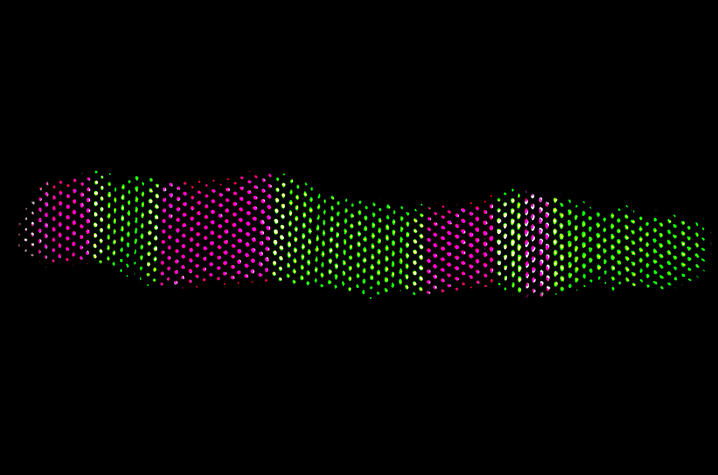
A team of researchers, led by the University of Minnesota, have discovered a new nano-scale thin film material with the highest-ever conductivity in its class.

A team of researchers, led by the University of Minnesota, have discovered a new nano-scale thin film material with the highest-ever conductivity in its class.

A new nano-scale thin film material with the highest-ever conductivity in its class has been found by a team of researchers, led by the University of Minnesota. The new material could lead to smaller, faster, and more powerful electronics, as well as more efficient solar cells. Besides high conductivity, it also has a wide bandgap, which means light can easily pass through the material making it optically transparent. In most cases, materials with wide bandgap, usually have either low conductivity or poor transparency.

“The high conductivity and wide bandgap make this an ideal material for making optically transparent conducting fil...

Read More

NASA-Funded Sounding Rocket Will Take 1,500 Images of Sun in 5 Minutes

RAISE sounding rocket completes testing.

The Rapid Acquisition Imaging Spectrograph Experiment or RAISE was successfully launched at 2:24:58 p.m. EDT, May 5. The payload was launched on a NASA Black Brant IX sounding rocket at the White Sands Missile Range in New Mexico and flew to an altitude of 184 miles The experimenter, Don Hassler with the Southwest Research Institute, reported that good data from the instruments observing the sun was received during the flight. The payload is being recovered.

The NASA-funded RAISE mission scrutinized split-second changes occurring near the sun’s active regions — areas of intense, complex magnetic activity that can give rise to solar flares, which eject energy and solar material out into space...

Read More

Cinnamon may Lessen Damage of High-Fat Diet in Rats

Cinnamon (1 tsp)

Cinnamon (1 tsp) copyright American Heart Association

Cinnamon may lessen the risk of cardiovascular damage of a high-fat diet by activating the body’s antioxidant and anti-inflammatory systems and slowing the fat-storing process, according to a preliminary animal study presented at the American Heart Association’s Arteriosclerosis, Thrombosis and Vascular Biology | Peripheral Vascular Disease 2017 Scientific Sessions.

In the study, researchers fed rats cinnamon supplements for 12 weeks along with a high-fat diet. They found: The rats weighed less and had less belly fat and healthier levels of sugar, insulin and fat in their blood, compared to rats that did not receive cinnamon with their high-fat foods...

Read More