AI-powered method improves reliability of next-generation networks

Network technology focused on signal developed for faster, reliable 5G and 6G networks
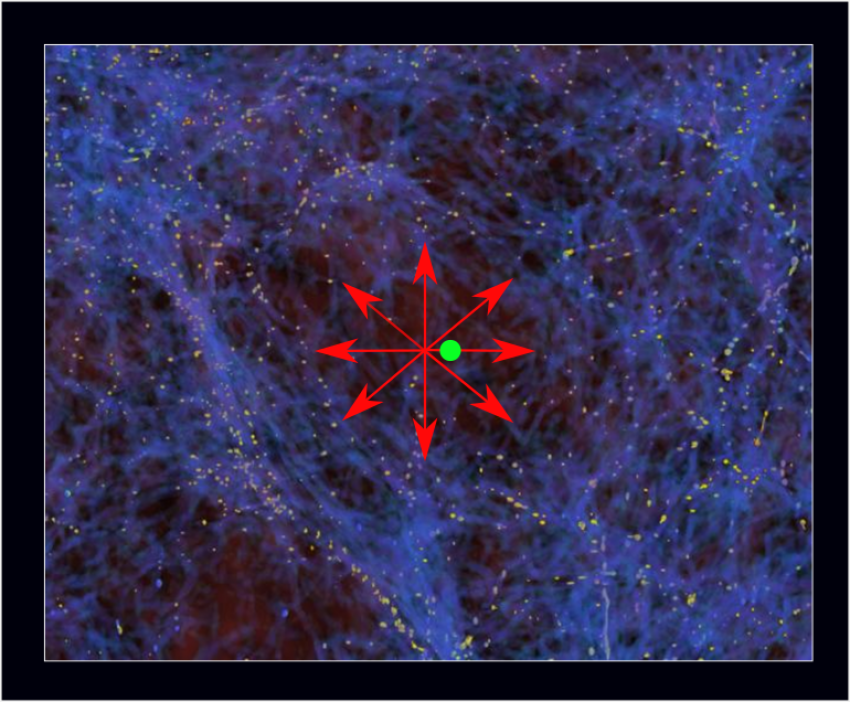
mmWave Massive MIMO system with moving UE; The angle-delay reciprocity holds in stationary (quasi-static) but not in non-stationary scenarios. Credit: IEEE Transactions on Wireless Communications (2024). DOI: 10.1109/TWC.2024.3476474

As 5G and 6G networks expand, they promise a future of incredibly fast and reliable wireless connections. A key technology behind this is millimeter-wave (mmWave), which uses very high-frequency radio waves to transmit huge amounts of data. To make the most of mmWave, networks use large groups of antennas working together, called massive Multiple-Input Multiple-Output (MIMO).

However, managing these complex antenna systems is challenging...

Read More

Alien Ocean could Hide Signs of Life from Spacecraft

Searching for life in alien oceans may be more difficult than scientists previously thought, even when we can sample these extraterrestrial waters directly.

A new study focusing on Enceladus, a moon of Saturn that sprays its ocean water into space through cracks in its icy surface, shows that the physics of alien oceans could prevent evidence of deep-sea life from reaching places where we can detect it.

Published today (Thursday, 6 February 2025) in Communications Earth and Environment, the study shows how Enceladus’s ocean forms distinct layers that dramatically slow the movement of material from the ocean floor to the surface.

Chemical traces, microbes, and organic material — telltale signatures of life that scientists look for — could break down or transform as they travel...

Read More

Luteolin, an antioxidant in vegetables, may contribute to the prevention of hair graying

Graying hair is a hallmark of aging, often considered an inevitable part of growing older. However, recent research from Nagoya University in Japan led by Masashi Kato and Takumi Kagawa suggests that an antioxidant might suppress this process. The researchers identified luteolin, an antioxidant found in vegetables including celery, broccoli, carrots, onions, and peppers, as being a potential anti-graying agent. Their findings pave the way for potential applications in human hair care.

The researchers’ study focused on three antioxidants—luteolin, hesperetin, and diosmetin—to assess their anti-graying effects in mice that were bred to go gray like humans...

Read More

Self-powered sensor can generate electricity and light simultaneously using only movement

Credit: Advanced Sustainable Systems Cove

DGIST research teams have developed a self-powered sensor that uses motion and pressure to generate electricity and light simultaneously. This battery-free technology is expected to be used in various real-life applications, such as disaster rescue, sports, and wearable devices.

Triboelectric nanogenerators (TENG) and mechanoluminescence (ML) have attracted attention as green energy technologies that can generate electricity and light, respectively, without external power. However, researchers in previous studies mainly focused on the two technologies separately or simply combined them. Moreover, the power output stability of TENG and the insufficient luminous duration of ML materials have been major limitations for practical applications.

Read More