Group blazes path to efficient, Eco-friendly Deep-Ultraviolet LED

Members of the Jena-Xing Research Group - Debdeep Jena, Moudud Islam, Huili (Grace) Xing, Vladimir Protasenko, Kevin Lee and Shyam Bharadwaj - are pictured in front of one of the molecular beam epitaxy systems used in their latest work. Credit: Image courtesy of Cornell University

Members of the Jena-Xing Research Group – Debdeep Jena, Moudud Islam, Huili (Grace) Xing, Vladimir Protasenko, Kevin Lee and Shyam Bharadwaj – are pictured in front of one of the molecular beam epitaxy systems used in their latest work. Credit: Image courtesy of Cornell University

The darkest form of UV light, ie UV-C, is unique because of its reputation as a killer – of harmful organisms. With wavelengths of between 200 and 280 nanometers, this particular form of UV light penetrates the membranes of viruses, bacteria, mold and dust mites, attacking their DNA and killing them...

Read More

Researchers remotely control sequence in which 2D Sheets fold into 3D Structures

Jan Genzer et al. Sequential Self-folding of Polymer Sheets. Science Advances, March 2017 DOI: 10.1126/sciadv.1602417

Inspired by origami, North Carolina State University researchers have found a way to remotely control the order in which a 2D sheet folds itself into a 3D structure. “The sequence of folding is important in life as well as in technology,” says Genzer, the S. Frank and Doris Culberson Distinguished Professor of Chemical and Biomolecular Engin

eering at NC State. “On small length scales, sequential folding via molecular machinery enables DNA to pack efficiently into chromosomes and assists proteins to adopt a functional conformation. On large length scales, sequential folding via motors helps solar panels in satellites and space shuttles unfold in space...

Read More

Calculations Show Close Ia Supernova should be Neutrino detectable offering possibility of identifying Explosion type

Density contour plots including deflagration (white) and detonation (green) surfaces. Credit: arXiv:1609.07403 [astro-ph.HE]  Read more at: https://phys.org/news/2017-03-ia-supernova-neutrino-possibility-explosion.html#jCp

Density contour plots including deflagration (white) and detonation (green) surfaces. Credit: arXiv:1609.07403 [astro-ph.HE]

A team of researchers at North Carolina State University has found that current and future neutrino detectors placed around the world should be capable of detecting neutrinos emitted from a relatively close supernova. They also suggest that measuring such neutrinos would allow them to explain what goes on inside of a star during such an explosion—if the measurements match one of two models the team built to describe the inner workings of a supernova.

Supernovae have been classified into different types depending on what causes them to occur—one type, a la supernova, occurs when a white dwarf pulls in enough material from a companion, eventually triggering carbon fus...

Read More

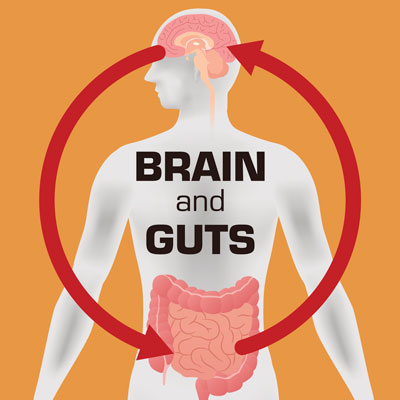
Link between Microbiome in the Gut, Parkinson’s discovered

Parkinson's disease and Parkinson's disease medications have distinct signatures of the gut microbiome. Movement Disorders, 2017; DOI: 10.1002/mds.26942

Parkinson’s disease and Parkinson’s disease medications have distinct signatures of the gut microbiome. Movement Disorders, 2017; DOI: 10.1002/mds.26942

A new study from researchers at the University of Alabama at Birmingham shows that Parkinson’s disease, and medications to treat Parkinson’s, have distinct effects on the composition of the trillions of bacteria that make up the gut microbiome. At this point, researchers do not know which comes first. Does having Parkinson’s cause changes in an individual’s gut microbiome, or are changes in the microbiome a predictor or early warning sign of Parkinson’s? What is known is that the first signs of Parkinson’s often arise as gastrointestinal symptoms such as inflammation or constipation.

“The human gut hosts tens of trillions of microorganisms...

Read More