






Soft Robot helps the Heart Beat

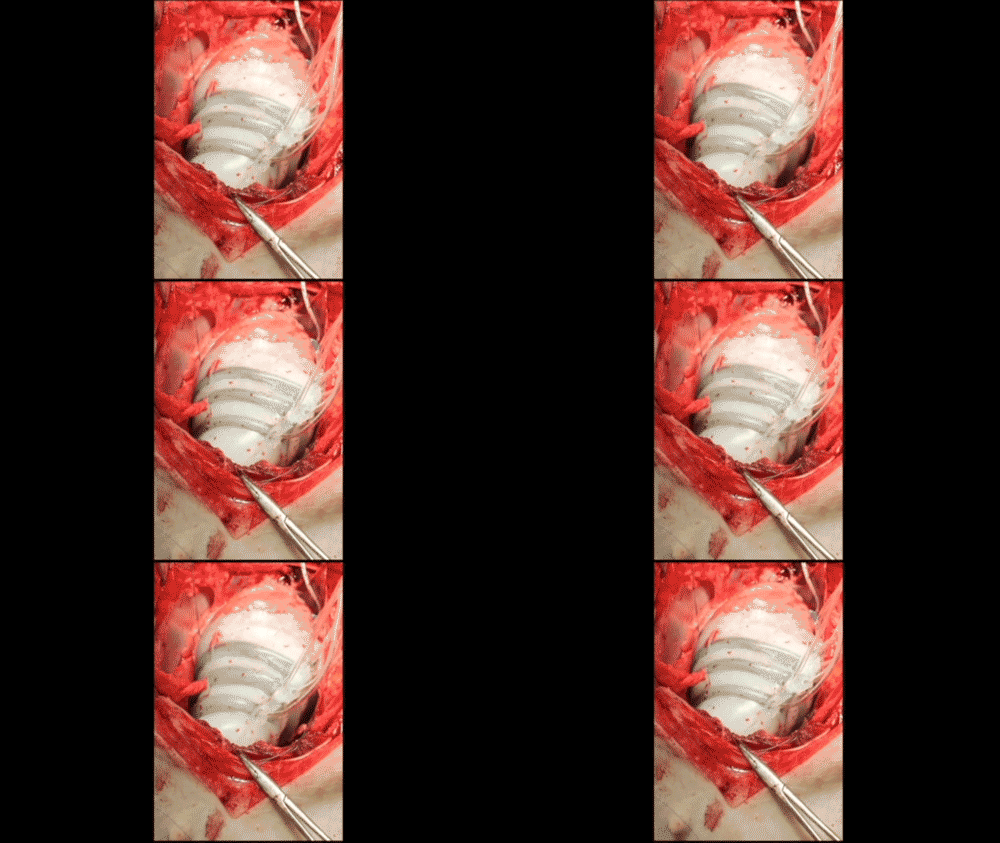
In vivo demonstration of cardiac assist in a porcine model of acute heart failure (Video courtesy of Ellen Rouche/Harvard SEAS)

In vivo demonstration of cardiac assist in a porcine model of acute heart failure (Video courtesy of Ellen Rouche/Harvard SEAS)

Harvard University and Boston Children’s Hospital researchers have developed a customizable soft robot that fits around a heart and helps it beat, potentially opening new treatment options for people suffering from heart failure. The soft robotic sleeve twists and compresses in synch with a beating heart, augmenting cardiovascular functions weakened by heart failure. Unlike currently available devices that assist heart function, Harvard’s soft robotic sleeve does not directly contact blood. This reduces the risk of clotting and eliminates the need for a patient to take potentially dangerous blood thinner medications...

Read More

Protein involved in Blood Clotting Stimulates Liver Repair

Fibri(nogen) drives repair after acetaminophen-induced liver injury via leukocyte αMβ2 integrin-dependent upregulation of MMP12

Fibri(nogen) drives repair after acetaminophen-induced liver injury via leukocyte αMβ2 integrin-dependent upregulation of MMP12

A team of MSU researchers has uncovered a new pathway in the body that stimulates liver repair. Using an experimental model of high-dosage acetaminophen, the team found that liver injury activated blood clotting, which then stimulated liver repair. Acetaminophen is the active ingredient in more than 600 medications and is a leading cause of drug-induced liver failure in the United States if used above the recommended dosage.

“This pathway of repair has never been described before and could lead to new strategies to promote liver repair,” said Luyendyk, an associate professor of pathobiology and diagnostic investigation...

Read More

Scientists Make Plastic from Christmas Trees

Graphical abstract: Polymerisation of a terpene-derived lactone: a bio-based alternative to ε-caprolactone

A high-yielding 4-step process for converting a naturally occurring terpene, β-pinene, into a substituted ε-caprolactone, and ring-opening polymerisation and copolymerisation of this monomer.

Most current plastics are made from oil, which is unsustainable. However, scientists from the Centre for Sustainable Chemical Technologies (CSCT) at the University of Bath have developed a renewable plastic from a chemical called pinene found in pine needles. Pinene is the fragrant chemical from the terpene family that gives pine trees their distinctive “Christmas smell” and is a waste product from the paper industry.

The researchers hope the plastic could be used in a range of applications, including food packaging, plastic bags and even medical implants...

Read More

Strength of Hair Inspires New Materials for Body Armor

Human Hair fiber

Human Hair fiber

In a new study, UCSD researchers investigate why hair is incredibly strong and resistant to breaking. The findings could lead to the development of new materials for body armor and help cosmetic manufacturers create better hair care products. Hair has a strength: weight ratio comparable to steel. It can be stretched up to 1.5X its original length before breaking. They examined at the nanoscale level how a strand of human hair behaves when it is deformed, or stretched. Hair behaves differently depending on how fast or slow it is stretched. The faster hair is stretched, the stronger it is.

Hair consists of 2 main parts – the cortex: made up of parallel fibrils, and the matrix, with an amorphous structure...

Read More