Lab Creates new class of Hydrogen Sulfide Donor molecules

University of Oregon lab creates new class of hydrogen sulfide donor molecules

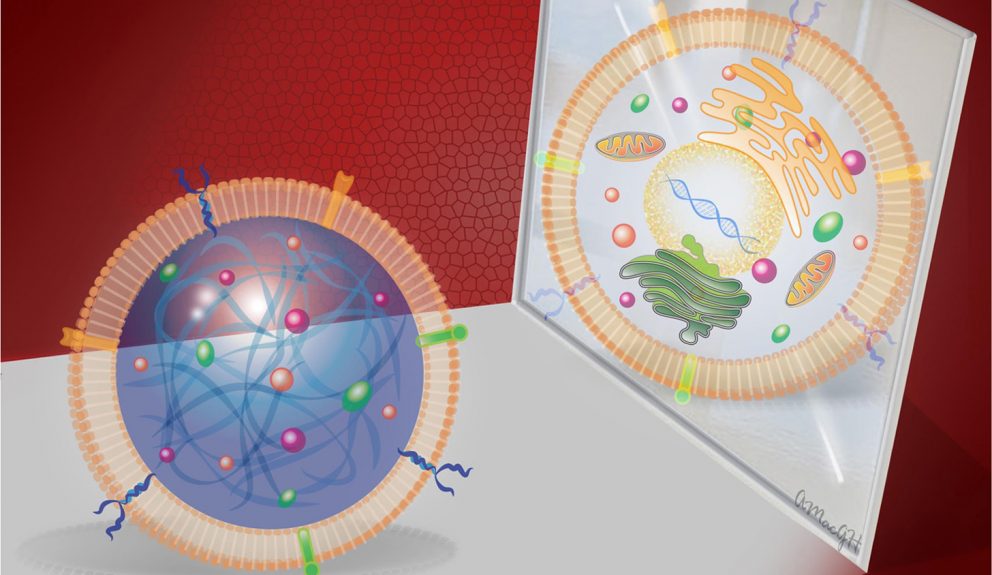
Illustration shows the delivery route of hydrogen sulfide to damaged cells based on two projects completed in the University of Oregon lab of Michael Pluth. Credit: Michael Pluth

Molecules with the potential to deliver healing power to stressed cells – such as those involved in heart attacks – have been created by University of Oregon researchers. The research – done at a cellular level in the lab and far from medical reality – involves the design of organic molecules that break down to release hydrogen sulfide when triggered by specific conditions such as increased oxidative stress. Oxidative stress damages cells and is tied especially to heart disease and cancer, as well as Alzheimer’s and Parkinson’s disease.

“We have discovered that small organic molecules can be engineered to release ...

Read More

Hubble Gazes at a Cosmic ‘Megamaser’

This megamaser galaxy is named IRAS 16399-0937 and is located over 370 million light-years from Earth. This NASA/ESA Hubble Space Telescope image belies the galaxy's energetic nature, instead painting it as a beautiful and serene cosmic rosebud. The image comprises observations captured across various wavelengths by two of Hubble's instruments: the Advanced Camera for Surveys (ACS), and the Near Infrared Camera and Multi-Object Spectrometer (NICMOS). Credit: ESA/Hubble & NASA, Acknowledgement: Judy Schmidt

This megamaser galaxy is named IRAS 16399-0937 and is located over 370 million light-years from Earth. This NASA/ESA Hubble Space Telescope image belies the galaxy’s energetic nature, instead painting it as a beautiful and serene cosmic rosebud. The image comprises observations captured across various wavelengths by two of Hubble’s instruments: the Advanced Camera for Surveys (ACS), and the Near Infrared Camera and Multi-Object Spectrometer (NICMOS). Credit: ESA/Hubble & NASA, Acknowledgement: Judy Schmidt

Megamasers are intensely bright, around 100 million times brighter than the masers found in galaxies like the Milky Way. The entire galaxy essentially acts as an astronomical laser that beams out microwave emission rather than visible light (hence the ‘m’ replacing the ‘l’)...

Read More

Omega-3 Supplements can Prevent Childhood Asthma

Professor Ken Stark testing samples in a lab

Professor Ken Stark taking a sample of blood in Waterloo’s Laboratory of Nutritional and Nutraceutical Research to determine the levels of omega-3 fatty acids. Credit: Light Imaging

Taking certain omega-3 fatty acid supplements during pregnancy can reduce the risk of childhood asthma by almost one third, according to a new study from the Copenhagen Prospective Studies on Asthma in Childhood (COPSAC) and the University of Waterloo. The study, published in the New England Journal of Medicine, found that women who were prescribed 2.4 grams of long-chain omega-3 supplements during the third trimester of pregnancy reduced their children’s risk of asthma by 31%...

Read More

Synthetic Stem Cells could offer Therapeutic Benefits, Reduced Risks

Therapeutic microparticles functionalized with biomimetic cardiac stem cell membranes and secretome

Therapeutic microparticles functionalized with biomimetic cardiac stem cell membranes and secretome

Researchers have developed a synthetic version of a cardiac stem cell which offer therapeutic benefits comparable to those from natural stem cells and could reduce some of risks associated with stem cell therapies. These cells also have better preservation stability and the technology is generalizable to other types of stem cells.

Stem cell therapies work by promoting endogenous repair; that is, they aid damaged tissue in repairing itself by secreting “paracrine factors,” including proteins and genetic materials. While stem cell therapies can be effective, they are also associated with some risks of both tumor growth and immune rejection...

Read More