China plans to Land Probes on Far Side of Moon, Mars by 2020

Image1: Far side of the Moon, photographed by Apollo 16
Image2: Valles Marineris, Mars. Credit: NASA

China has set out its space plans for the next 5 years, including soft landing a probe on the far side of the moon around 2018 and launching its first Mars probe by 2020. “To explore the vast cosmos, develop the space industry and build China into a space power is a dream we pursue unremittingly,” read a white paper. It says China aims to use space for peaceful purposes and to guarantee national security, and to carry out cutting edge scientific research.

The white paper released by the information office of China’s Cabinet points to the growing ambitions of China’s already rapidly advancing space program...

Read More

Fat Fuels the Road to Cancer Cell spread

cancer

Killer T cells surround a cancer cell. Credit: NIH

An international team discovered how a shift to increased fat utilization is required for the development and growth of lymphatic vessels for metastasis. This discovery paves the way towards developing therapeutics to limit lymphatic vessel growth in cancer by targeting fat utilization. Formation of new lymphatic vessels, ie lymphangiogenesis, is a poorly understood process, which currently lacks clinically approved drugs to prevent their growth during disease.

The study began with a simple observation: lymphatics use more fatty acids compared to blood vessels. This is the first description of the nutrient utilization of lymphatic vessels...

Read More

Single Protein may hold secret to treating Parkinson’s disease and more

Parkinson's disease

Immunohistochemistry for alpha-synuclein showing positive staining (brown) of an intraneural Lewy-body in the Substantia nigra in Parkinson’s disease. Credit: Wikipedia

New details learned about a key cellular protein could lead to treatments for neurodegenerative diseases, such as Parkinson’s, Huntington’s, Alzheimer’s, and amyotrophic lateral sclerosis (ALS). At their root, proteins misfold and accumulate in neurons, inflicting damage and eventually killing the cells. In a new study, researchers in the laboratory of Steven Finkbeiner, MD, PhD, at the Gladstone Institutes used a different protein, Nrf2, to restore levels of the disease-causing proteins to a normal, healthy range, thereby preventing cell death.

The researchers tested Nrf2 in 2 models of Parkinson’s disease: cells with muta...

Read More

Scientists Discover new Mechanism of how Brain Networks Form

Scientists discover new mechanism of how brain networks form

Scientists discover new mechanism of how brain networks form

Scientists have
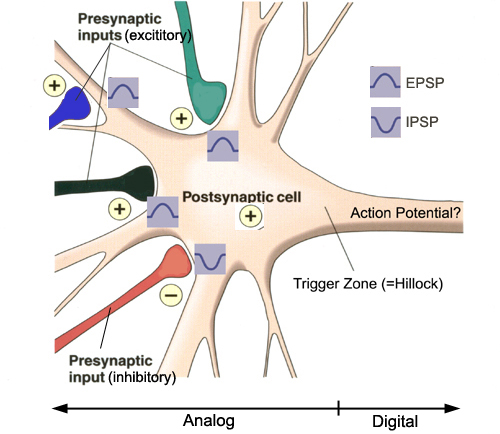
discovered that networks of inhibitory neurons develop through a mechanism opposite to the one followed by excitatory networks. Excitatory neurons sculpt and refine maps of the external world throughout development and experience, while inhibitory neurons form maps that become broader with maturation. This discovery adds a new piece to the puzzle of how the brain organizes and processes information. Knowing how the normal brain works is an important step toward understanding the nature of neurological conditions and opens the possibility of finding treatments in the future.

“The brain represents the external world as specific maps of activity created by networks of neurons,” said Dr...

Read More