






Mars rock-ingredient stew seen as plus for habitability

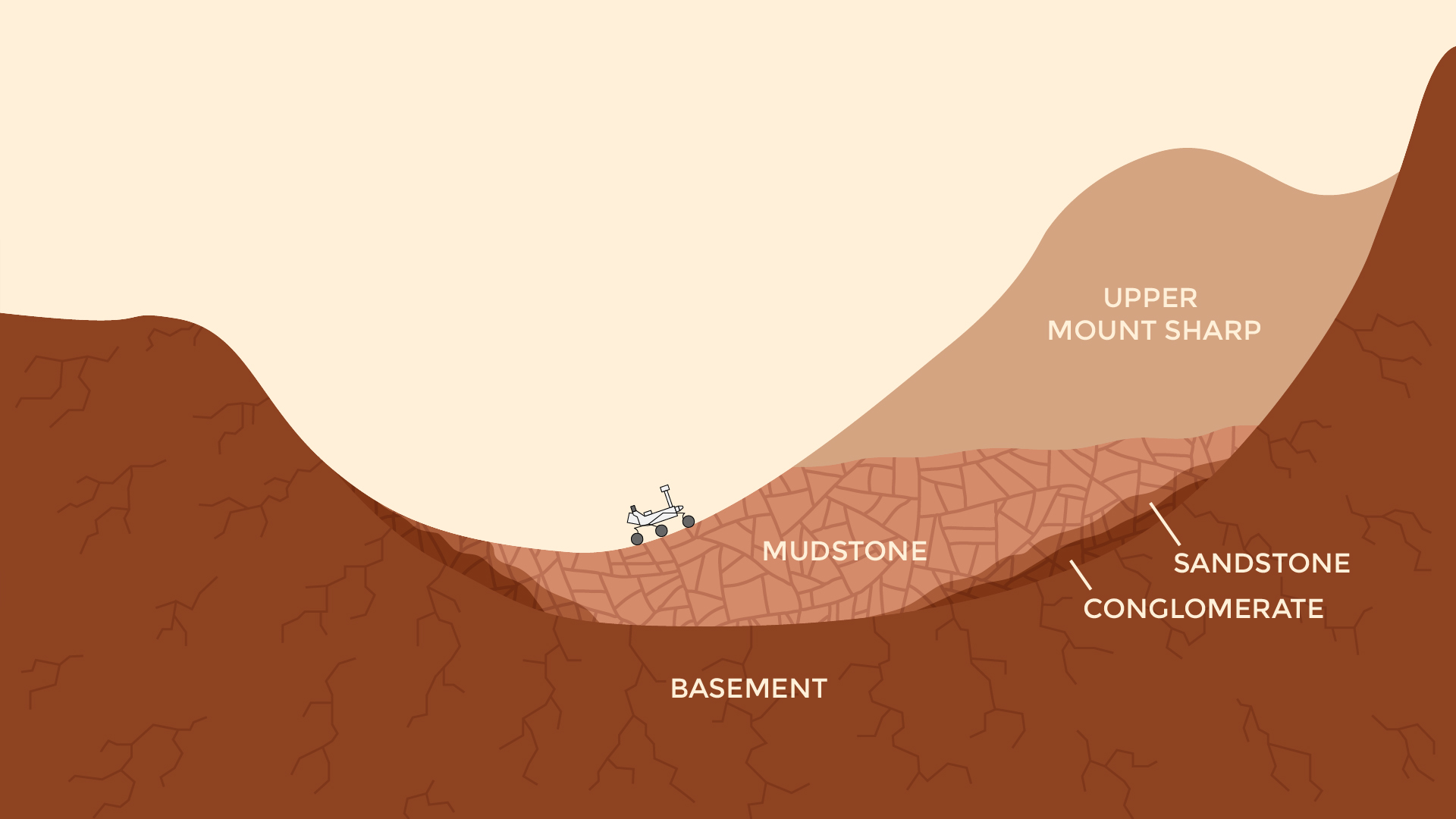
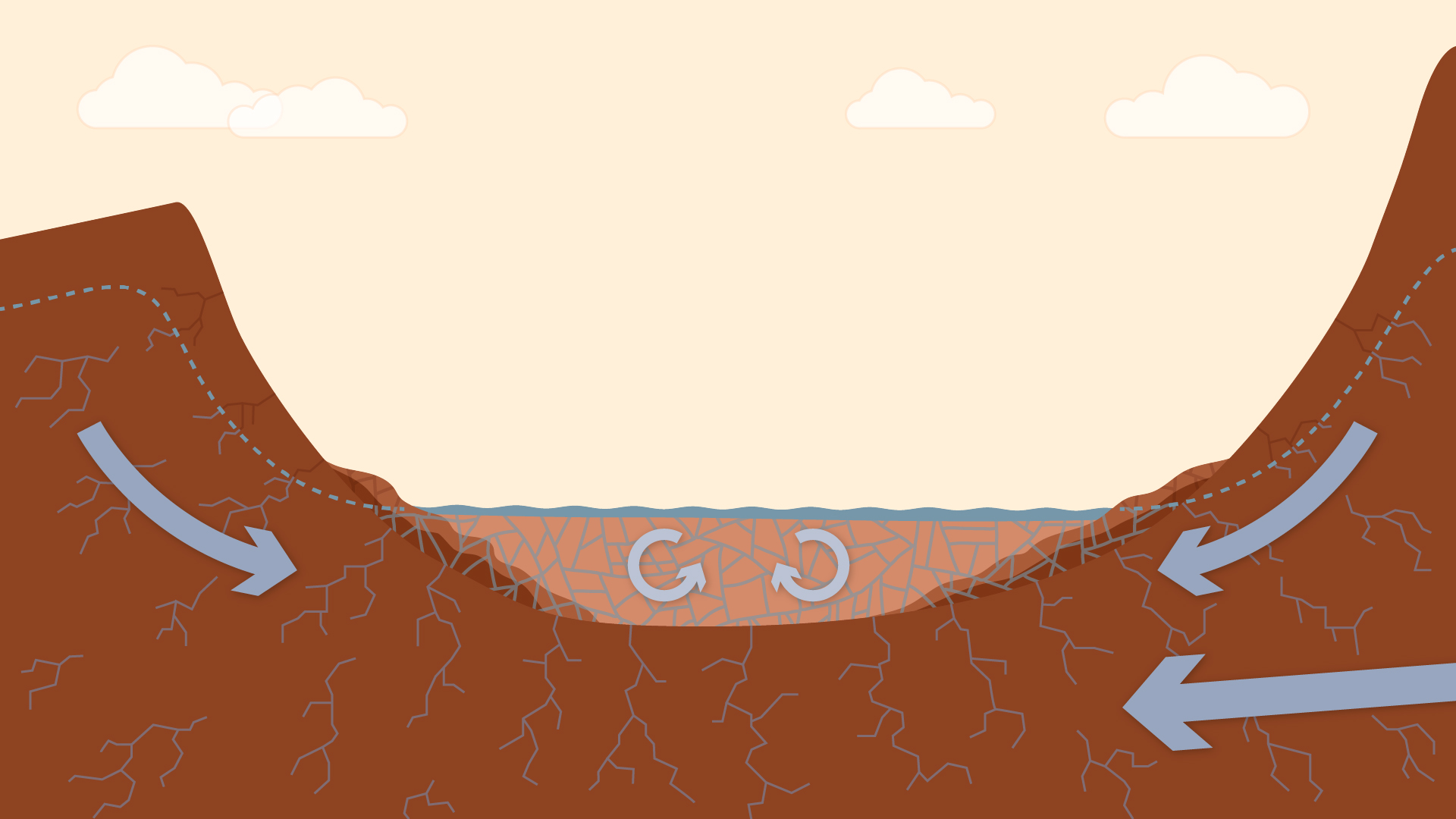
Images: This pair of drawings depicts the same location on Mars at two points in time: now and billions of years ago. The location is in Gale Crater, near the Red Planet’s equator. 1 shows a present-day snapshot of the northern half of Gale Crater. North is to the left. The underlying basement is the crust of Mars that forms the crater’s rim (left) and central peak (right). About 3.5 billion years ago, rivers brought sediment into the crater, depositing pebbles where the river was flowing more quickly, sand where the river entered a standing body of water in the center of the basin, and silt within this lake. Lake level rose over time as the sediments built up. Eventually they were buried by dry dust...

Read More

Squeezing Life from DNA’s Double Helix

A ring of six proteins known as a helicase surrounds the DNA strands at a special location known as origin DNA. Each of the six proteins is in distinct color, with origin DNA in the center. Credit: Xiaojiang Chen, USC

A ring of six proteins known as a helicase surrounds the DNA strands at a special location known as origin DNA. Each of the six proteins is in distinct color, with origin DNA in the center. Credit: Xiaojiang Chen, USC

Recipe for Replication: 2 DNA strands, 1 ring of proteins. Melt. For years, scientists have puzzled over what prompts the intertwined dsDNA to open its 2 strands and then start replication. Knowing this could be the key to understanding how organisms, from healthy cells to cancerous tumors replicate and multiply for their survival. A group of USC scientists believe they have solved the mystery. Replication is prompted by a ring of proteins that bond with the DNA at a location called “origin DNA...

Read More

Topical Skin Cream for Treatment of Basal Cell Carcinoma shows promise as an Alternative to Surgery

An example of a small, superficial BCC lesion that might be treated with imiquimod. Credit: Journal of Investigative Dermatology

An example of a small, superficial BCC lesion that might be treated with imiquimod. Credit: Journal of Investigative Dermatology

Basal cell carcinoma (BCC) is the most common form of human cancer. With a growing aging population, BCC rates are climbing at an alarming rate, with reported cases rising by as much as 10% per year. A new study examines the effectiveness of imiquimod, a topical skin cream used to treat low-risk BCC lesions, over a five-year period. Imiquimod success rates were sustained for the extended study period and did not promote lesion reoccurrence.

Currently, the gold standard of treatment for BCC is excisional or Mohs surgery, both of which require a dermatologist or plastic surgeon...

Read More

New Anode Material set to boost Lithium-ion Battery capacity

Cross-sectional schematic view showing the detailed structural characteristics of a SGC hybrid particle. Credit: UNIST

Cross-sectional schematic view showing the detailed structural characteristics of a SGC hybrid particle. Credit: UNIST

A new approach developed by a team of researchers, led by Prof. Jaephil Cho (School of Energy and Chemical Engineering) could hold the key to greatly improving the performance of commercial lithium-ion batteries. Prof. Cho and his research team have developed a new type anode material that would be used in place of a conventional graphite anode, which they claim will lead to lighter and longer-lasting batteries for everything from personal devices to electric vehicles.

In the study, the research team has demonstrated the feasibility of a next-generation hybrid anode using silicon-nanolayer-embedded graphite/carbon...

Read More