






Will Earth still exist 5 Billion years from now?

This is a schematic view of the candidate planet's orbit in L2 Puppis disk. Credit: © P. Kervella (CNRS / U. de Chile / Observatoire de Paris / LESIA)

This is a schematic view of the candidate planet’s orbit in L2 Puppis disk. Credit: © P. Kervella (CNRS / U. de Chile / Observatoire de Paris / LESIA)

Old Star offers sneak preview of the future. What will happen to Earth when, in a few billion years’ time, the Sun is a hundred times bigger than it is today? Using the most powerful radio telescope in the world, an international team of astronomers has set out to look for answers in the star L2 Puppis. 5 billion years ago, this star was very similar to the Sun as it is today.

“Five billion years from now, the Sun will have grown into a red giant star, more than a hundred times larger than its current size,” says Professor Leen Decin from the KU Leuven Institute of Astronomy...

Read More
Protein Disrupts Infectious Biofilms

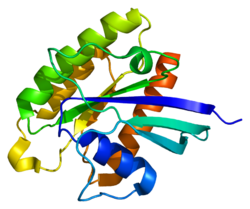
Crystal structure of the PodA protein complex with three molecules of 1-hydroxyphenazine, the reaction product, bound in the active sites. Credit: Kyle Costa/Caltech

Crystal structure of the PodA protein complex with three molecules of 1-hydroxyphenazine, the reaction product, bound in the active sites. Credit: Kyle Costa/Caltech

Many infectious pathogens are difficult to treat because they develop into biofilms, layers of metabolically active but slowly growing bacteria embedded in a protective layer of slime, which are inherently more resistant to antibiotics. Now, researchers at Caltech and University of Oxford have made progress in the fight against biofilms. Led by Dianne Newman, the Gordon M. Binder/Amgen Professor of Biology and Geobiology, the group identified a protein that degrades and inhibits biofilms of Pseudomonas aeruginosa, the primary pathogen in cystic fibrosis (CF) infections.

“Pseudomonas aeruginosa causes chronic infections that ar...

Read More

Scientists uncover potential driver of Age- and Alzheimer’s-related Memory Loss

Protein BACE1 PDB 1fkn.pngImages: 1. RHEB, Ras homolog enriched in brain  2. BACE1
TSRI Florida scientists have made an important discovery toward the development of drugs to treat age-related memory loss in diseases like Alzheimer’s. They found that reduced levels of a protein called Rheb result in spontaneous symptoms of memory loss in animal models and are linked to increased levels of another protein known to be elevated in the brains of Alzheimer’s disease patients. Subramaniam’s group investigated the link between Rheb and an important enzyme called BACE1, which is elevated in older adults and people with Alzheimer’s disease.

“We know that Rheb regulates BACE1, which is a major drug target in Alzheimer’s disease,” Subramaniam said...

Read More

Successful Synthesis of pure Organic Molecules that shows Metallic Conduction under Ambient Pressure

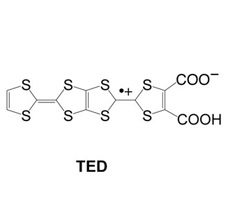
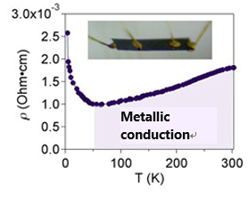
Picture: Figure 1. Molecular structure of TED Picture: Figure 2. Temperature dependence of electrical resistivity in TED self-supporting film. Inserted photo shows a self-supporting film with four gold terminals attached.

For the first time, a NIMS research team designed and fabricated single-component organic molecules that are conductive like metal under normal pressure, despite the fact that the molecules contain neither multiple molecules nor metal elements. Because the molecules are completely pure, they are more durable and stable compared to conventional chemically doped organic conductive materials. The new molecules may be applied to solar cell electrodes and touch panels.

Organic molecules consisting solely of light elements essentially do not have carriers by which an electric charge can pass through. As such, they are not high quality conductors...

Read More