






NA64 hunts the mysterious Dark Photon

NA64 hunts the mysterious dark photon

An overview of the NA64 experimental set-up at CERN. NA64 hunts down dark photons, hypothetic dark matter particles. Credit: Maximilien Brice/CERN

One of the biggest puzzles in physics is that 85% of the matter in our universe is “dark”: it does not interact with the photons of the conventional electromagnetic force and is therefore invisible to our eyes and telescopes. Although the composition and origin of dark matter are a mystery, we know it exists because astronomers observe its gravitational pull on ordinary visible matter such as stars and galaxies.

Some theories suggest that, in addition to gravity, dark matter particles could interact with visible matter through a new force, which has so far escaped detection...

Read More
Harnessing the power of Predatory Bacteria as a ‘Living Antibiotic’

Highlights SIP is a new protein phosphatase 2A-containing protein complex SIP is essential for the asymmetric localization of SIN components to the SPB SIP is required for the SPB localization of the SIN inhibitor Byr4p SIP promotes dephosphorylation of the SIN scaffold protein Cdc11p

Highlights SIP is a new protein phosphatase 2A-containing protein complex SIP is essential for the asymmetric localization of SIN components to the SPB SIP is required for the SPB localization of the SIN inhibitor Byr4p SIP promotes dephosphorylation of the SIN scaffold protein Cdc11p

A naturally occurring predatory bacterium is able to work with the immune system to clear multi-drug resistant Shigella infections in zebrafish. It is the first time the predatory bacterium Bdellovibrio bacteriovorus has been successfully used as an injected anti-bacterial therapy and represents an important step in the fight against drug-resistant infections, or ‘superbugs’.

Shigella infection is responsible for over 160 million illnesses and over 1 million deaths every year – and is a common cause of ‘trave...

Read More

Fibroblasts could provide New Target for Treatment of Rheumatoid Arthritis

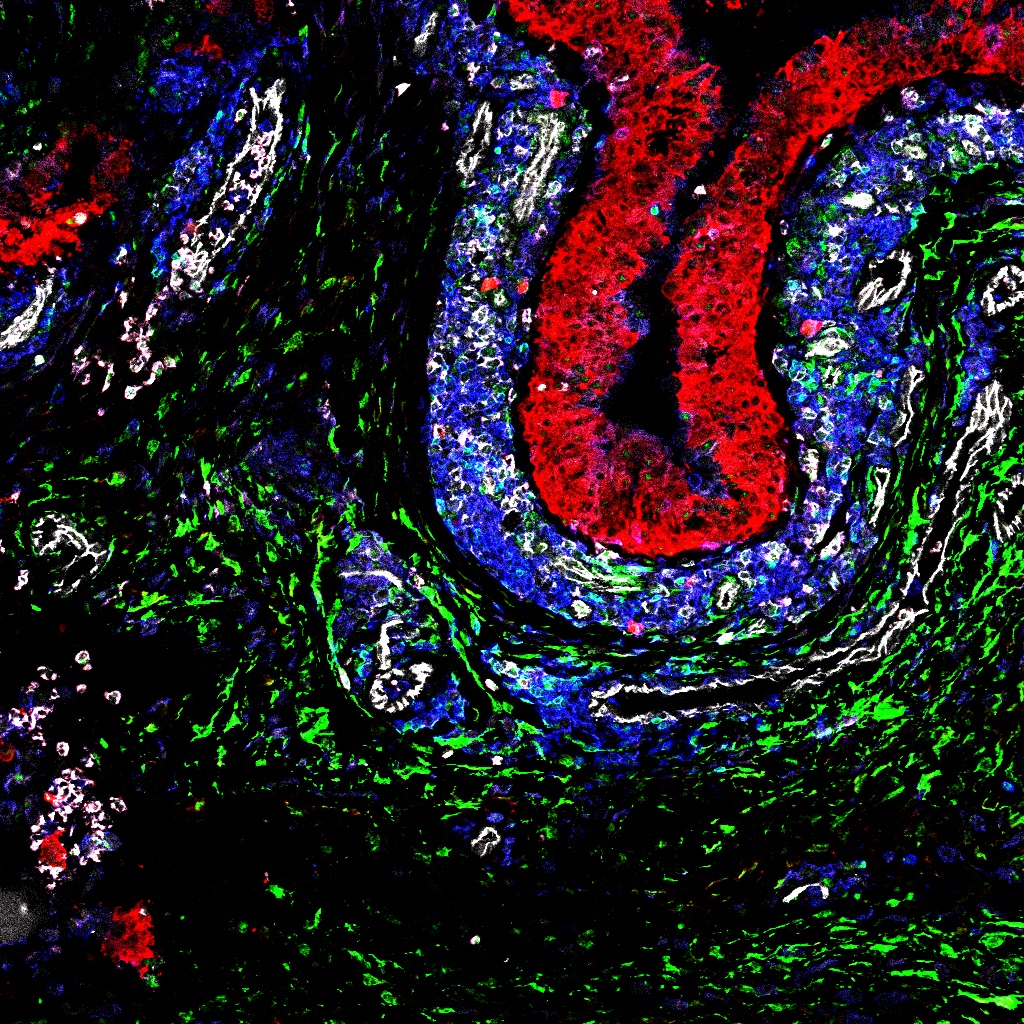
Synovial Fibroblasts (SFs) - pictured below - are cells that make up part of the connective tissue, or synovium, around human joints. In RA patients, SF cells cause damage by invading and attacking the cartilage and bone around the joint.

Synovial Fibroblasts (SFs)  are cells that make up part of the connective tissue, or synovium, around human joints. In RA patients, SF cells cause damage by invading and attacking the cartilage and bone around the joint

A study reveals the key role of different types of fibroblast cells in the development of rheumatoid arthritis (RA), opening up a new avenue for research into treatment of the disease. Synovial Fibroblasts (SFs) are cells that make up part of the connective tissue, or synovium, around human joints. In RA patients, SF cells cause damage by invading and attacking the cartilage and bone around the joint.

A team from University of Birmingham’s Institute of Inflammation and Ageing identified 2 distinct types of SF within the synovial membrane...

Read More

Bringing Silicon to Life: Scientists persuade Nature to make Silicon-Carbon bonds

They had created an enzyme that can selectively make silicon-carbon #bonds #15X more #efficiently than the best catalyst invented

An enzyme was created via directed evolution to make silicon-carbon bonds 15X more efficiently than the best catalysts invented

A new study is the first to show that living organisms can be persuaded to make silicon-carbon bonds – something only chemists had done before. Scientists at Caltech “bred” a bacterial protein to make the humanmade bonds – a finding that has applications in several industries. Molecules with silicon-carbon, or organosilicon, compounds ar

gricultural chemicals, paints, semiconductors, and computer and TV screens. Currently, these products are made synthetically, since the Si-C bonds are not found in nature.

The new study demonstrates biology can be used to manufacture these bonds in ways that are more environmentally friendly and potentially much less expensive...

Read More