

Scientist...
Read More


Until we recognize the essential role of biology, our attempts to truly unify the universe will remain a train to nowhere. ~Robert Lanza Read More

Good health is not something we can buy. However, it can be an extremely valuable savings account. ~Anne Wilson Schaef Read More

The only way forward, if we are going to improve the quality of the environment, is to get everybody involved. ~Richard Rogers Read More

To raise new questions, new possibilities, to regard old problems from a new angle, requires creative imagination and marks real advance in science. ~Albert Einstein Read More

Old Newtonian physics claimed that things have an objective reality separate from our perception of them. Quantum physics, and particularly Heisenberg's Uncertainty Principle, reveal that, as our perception of an object changes, the object itself literally changes. ~Marianne Williamson Read More

Astronomy compels the soul to look upwards and leads us from this world to another. ~ Read More
May 28, 2025,
 Astronomy/Space
Scientist...
Read More
May 26, 2025,
Health/Medical, Biology/Biotechnology

Wenzhou Medical University researchers have reimagined the spleen as a viable site for islet transplantation, enabling long-term diabetes control without the burden of full immunosuppression. Nanoparticle-driven spleen remodeling allowed transplanted mouse, rat, and human islets to restore normal blood sugar in diabetic rodents and cynomolgus macaques.
In type 1 diabetes, the immune system destroys native beta cells, the insulin-producing cells housed within pancreatic clusters called islets of Langerhans...
Read More
May 26, 2025,
Health/Medical, Biology/Biotechnology

Is artificial intelligence (AI) capable of suggesting appropriate behavior in emotionally charged situations? A team from the University of Geneva (UNIGE) and the University of Bern (UniBE) put six generative AIs—including ChatGPT—to the test using emotional intelligence (EI) assessments typically designed for humans.
The outcome: these AIs outperformed average human performance and were even able to generate new tests in record time. These findings open up new possibilities for AI in education, coaching, and conflict management. The study is published in Communications Psychology.
Large language models (LLMs) are artificial intelligence (AI) systems capable of processing, interpreting and generating human language...
Read More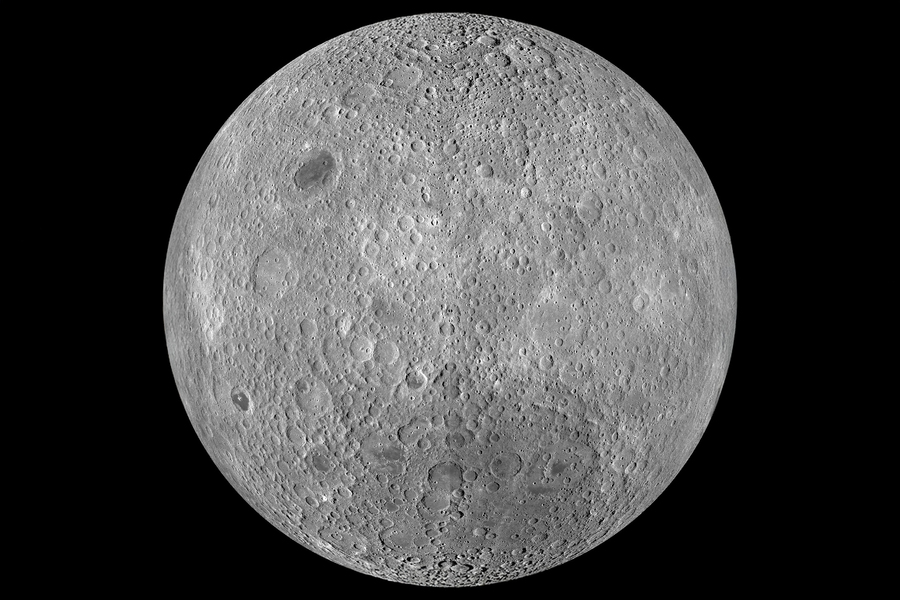
Why are some rocks on the moon highly magnetic?
A large impact could have briefly amplified the moon’s weak magnetic field, creating a momentary spike that was recorded in some lunar rocks. Scientists may have solved the mystery of why the moon shows ancient signs of magnetism although it has no magnetic field today. An impact, such as from a large asteroid, could have generated a cloud of ionized particles that briefly enveloped the moon and amplified its weak magnetic field.
Where did the moon’s magnetism go? Scientists have puzzled over this question for decades, ever since orbiting spacecraft picked up signs of a high magnetic field in lunar surface rocks...
Read More
Recent Comments