Lightning strikes kick off a game of electron pinball in space

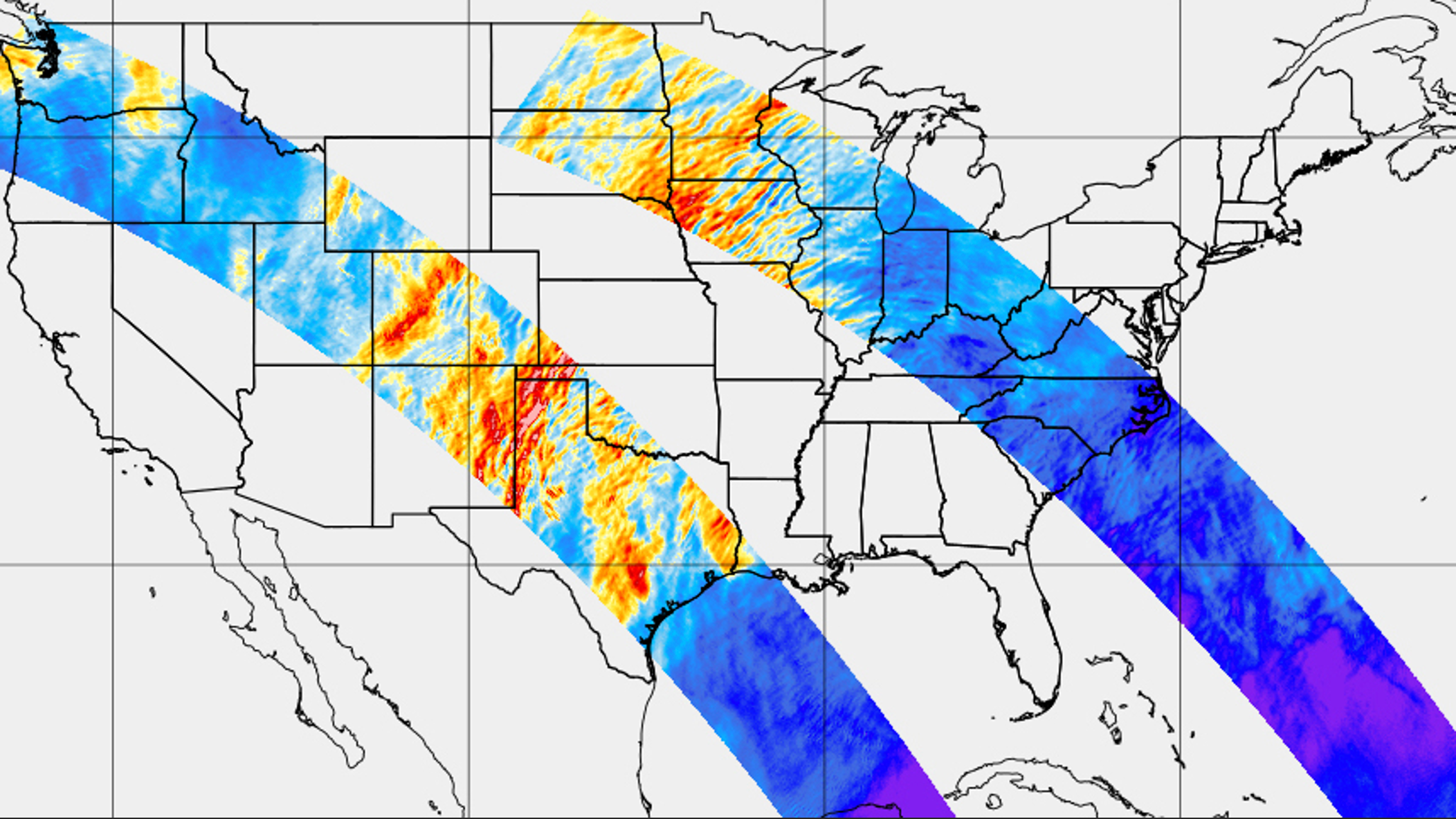
When lightning strikes, the electrons come pouring down. In a new study, researchers at the University of Colorado Boulder, led by an undergraduate student, have discovered a novel connection between weather on Earth and space weather. The team utilized satellite data to reveal that lightning storms on our planet can dislodge particularly high-energy, or “extra-hot,” electrons from the inner radiation belt—a region of space enveloped by charged particles that surround Earth like an inner tube.

The team’s results could help satellites and even astronauts avoid dangerous radiation in space. This is one kind of downpour you don’t want to get caught in, said lead author and undergraduate Max Feinland.

“These particles are the scary ones or what some people call ‘killer electrons,'...

Read More

Stem Cell Discovery Highlights importance of DNA Methylation in Cancer

A study led by Umeå University, Sweden, presents new insights into how stem cells develop and transition into specialized cells. The discovery can provide increased understanding of how cells divide and grow uncontrollably so that cancer develops.

“The discovery opens a new track for future research into developing new and more effective treatments for certain cancers,” says Francesca Aguilo, associate professor at the Department of Molecular Biology at Umeå University and leader of the study in collaboration with various institutions including the University of Pavia, University of Texas Health Science Center at Houston, Universidad de Extremadura, and others.

All cells in the body arise from a single fertilized egg...

Read More

New Data Augmentation Algorithm could Facilitate the Transfer of Skills across Robots

In recent years, roboticists have developed a wide range of systems designed to tackle various real-world tasks, ranging from completing household chores to delivering packages or finding target objects in delineated environments.

A key objective in the field has been to develop algorithms that allow the reliable transfer of specific skills across robots with different bodies and characteristics, which would help to rapidly train robots on new tasks, broadening their capabilities.

Researchers at UC Berkeley have developed RoVi-Aug, a new computational framework designed to augment robotic data and facilitate the transfer of skills across different robots...

Read More

Astronomers find Webb Data Conflict with Reionization Models

Astronomers Find JWST Data Conflicts with Reionization Models
Simulation of galaxies ionizing hydrogen gas (bright areas) during the epoch of Reionization. Credit: M. Alvarez, R. Kaehler, and T. Abel / European Southern Observatory (ESO).

Reionization is a critical period when the first stars and galaxies changed the physical structure of their surroundings, and eventually the entire universe. Established theories state that this epoch ended around 1 billion years after the Big Bang. However, if calculating this milestone using observations from the James Webb Space Telescope (JWST), reionization would have ended at least 350 million years earlier than expected. That’s according to a new paper published in Monthly Notices of the Royal Astronomical Society: Letters.

Throughout its history, the universe has undergone several major changes...

Read More