








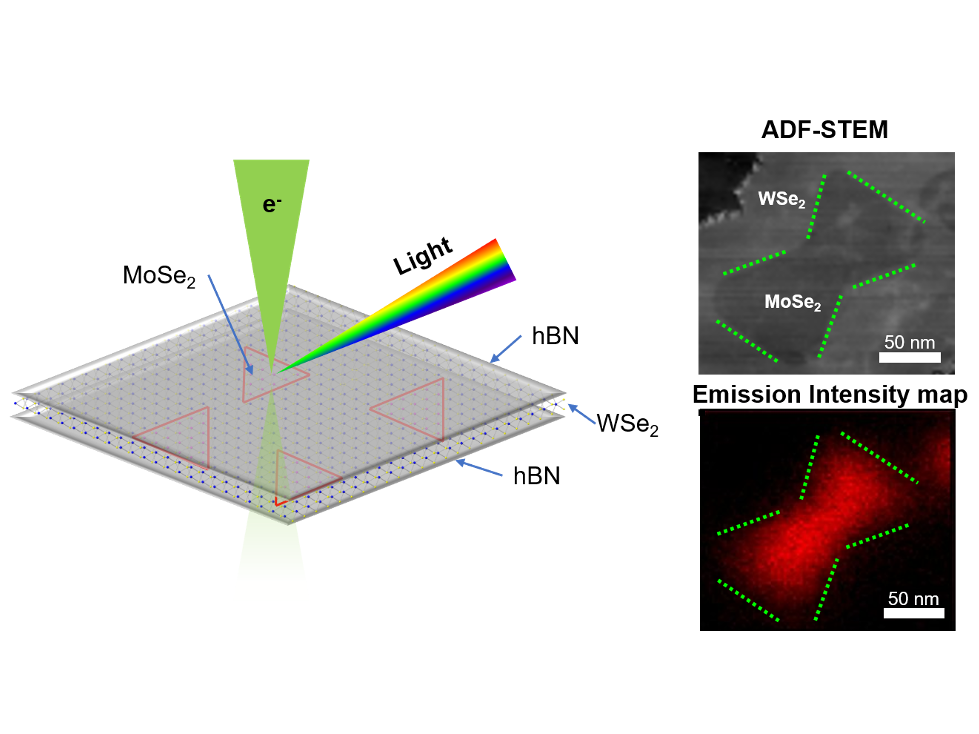
‘Nanodot’ control could fine-tune light for sharper displays, quantum computing
March 12, 2025,
 Physics, Technology/Electronics, Chemistry/Nanotechnology
Evidence of a new phenomenon: Quantum tornadoes in momentum space
March 12, 2025,
Physics, Astronomy/Space

A team of researchers from Würzburg has for the first time experimentally demonstrated a quantum tornado. Electrons form vortices in the momentum space of the quantum semi-metal tantalum arsenide.
Scientists have long known that electrons can form vortices in quantum materials...
Read MoreCan melatonin supplements really ‘reverse’ DNA damage caused by lack of sleep?
March 10, 2025,
Biology/Biotechnology, Health/Medical

Sleep isn’t just a luxury, it’s a vital process that helps our bodies repair and rejuvenate. Researchers have started to uncover how the quality and timing of sleep can affect more than just how rested we feel—it might also affect the very blueprint of our cells: our DNA.
A new study from Canada found that melatonin, a hormone known for its role in regulating sleep, might help reverse some of the DNA damage caused by years of poor sleep.
Melatonin is produced by the pineal gland in our brains when darkness falls. It signals to our bodies that it’s time to wind down and prepare for sleep. Beyond its sleep-inducing properties, melatonin is also a powerful antioxidant.
Antioxidants help protect our cells from oxidative stress—a condition in which an imbalance between free radi...
Read MoreSeismic clues from Marsquakes suggest liquid water and life potential beneath the surface
March 10, 2025,
Astronomy/Space

Are subterranean lifeforms viable on Mars? A new interpretation of Martian seismic data by scientists Ikuo Katayama of Hiroshima University and Yuya Akamatsu of Research Institute for Marine Geodynamics suggests the presence of water below the surface of Mars. “If liquid water exists on Mars,” Katayama says, “the presence of microbial activity” is possible.
This analysis is based on seismic data from SEIS (Seismic Experiment for the Interior Structure), deployed from NASA’s InSight lander that landed on Mars in 2018...
Read More
Recent Comments