One of the biggest stars in the universe might be getting ready to explode

Image of WOH G64, taken by the GRAVITY instrument on the European Southern Observatory’s Very Large Telescope Interferometer (ESO’s VLTI). ESO/K. Ohnaka et al.

One of the largest known stars in the universe underwent a dramatic transformation in 2014, new research shows, and may be preparing to explode. A study led by Gonzalo Muñoz-Sanchez at the National Observatory of Athens, published in Nature Astronomy today, argues that the enormous star WOH G64 has transitioned from a red supergiant to a rare yellow hypergiant—in what may be evidence of an impending supernova.

The evidence suggests we may be witnessing, in real time, a massive star shedding its outer layers, shrinking as it heats up, and moving closer to the end of its short life.

A very special star
WOH G64 was fir...

Read More

A 3D-printed swallowable robot could perform gastrointestinal procedures

Recent technological advances have opened new possibilities for the development of advanced medical devices, including tiny robots that can safely move inside the human body. Some of these systems could help to simplify complex medical procedures, including delicate surgeries and the targeted delivery of drugs to specific sites.

THE MINIMAX lab at University of Texas (UT) Austin specializes in the development of tiny robots for medical, environmental, and other applications. In a recent preprint paper on arXiv, researchers from this lab introduced a new 3Dprintable and magnetically steerable capsule robot that could potentially help to diagnose and treat some gastrointestinal (GI) conditions.

“My motivation for GI health monitoring is deeply personal,” Fangzhou Xia, director of ...

Read More

Something strange is happening in the Milky Way’s magnetic field

A group stand in front of a telescope
Researchers, from left, Rebecca Booth, Anna Ordog and Alex Hill next to the telescope used to collect the data for their study.
National Research Council of Canada/ Conseil National de Recherches Canada

A stunning new map of the Milky Way reveals a dramatic magnetic flip hiding in plain sight. Deep inside the Milky Way, an invisible force is quietly holding everything together — its magnetic field. Now, researchers have created one of the most detailed maps ever of this hidden structure, revealing surprising twists in how it flows through our galaxy.

For generations, scientists have studied the stars and planets to better understand how our galaxy works. Now, Dr. Jo-Anne Brown, PhD, is focused on charting something we cannot see at all: the Milky Way’s magnetic field.

“Without a...

Read More

Faster cancer screening? New AI system offers a better way to detect abnormal cells

New AI system offers a faster way to detect abnormal cells
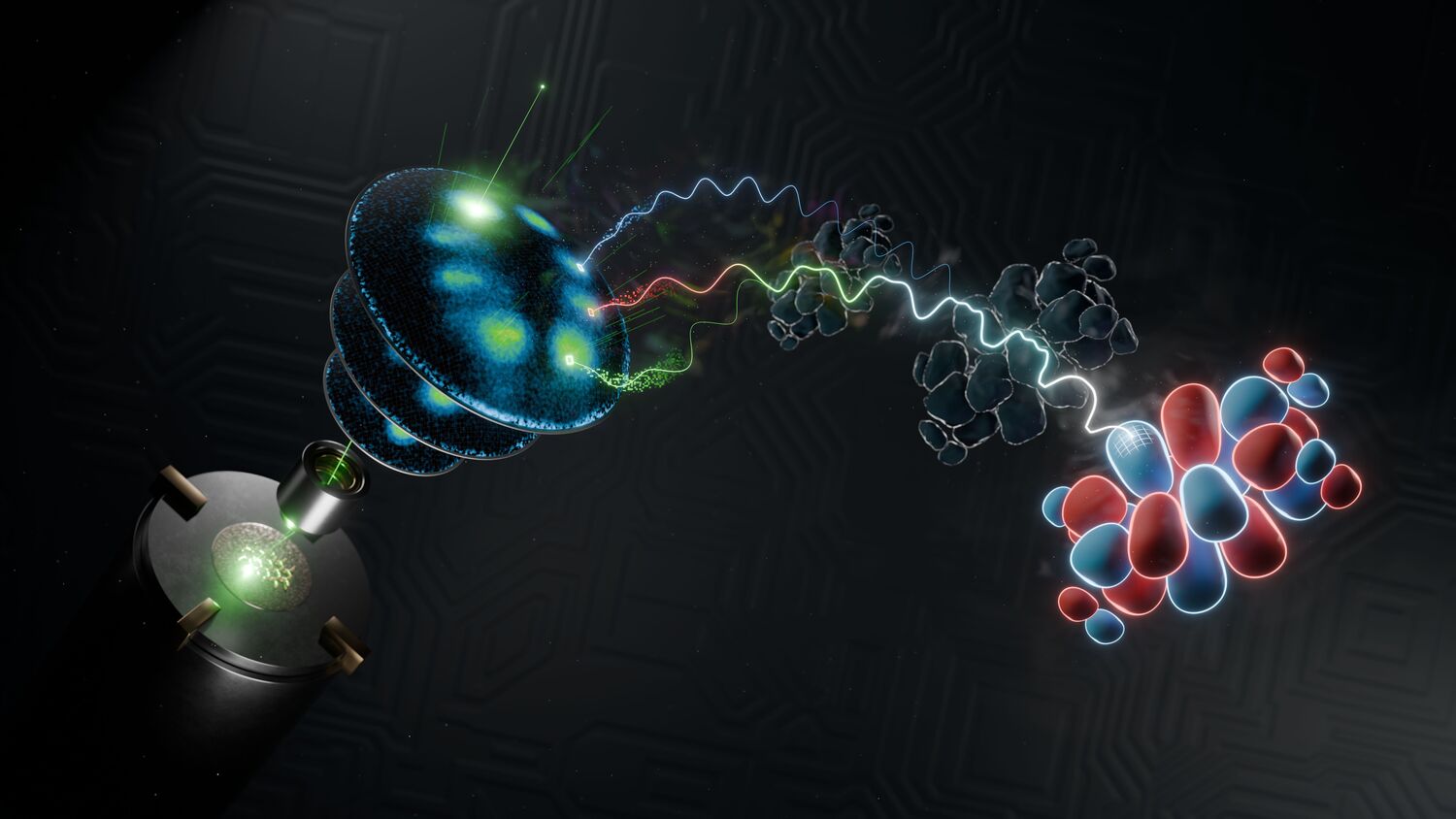
Whole-slide edge tomography. Credit: Nature (2026). DOI: 10.1038/s41586-025-10094-y

One way cancer specialists detect the disease is by examining cells and bodily fluids under a microscope, a time-consuming and labor-intensive process called cytology. It involves visually inspecting tens of thousands to one million cells per slide for subtle 3D morphological changes that might signal the onset of cancer. But AI offers an approach that is potentially faster and more accurate.

In a new study published in the journal Nature, researchers demonstrate an AI-powered 3D scanning system that can automatically sort through samples and identify abnormal cells with performance approaching that of human experts.

Building digital models
The team developed a system called Whole-Slide Edge Tomo...

Read More