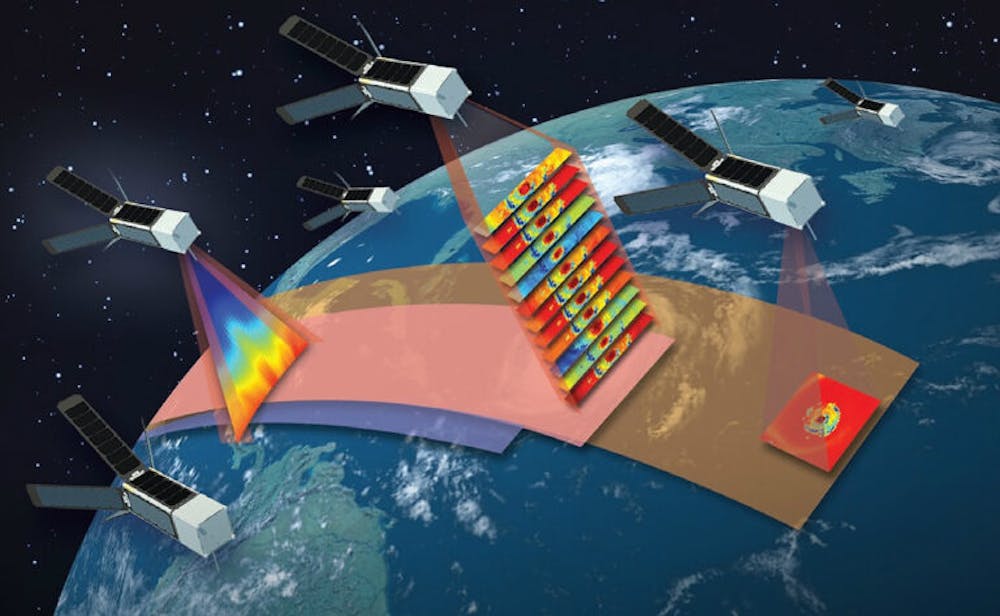
MAUVE: An Ultraviolet Astrophysics Probe Mission Concept

For the past 30 years, NASA’s Great Observatories—the Hubble, Spitzer, Compton, and Chandra space telescopes—have revealed some amazing things about the universe. In addition to some of the deepest views of the universe provided by the Hubble Deep Fields campaign, these telescopes have provided insight into the unseen parts of the cosmos—i.e., in the infrared, gamma-ray, and ultraviolet spectrums.

With the success of these observatories and the James Webb Space Telescope (JWST), NASA is contemplating future missions that would reveal even more of the “unseen universe.”

This includes the UltraViolet Explorer (UVEX), a space telescope NASA plans to launch in 2030 as its next Astrophysics Medium-Class Explorer mission...

Read More

Research reveals how Fructose in Diet Enhances Tumor Growth

Fructose consumption has increased considerably over the past five decades, largely due to the widespread use of high-fructose corn syrup as a sweetener in beverages and ultra-processed foods.

New research from Washington University in St. Louis shows that dietary fructose promotes tumor growth in animal models of melanoma, breast cancer and cervical cancer. However, fructose does not directly fuel tumors, according to the study published Dec. 4 in the journal Nature.

Instead, WashU scientists discovered that the liver converts fructose into usable nutrients for cancer cells, a compelling finding that could open up new avenues for care and treatment of many different types of cancer.

“The idea that you can tackle cancer with diet is intriguing,” said Gary Patti, the Michael a...

Read More

Scientists produce World’s First Carbon-14 Diamond Battery with Potential Lifespan of Thousands of Years

Scientists and engineers from the University of Bristol and the UK Atomic Energy Authority (UKAEA) have successfully created the world’s first carbon-14 diamond battery.

This new type of battery has the potential to power devices for thousands of years, making it an incredibly long-lasting energy source. The battery leverages the radioactive isotope, carbon-14, known for its use in radiocarbon dating, to produce a diamond battery.

Several game-changing applications are possible. Bio-compatible diamond batteries can be used in medical devices such as ocular implants, hearing aids, and pacemakers, minimizing the need for replacements and distress to patients.

Diamond batteries could also be used in extreme environments—both in space and on earth—where it is not practical to rep...

Read More

New evidence of Organic Material identified on Ceres, the Inner Solar System’s most Water-rich Object after Earth

Six years ago, NASA’s Dawn mission communicated with Earth for the last time, ending its exploration of Ceres and Vesta, the two largest bodies in the asteroid belt. Since then, Ceres —a water-rich dwarf planet showing signs of geological activity— has been at the center of intense debates about its origin and evolution.

Now, a study led by IAA-CSIC, using Dawn data and an innovative methodology, has identified 11 new regions suggesting the existence of an internal reservoir of organic materials in the dwarf planet. The results, published in The Planetary Science Journal, provide critical insights into the potential nature of this celestial body.

In 2017, the Dawn spacecraft detected organic compounds near the Ernutet crater in Ceres’ northern hemisphere, sparking discussion...

Read More