Neural Networks Made of Light

Artistic illustration of a neuromorphic system of waveguides carrying light.© Clara Wanjura

Scientists propose a new way of implementing a neural network with an optical system which could make machine learning more sustainable in the future. The researchers at the Max Planck Institute for the Science of Light have published their new method in Nature Physics, demonstrating a method much simpler than previous approaches.

Machine learning and artificial intelligence are becoming increasingly widespread with applications ranging from computer vision to text generation, as demonstrated by ChatGPT. However, these complex tasks require increasingly complex neural networks; some with many billion parameters...

Read More

Scorching Storms on Distant Worlds Revealed

brown dwarf
Artist’s impression of the nearest brown dwarf to Earth. Credit – ESO/I. Crossfield/N. Risinger.

Astronomers have created the most detailed weather report so far for two distant worlds beyond our own solar system. Astronomers have created the most detailed weather report so far for two distant worlds beyond our own solar system.

The international study — the first of its kind — reveals the extreme atmospheric conditions on the celestial objects, which are swathed in swirling clouds of hot sand amid temperatures of 950C.

Using NASA’s powerful James Webb Space Telescope (JWST), researchers set out to capture the weather on a pair of brown dwarfs — cosmic bodies that are bigger than planets but smaller than stars.

These brown dwarfs, named collectively as WISE 1049AB, are the bri...

Read More

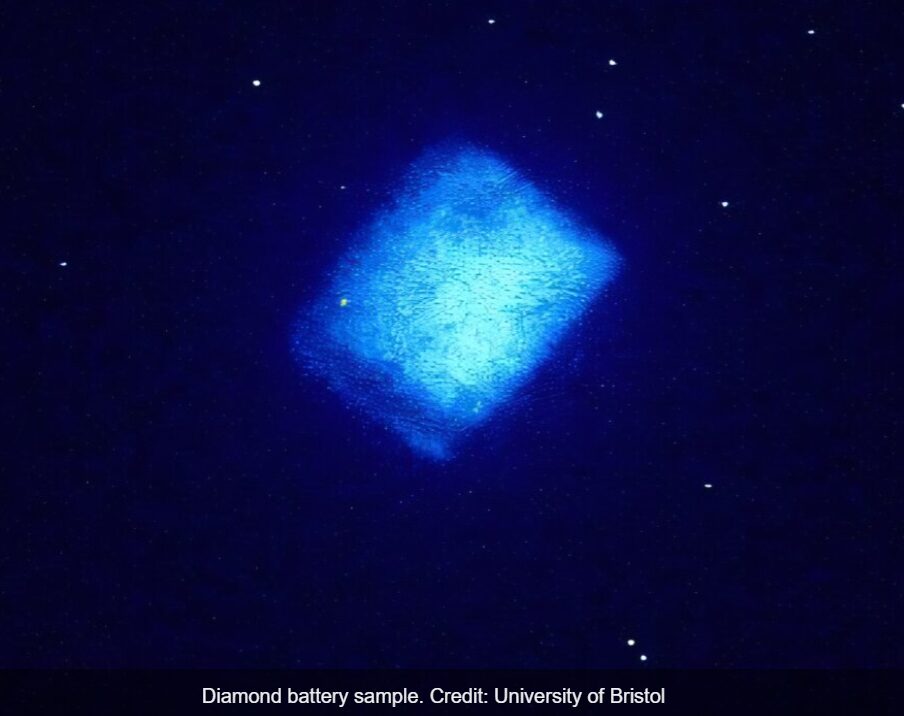
Could High-Temperature Single Crystals enable Electric Vehicles capable of Traveling up to One Million Km?

A research team led by Professor Kyu-Young Park from the Graduate Institute of Ferrous & Eco Materials Technology and the Department of Materials Science and Engineering and Kyoung Eun Lee, a PhD candidate, and alumna Yura Kim from the Graduate Institute of Ferrous & Eco Materials Technology at Pohang University of Science and Technology (POSTECH), in collaboration with the POSCO Holdings N.EX.T Hub, has recently demonstrated a single-crystal synthesis technology that significantly extends the lifespan of cathode materials for electric vehicles. This research was published in the online edition of ACS Materials & Interfaces, an international journal in the materials science field.

Lithium (Li) secondary batteries, commonly used in electric vehicles, store energy by converting elect...

Read More

Researchers Pinpoint Brain Cells that Delay First Bite of Food

A set of neurons identified by Scripps Research scientists influence the start of eating and drinking. Do you grab a fork and take a first bite of cake, or say no and walk away? Our motivation to eat is driven by a complex web of cells in the brain that use signals from within the body, as well as sensory information about the food in front of us, to determine our behaviors. Now, Scripps Research scientists have identified a group of neurons in a small and understudied region of the brain — the parasubthalamic nucleus (PSTN) — that controls when an animal decides to take a first bite of food.

In the study, published in Molecular Psychiatry on July 4, 2024, the team of scientists set out to selectively manipulate a group of PSTN cells that dial up their activity during periods of bi...

Read More