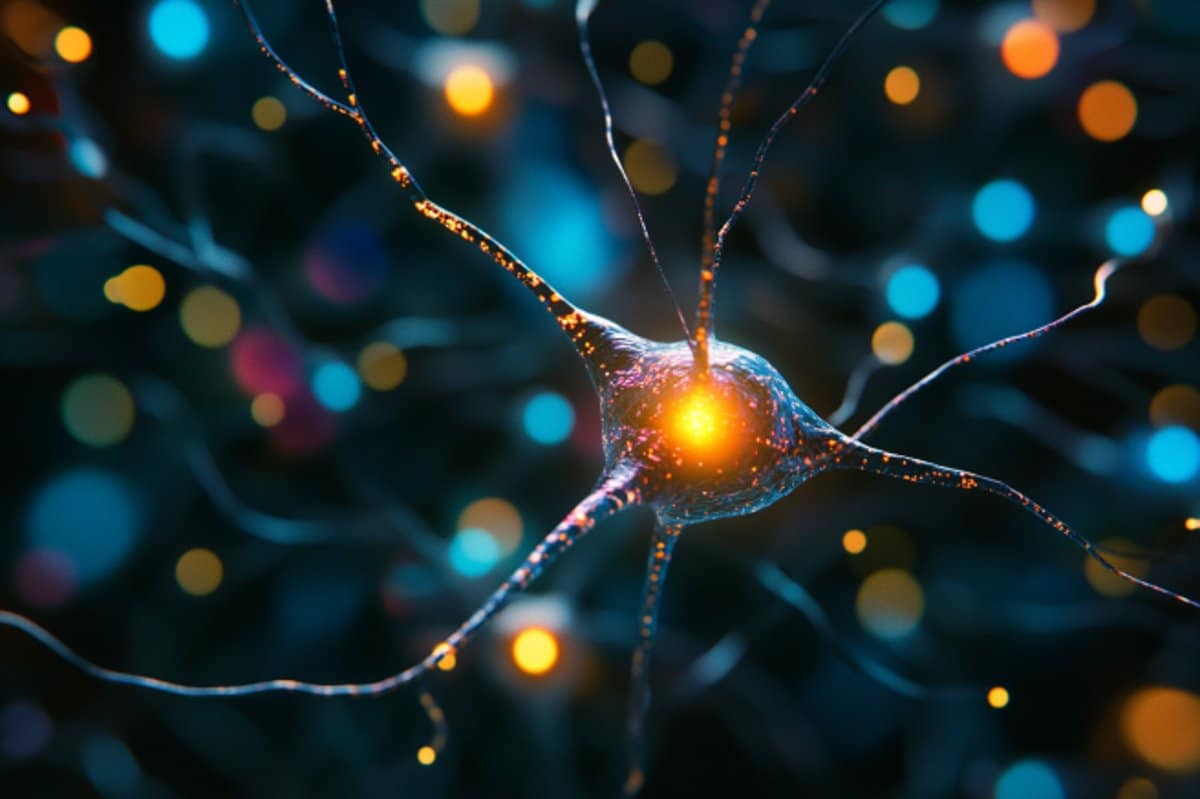
Key Mechanisms identified for Regeneration of Neurons

neuron
Credit: Pixabay/CC0 Public Domain

Neurological disorders, such as trauma, stroke, epilepsy, and various neurodegenerative diseases, often lead to the permanent loss of neurons, causing significant impairments in brain function. Current treatment options are limited, primarily due to the challenge of replacing lost neurons.

Direct neuronal reprogramming, a complex procedure that involves changing the function of one type of cell into another, offers a promising strategy.

In cell culture and in living organisms, glial cells—the non-neuronal cells in the central nervous system—have been successfully transformed into functional neurons. However, the processes involved in this reprogramming are complex and require further understanding...

Read More

Engineers send 3D Printer into Space

Spaceflight feather, as viewed aboard VSS Unity on June 8, 2024. The Virgin Galactic 07 flight carried Berkeley’s SpaceCal 3D printer and four other research payloads.

Imagine a crew of astronauts headed to Mars. About 140 million miles away from Earth, they discover their spacecraft has a cracked O-ring. But instead of relying on a dwindling cache of spare parts, what if they could simply fabricate any part they needed on demand?

A team of Berkeley researchers, led by Ph.D. student Taylor Waddell, may have taken a giant leap toward making this option a reality. On June 8, they sent their 3D printing technology to space for the first time as part of the Virgin Galactic 07 mission.

Their next-generation microgravity printer—dubbed SpaceCAL—spent 140 seconds in suborbital space while aboard the VSS Unity space plane...

Read More

Drugs that Kill ‘Zombie’ Cells may Benefit some Older Women, but not all

Drugs that selectively kill senescent cells may benefit otherwise healthy older women but are not a “one-size-fits-all” remedy, Mayo Clinic researchers have found. Specifically, these drugs may only benefit people with a high number of senescent cells, according to findings publishing July 2 in Nature Medicine.

Senescent cells are malfunctioning cells in the body that lapse into a state of dormancy. These cells, also known as “zombie cells,” can’t divide but can drive chronic inflammation and tissue dysfunction linked to aging and chronic diseases. Senolytic drugs clear tissues of senescent cells.

In the 20-week, phase 2 randomized controlled trial, 60 healthy women past menopause intermittently received a senolytic combination composed of FDA-approved dasatinib and quercetin, a...

Read More

Scientists discover way to ‘Grow’ Sub-Nanometer Sized Transistors

Opening the path to next-generation semiconductors through epitaxial growth of new Van der Waals materials. A research team led by Director JO Moon-Ho of the Center for Van der Waals Quantum Solids within the Institute for Basic Science (IBS) has implemented a novel method to achieve epitaxial growth of 1D metallic materials with a width of less than 1 nm. The group applied this process to develop a new structure for 2D semiconductor logic circuits. Notably, they used the 1D metals as a gate electrode of the ultra-miniaturized transistor.

Integrated devices based on two-dimensional (2D) semiconductors, which exhibit excellent properties even at the ultimate limit of material thickness down to the atomic scale, are a major focus of basic and applied research worldwide.

However, r...

Read More