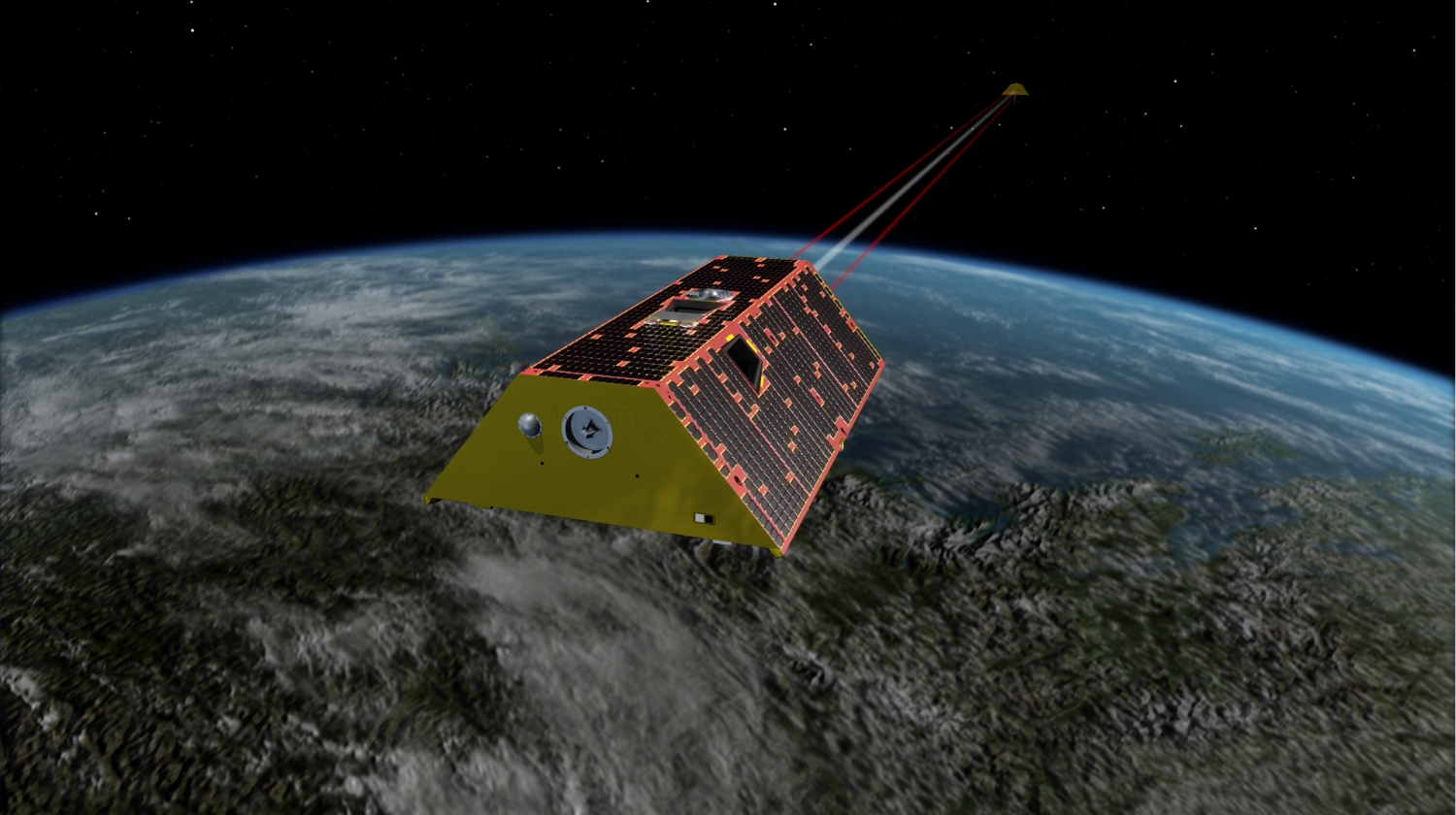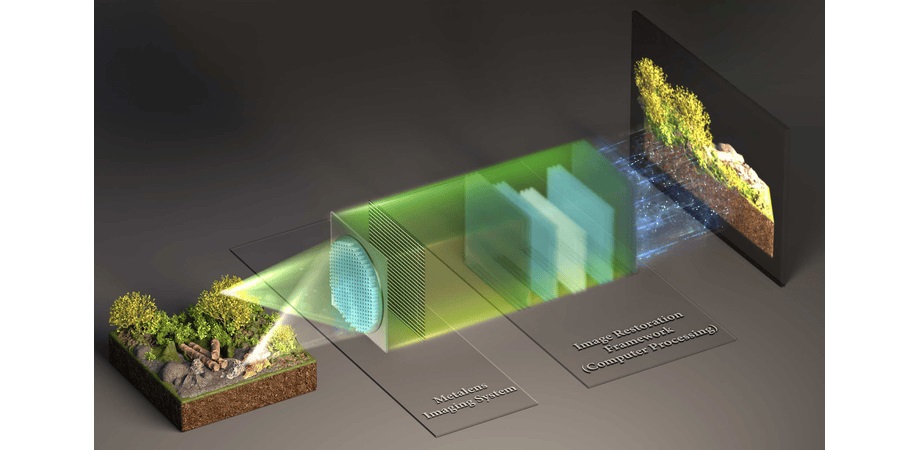
Slingshotting Around the Sun would make a Spacecraft the Fastest Ever

Top: Image of the test set-up for the thermal shield.
Credit – Benkoski et al.
Bottom: Graphic depicting the development path for the solar thermal propulsion system.
Credit – Benkoski et al.

NASA is very interested in developing a propulsion method to allow spacecraft to go faster. We’ve reported several times on different ideas to support that goal, and most of the more successful have utilized the sun’s gravity well, typically by slingshotting around it, as is commonly done with Jupiter currently.

But, there are still significant hurdles when doing so, not the least of which is the energy radiating from the sun simply vaporizing anything that gets close enough to utilize a gravity assist...

Read More

Growth Factors linked to Stem Cell Aging in Bone Marrow Study

How old is your bone marrow?

The immunofluorescence image details the morphology and cell composition of a femur from a middle-aged mouse. Credit: The Jackson Laboratory

Our bone marrow—the fatty, jelly-like substance inside our bones—is an unseen powerhouse quietly producing 500 billion new blood cells every day. That process is driven by hematopoietic stem cells that generate all of the various types of blood cells in our bodies and regenerating themselves to keep the entire assembly line of blood production operating smoothly.

As with any complex system, hematopoietic stem cells lose functionality as they age—and, in the process, contribute to the risk of serious diseases, including blood cancers. We know that the risk of developing aging-associated diseases is different among different individuals...

Read More

Researchers ‘Crack the Code’ for Quelling Electromagnetic Interference

FAU Center for Connected Autonomy and Artificial Intelligence highlighted in 'Nature Reviews'
Equipped with a breakthrough algorithmic solution, researchers have “cracked the code” on interference when machines need to talk with each other—and people. Credit: Alex Dolce, Florida Atlantic University

Florida Atlantic Center for Connected Autonomy and Artificial Intelligence (CA-AI.fau.edu) researchers have “cracked the code” on interference when machines need to talk with each other—and people.

Electromagnetic waves make wireless connectivity possible but create a lot of unwanted chatter. Referred to as “electromagnetic interference,” this noisy byproduct of wireless communications poses formidable challenges in modern day dense IoT and AI robotic environments...

Read More

Supermassive Black Hole appears to Grow Like a Baby Star

Galactic whirlwind
Artist’s impression: A spiralling wind helps the supermassive black hole in galaxy ESO320-G030 to grow, assisted by magnetic fields. In this illustration, the core of the galaxy is dominated by a rotating wind of dense gas leading outwards from the (hidden) supermassive black hole at the galaxy’s very centre. The motions of the gas, traced by light from molecules of hydrogen cyanide have been measured with the Alma telescope. Image credit: M. D. Gorski/Aaron M. Geller, Northwestern University, CIERA, the Center for Interdisciplinary Exploration and Research in Astrophysics.

Supermassive black holes pose unanswered questions for astronomers around the world, not least “How do they grow so big?” Now, an international team of astronomers, including researchers from Chalmers University...

Read More