






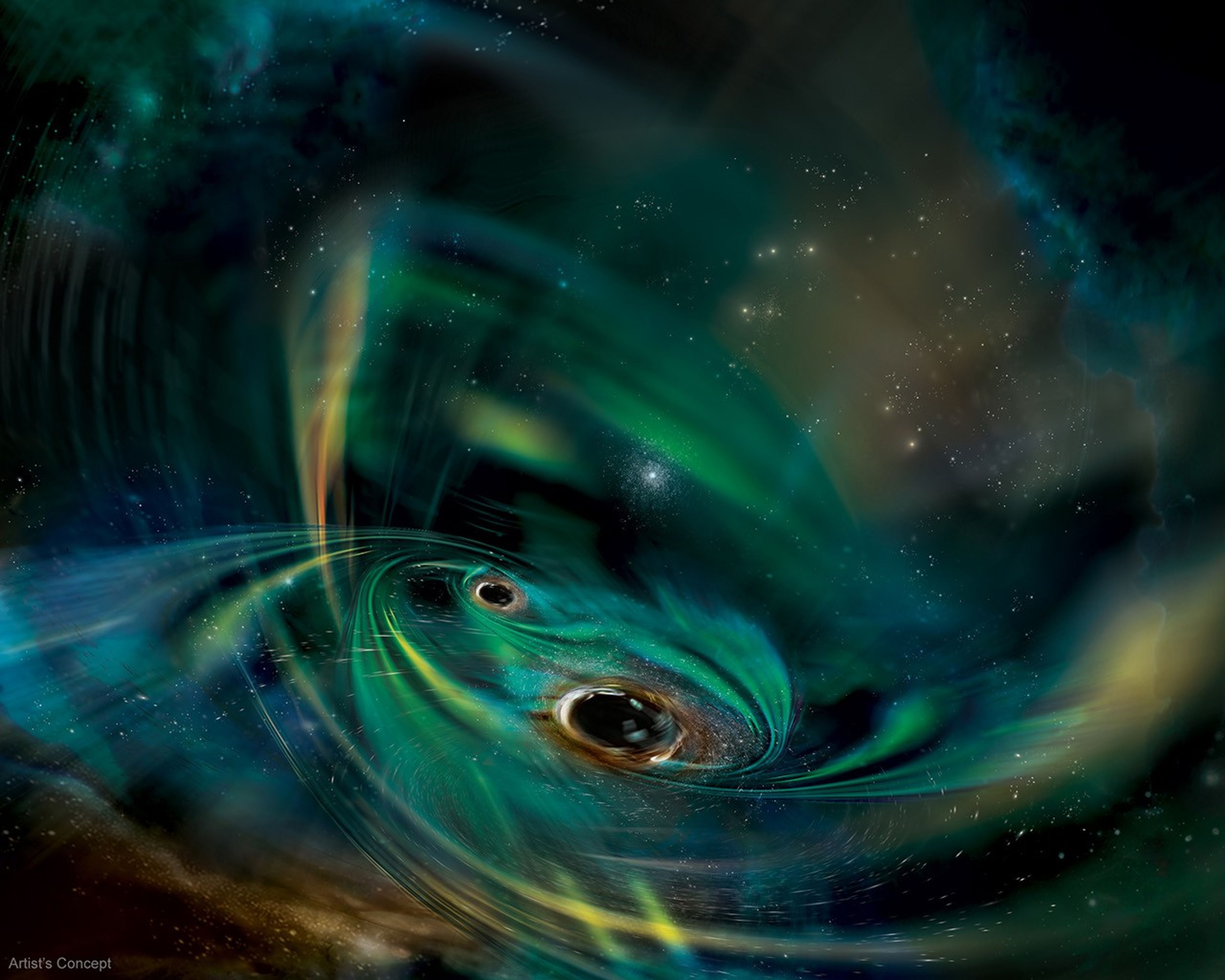
Astronomers see a Massive Black Hole Awaken in Real Time

In late 2019 the previously unremarkable galaxy SDSS1335+0728 suddenly started shining brighter than ever before. To understand why, astronomers have used data from several space and ground-based observatories, including the European Southern Observatory’s Very Large Telescope (ESO’s VLT), to track how the galaxy’s @brightness has varied. In a study out today, they conclude that they are witnessing changes never seen before in a galaxy – likely the result of the sudden awakening of the massive black hole at its core.

“Imagine you’ve been observing a distant galaxy for years, and it always seemed calm and inactive,” says Paula Sánchez Sáez, an astronomer at ESO in Germany and lead author of the study accepted for publication in Astronomy & Astrophysics...

Read More

Circadian Rhythm drives the Release of Important Immune Cells, study reveals

Circadian rhythm drives the release of important immune cells
Credit: Cell Reports (2024). DOI: 10.1016/j.celrep.2024.114200

The sites where our bodies come into contact with the outside world—via skin, the surface of the eye, inside the mouth, the lining of the intestine and the urinary tract, for example—are known as barrier tissues.

Helping to defend those tissues are innate lymphoid cells, or ILCs, which when faced with a threat, stimulate proteins called cytokines that further activate the immune system and control the intestinal microbiome.

These cells naturally diminish with aging or can be depleted by certain medical conditions.

ILCs are made inside bone marrow and circulate in the blood. But how are they activated to mobilize and travel to their target sites to replenish the depleted pool of tissue ILCs?

A Michigan Medi...

Read More

Researchers improve Solid Oxide Fuel Cell Threefold

Threefold improvement of solid oxide fuel cell in 4 minutes
This image was selected as a front-inside cover of Advanced Materials illustrating the morphology evolution of oxide nano-catalyst over time during coating process. Credit: Korea Institute of Energy Research (KIER)

A research team has successfully developed a catalyst coating technology that significantly improves the performance of solid oxide fuel cells (SOFCs) in just four minutes.

Dr. Yoonseok Choi from the Hydrogen Convergence Materials Laboratory at the Korea Institute of Energy Research (KIER), in collaboration with Professor WooChul Jung from the Department of Materials Science and Engineering at KAIST and Professor Beom-Kyung Park from the Department of Materials Science and Engineering at Pusan National University, led the research.

Their findings were published in Adva...

Read More

Investigating the Origins of the Crab Nebula

This image by NASA’s James Webb Space Telescope’s NIRCam (Near-Infrared Camera) and MIRI (Mid-Infrared Instrument) shows different structural details of the Crab Nebula. The supernova remnant is comprised of several different components, including doubly ionized sulfur (represented in green), warm dust (magenta), and synchrotron emission (blue). Yellow-white mottled filaments within the Crab’s interior represent areas where dust and doubly ionized sulfur coincide. The observations were taken as part of General Observer program 1714.
: NASA, ESA, CSA, STScI, T. Temim (Princeton University)

A team of scientists used NASA’s James Webb Space Telescope to parse the composition of the Crab Nebula, a supernova remnant located 6,500 light-years away in the constellation Taurus...

Read More