The Moon Turned Itself Inside Out, Scientists Confirm

Small Bang
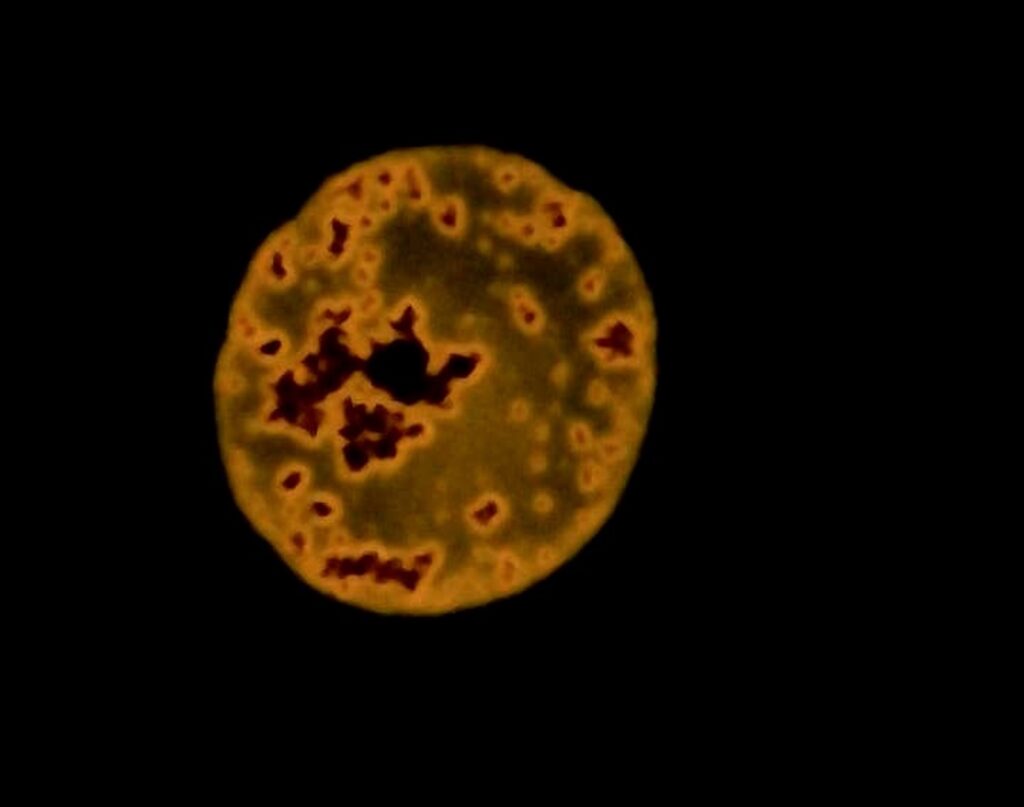
Scientists seem to have figured out why the Moon is made up of such weird and heavy rocks: way back in the day, it turned itself inside out.

For decades now, scientists have pretty much agreed that the Moon formed from debris that flew off the young Earth when another planet smashed into it about 4.5 billion years. That cosmic wreckage “coalesced, cooled and solidified” to form the Moon as we know it today, researchers from the University of Arizona’s Lunar and Planetary Laboratory wrote in a press release — but what happened next is something of a “choose-your-own adventure,” as the scientists describe it.

In a new paper published in the journal Nature Geoscience, the LPL researchers found that the surprisingly high concentration of titanium found in Moon rocks, suc...

Read More

Scientists uncover a Missing Link between Poor Diet and Higher Cancer Risk

2024 0409 (CSI) Poor diet and higher cancer risks
A new study by NUS researchers reveals that methylglyoxal, a chemical produced when our body break down glucose for energy production, instigates faults in our DNA that are early warning signs of cancer initiation.

A research team from the National University of Singapore (NUS) has unearthed new findings which may help explain the connection between cancer risk and poor diet, as well as common diseases like diabetes, which arise from poor diet. The insights gained from this study hold promise for advancing cancer prevention strategies aimed at promoting healthy ageing.

Led by Professor Ashok Venkitaraman, this ground-breaking study was conducted by scientists from the Cancer Science Institute of Singapore (CSI Singapore) at NUS and NUS Centre for Cancer Research (N2CR) under the Yon...

Read More

Metasurface Antenna could enable Future 6G Communications Networks

Metasurface antenna could enable future 6G communications networks
DMA prototype 1. Credit: University of Glasgow

A team led by researchers from the University of Glasgow has developed an innovative wireless communications antenna that combines the unique properties of metamaterials with sophisticated signal processing to deliver a new peak of performance.

In a paper published in the IEEE Open Journal of Antennas and Propagation, titled “60 GHz Programmable Dynamic Metasurface Antenna (DMA) for Next-Generation Communication, Sensing, and Imaging Applications: From Concept to Prototype,” the researchers showcase their development of a prototype digitally coded dynamic metasurface antenna, or DMA, controlled through high-speed field-programmable gate array (FPGA).

Their DMA is the first in the world designed and demonstrated at the operating frequ...

Read More

Scientists use Wearable Technology to Detect Stress Levels During Sleep

Scientists use wearable technology to detect stress levels during sleep

What if changes in a person’s stress levels could be detected while they sleep using wearable devices? A new study by University of Vermont researchers published in PLOS Digital Health is the first to find changes in perceived stress levels reflected in sleep data—an important step towards identifying biomarkers that may help flag individuals in need of support.

Given how critical sleep is to physical and mental health, the research team suspected signals might exist in sleep data, says Laura Bloomfield, a research assistant professor of mathematics and statistics and lead author of the study. “Changes in stress are visible.”

When parsing baseline sleep data, the researchers found “consistent associations” between people’s perceived stress scores and factors such as total slee...

Read More