






New study shows ‘Dancing Molecules’ can Regenerate Cartilage in 3 days

arthritis
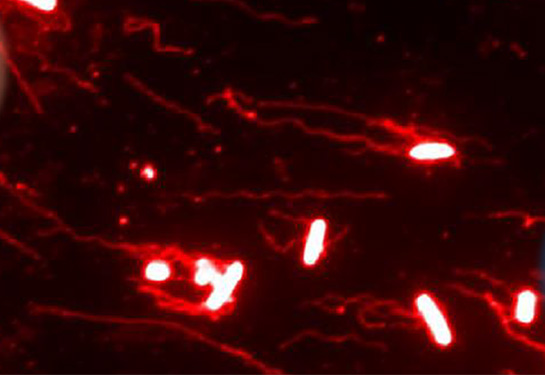
In new experiments, human cartilage cells treated with fast-moving dancing molecules made more collagen II (shown in red), a crucial component for regeneration. Cell nuclei are shown in blue/purple. Credit: Stupp Research Group/Northwestern

In November 2021, Northwestern University researchers introduced an injectable new therapy, which harnessed fast-moving “dancing molecules,” to repair tissues and reverse paralysis after severe spinal cord injuries.

Now, the same research group has applied the therapeutic strategy to damaged human cartilage cells. In the new study, the treatment activated the gene expression necessary to regenerate cartilage within just four hours. And, after only three days, the human cells produced protein components needed for cartilage regeneration.

The re...

Read More

Engineers develop Magnetic Tunnel Junction–based Device to make AI more Energy Efficient

Researchers develop state-of-the-art device to make artificial intelligence more energy efficient

Engineering researchers at the University of Minnesota Twin Cities have demonstrated a state-of-the-art hardware device that could reduce energy consumption for artificial intelligent (AI) computing applications by a factor of at least 1,000.

The research is published in npj Unconventional Computing titled “Experimental demonstration of magnetic tunnel junction-based computational random-access memory.” The researchers have multiple patents on the technology used in the device.

With the growing demand for AI applications, researchers have been looking at ways to create a more energy efficient process, while keeping performance high and costs low...

Read More

A Cave Discovered on the Moon Opens up New Opportunities for Settlement by Humans

Astronauts
Cave systems would act as a natural shelter for a lunar base. NASA

Almost 55 years after the launch of Apollo 11—the first mission to land humans on the moon—scientists have found evidence of a large cave system near the landing site of those astronauts.

Using radar images taken by Nasa’s Lunar Reconnaissance Orbiter spacecraft in 2010, researchers have been able to determine that huge pits, found in images of the moon, may in fact be “skylights” to large caves and tunnels that sit beneath the lunar surface.

These could be incredibly valuable to future astronauts hoping to settle on the moon, acting as a convenient shelter for a lunar base.

The cave is accessible through a pit in the well-studied Mare Tranquillitatis (Sea of Tranquility)...

Read More

Central Nervous System-associated Macrophages could Modulate Post-Stroke Immune Responses

A CNS-associated macrophage (CAM, in red) at the interface between a blood vessel and an astrocyte (cyan) in a mouse brain. Credit: Levard et al.

An ischemic stroke is a type of stroke that occurs when a blood clot in an artery, also known as thrombus, or the progressive narrowing of arteries, blocks the blood and oxygen flowing to the brain. This process can cause both temporary and permanent brain damage, for instance, leading to partial paralysis, cognitive impairments and other debilitating impairments.

Statistics suggest that older age increases the risk of experiencing ischemic strokes...

Read More