






Handheld Device Offers Lab-Quality Diagnostic Testing

Handheld device offers lab-quality diagnostic testing

The LIAMT handheld processor features a window which the user can look through to view fluorescent virus detection signals. Credit: Advanced Science (2024). DOI: 10.1002/advs.202310066

Because of its high accuracy, laboratory-based polymerase chain reaction (PCR) testing is the gold standard for infectious disease diagnostics. However, PCR technology requires highly trained staff and costly equipment, hindering its availability, especially in low-resource settings. New research suggests a different kind of test could be more streamlined without sacrificing performance.

A platform technology developed by researchers at the University of Connecticut uses similar techniques as PCR testing, but within a handheld device rather than several benchtop machines.

In a study publish...

Read More
AI Study reveals Dramatic Reasoning Breakdown in Large Language Models

AI study reveals dramatic reasoning breakdown in LLMs
Strong fluctuations across AIW problem variations. Also for higher performers, eg GPT-4o, GPT-4 and Claude Opus 3, correct response rates vary strongly from close to 1 to close to 0, despite only slight changes introduced in AIW variations (a color per each variation 1–4). This clearly shows lack of model robustness, hinting basic reasoning deficits. Credit: arXiv (2024). DOI: 10.48550/arxiv.2406.02061

Even the best AI large language models (LLMs) fail dramatically when it comes to simple logical questions. This is the conclusion of researchers from the Jülich Supercomputing Center (JSC), the School of Electrical and Electronic Engineering at the University of Bristol and the LAION AI laboratory.

In their paper posted to the arXiv preprint server, titled “Alice in Wonderland: S...

Read More

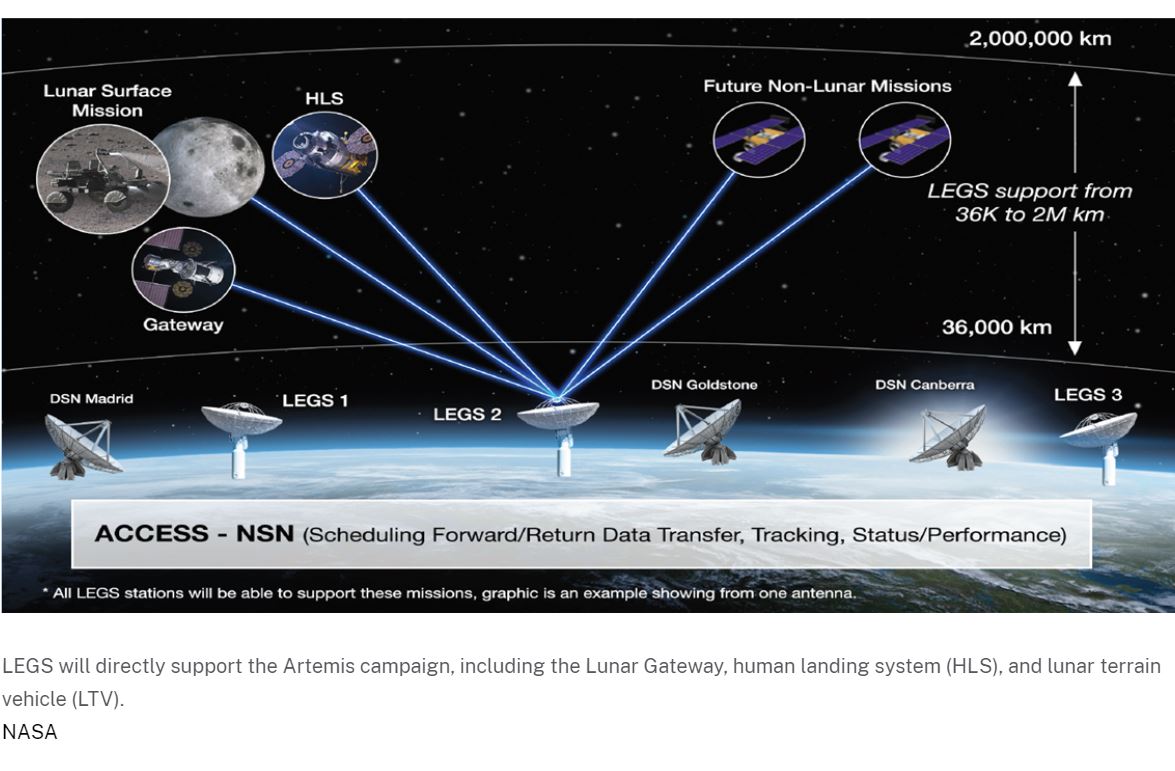
Lunar Exploration Ground Sites will Enhance the Near Space Network’s Communications Services

NASA’s LEGS can do more than help Earthlings move about the planet. Three Lunar Exploration Ground Sites, or LEGS, will enhance the Near Space Network’s communications services and support of NASA’s Artemis campaign.

NASA’s Space Communications and Navigation (SCaN) program maintains the agency’s two primary communications networks—the Deep Space Network and the Near Space Network, which enable satellites in space to send data back to Earth for investigation and discovery.

Using antennas around the globe, these networks capture signals from satellites, collecting data and enabling navigation engineers to track the mission. For the first Artemis mission, these networks worked in tandem to support the mission as it completed its 25-day journey around the moon...

Read More

Engineers Develop Safe and Long-Cyclable Lithium Metal Battery for High Temperatures

In recent years, batteries have become ubiquitous in consumers’ daily lives. However, existing commercial battery technologies, which use liquid electrolytes and carbonaceous anodes, have certain drawbacks such as safety concerns, limited lifespan, and inadequate power density particularly at high temperatures.

Yet, there is an increasing need for batteries that can operate in extreme conditions, such as the high temperatures required in various industrial sectors, including medical device sterilization, subsurface exploration, and thermal reactors.

This has prompted researchers to search for solid electrolytes that are safe and compatible with lithium metal anodes, which are known for their high theoretical specific power capacity.

A research team led by Professor Dong-Myeon...

Read More