Engineers Collaborate with ChatGPT4 to Design Brain-Inspired Chips

Image of a cartoon person looking at a computer

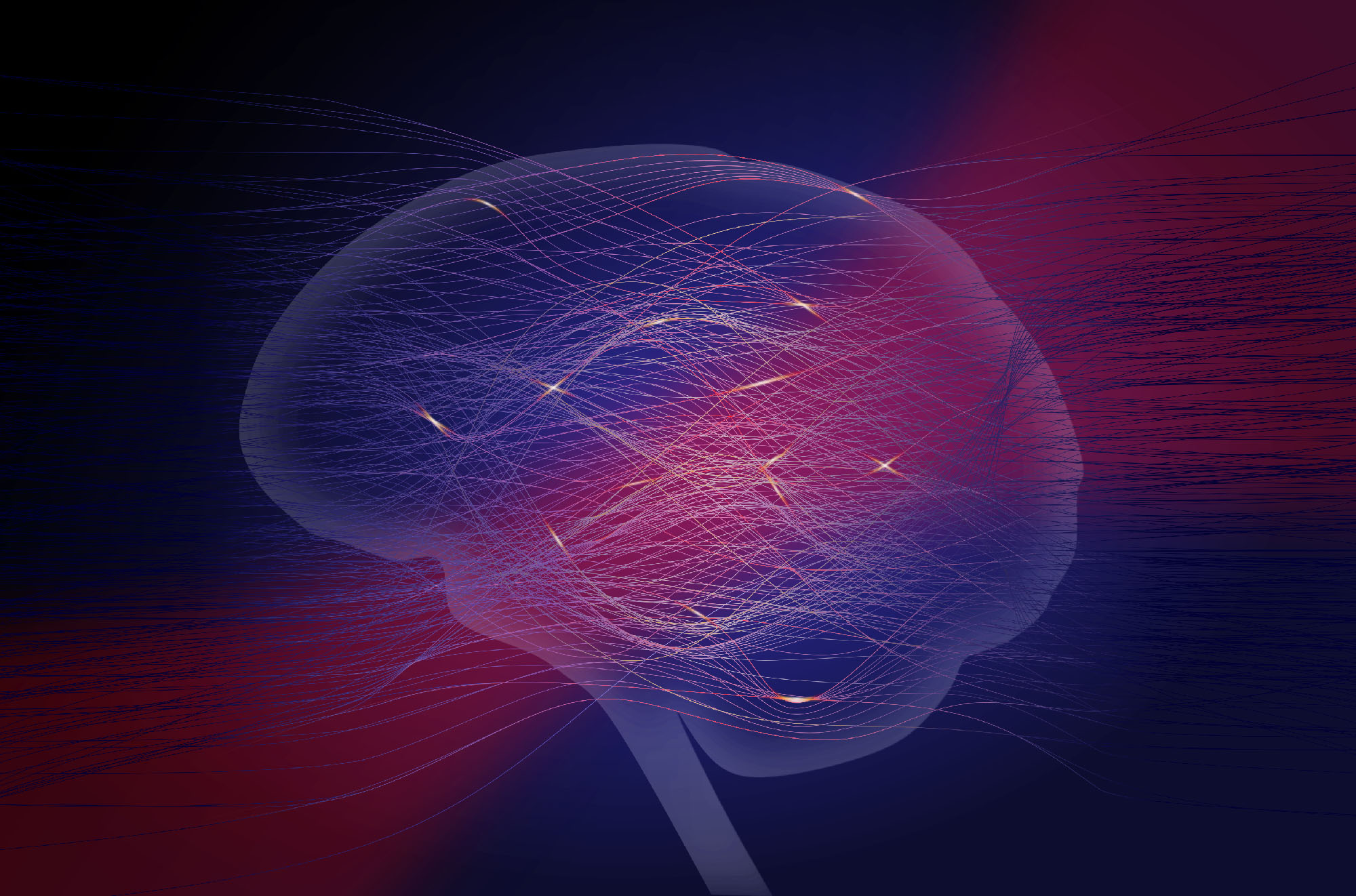
Johns Hopkins electrical and computer engineers are pioneering a new approach to creating neural network chips—neuromorphic accelerators that could power energy-efficient, real-time machine intelligence for next-generation embodied systems like autonomous vehicles and robots.

Electrical and computer engineering graduate student Michael Tomlinson and undergraduate Joe Li—both members of the Andreou Lab—used natural language prompts and ChatGPT4 to produce detailed instructions to build a spiking neural network chip: one that operates much like the human brain.

Through step-by-step prompts to ChatGPT4, starting with mimicking a single biological neuron and then linking more to form a network, they generated a full chip design that could be fabricated.

“This is the first A...

Read More

Groundbreaking Survey reveals Secrets of Planet Birth around Dozens of Stars

A team of astronomers has shed new light on the fascinating and complex process of planet formation. The research brings together observations of more than 80 young stars that might have planets forming around them, providing astronomers with a wealth of data and unique insights into how planets arise in different regions of our galaxy.

In a series of studies, a team of astronomers has shed new light on the fascinating and complex process of planet formation. The stunning images, captured using the European Southern Observatory’s Very Large Telescope (ESO’s VLT) in Chile, represent one of the largest ever surveys of planet-forming discs...

Read More

Shortcut to Success: Toward fast and robust Quantum Control through Accelerating Adiabatic Passage

20240220_1_fig_2.png
Semiconductor quantum dots
Credit: Xiao-Fei Liu et al.

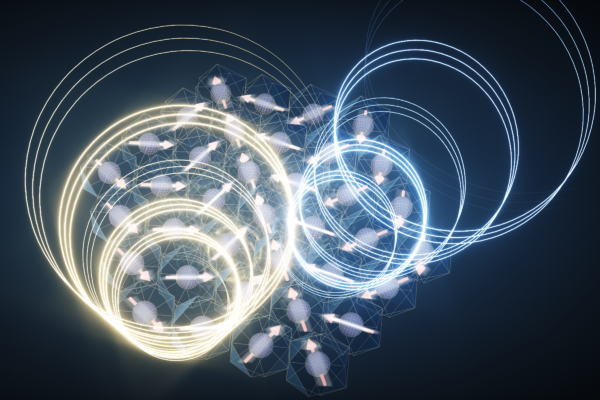
Researchers at Osaka University’s Institute of Scientific and Industrial Research (SANKEN) used the shortcuts to the adiabaticity (STA) method to greatly speed-up the adiabatic evolution of spin qubits. The spin flip fidelity after pulse optimization can be as high as 97.8% in GaAs quantum dots. This work may be applicable to other adiabatic passage and will be useful for fast and high-fidelity quantum control.

A quantum computer uses the superposition of “0” and “1” states to perform information processing, which is completely different from classical computing, thus allowing for the solution of certain problems at a much faster rate.

High-fidelity quantum state operation in large enough programmable qubit spaces is required...

Read More

What makes Black Holes Grow and New Stars Form? Machine Learning helps Solve the Mystery

Intergalactic scene
A pair of disc galaxies in the late stages of a merger. Credit: NASA.

It takes more than a galaxy merger to make a black hole grow and new stars form: machine learning shows cold gas is needed too to initiate rapid growth — new research finds.

When they are active, supermassive black holes play a crucial role in the way galaxies evolve. Until now, growth was thought to be triggered by the violent collision of two galaxies followed by their merger, however new research led by the University of Bath suggests galaxy mergers alone are not enough to fuel a black hole — a reservoir of cold gas at the centre the host galaxy is needed too.

The new study, published this week in the journal Monthly Notices of the Royal Astronomical Society is believed to be the first to use machine learnin...

Read More