





Scientists turn White Fat Cells into Calorie-Burning Beige Fat

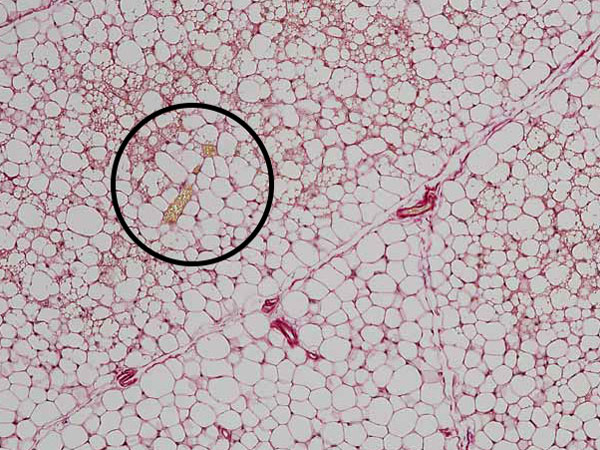
A microscopic image of oridinary white fat, which is transluscent, and pockets of beige fat cells, which are beige in color.
White fat without the KLF-15 protein, which contains small patches of calorie-burning beige fat cells (seen above in the beige areas within the black circle). Image by Liang Li

A new study shows that suppressing a protein turns ordinary fat into a calorie burner and may explain why drug trials attempting the feat haven’t been successful.

Researchers at UC San Francisco have figured out how to turn ordinary white fat cells, which store calories, into beige fat cells that burn calories to maintain body temperature.

The discovery could open the door to developing a new class of weight-loss drugs and may explain why clinical trials of related therapies have not been successful.

Until now, researchers believed creating beige fat might require starting from stem cells...

Read More
‘World Record’ for Data Transmission Speed

Aston University researchers break ‘world record’ again for data transmission speed
ini Pratiwi, Mingming Tan, Ian Phillips, Aleksandr Donodin, Ruben Luis, Wladek Forysiak, Ben Puttnam

Aston University researchers are part of a team that has sent data at a record rate of 402 terabits per second using commercially available optical fibre.

This beats their previous record, announced in March 2024, of 301 terabits or 301,000,000 megabits per second, using a single, standard optical fibre.

“If compared to the internet connection speed recommendations of Netflix, of 3 Mbit/s or higher, for a watching a HD movie, this speed is over 100 million times faster.

The speed was achieved by using a wider spectrum, using six bands rather than the previous four, which increased capacity for data sharing. Normally just one or two bands are used.

The international research ...

Read More

This Desert Moss has the Potential to Grow on Mars

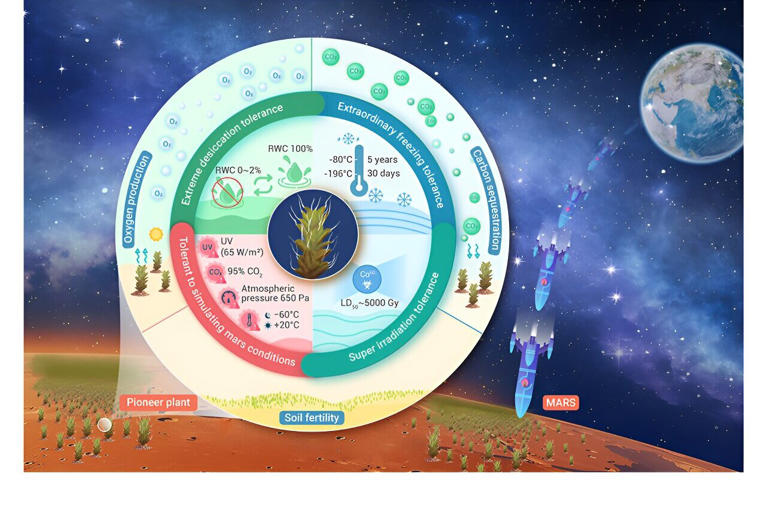
Graphical abstract. Credit: The Innovation (2024). DOI: 10.1016/j.xinn.2024.100657
Graphical abstract. Credit: The Innovation (2024). DOI: 10.1016/j.xinn.2024.100657© Provided by Phys.org

The desert moss Syntrichia caninervis is a promising candidate for Mars colonization thanks to its extreme ability to tolerate harsh conditions lethal to most life forms. The moss is well known for its ability to tolerate drought conditions, but researchers report June 30 in the journal The Innovation that it can also survive freezing temperatures as low as −196°C, high levels of gamma radiation, and simulated Martian conditions involving these three stressors combined. In all cases, prior dehydration seemed to help the plants cope.

“Our study shows that the environmental resilience of S...

Read More

Breakthrough Research Makes Cancer-fighting Viral Agent More Effective

Cancer cells.
Credit: iStock.

Researchers from Aarhus University have made a significant breakthrough by discovering that the drug 4-OI can enhance the effectiveness of a cancer-fighting viral agent. This may lead to treatment of cancers that are otherwise resistant to therapies.

When a cancer cell doesn’t respond to traditional therapies, doctors may turn to a sort of viral biological warfare, by deploying ‘troops’ in the form of viral agents that are specifically engineered to target and eliminate cancer cells. The mode of attack is to transform the tumor into an immunologically “hot” environment, making it more visible and recognisable to our immune system.

Now, researchers from the Department of Biomedicine at Aarhus University have found a way to make one strain of viral agents even more ...

Read More