Team develops a new Deepfake Detector designed to be Less Biased

Study: New deepfake detector designed to be less biased
Deepfake detection algorithms often perform differently across races and genders, including a higher false positive rate on Black men than on white women. New algorithms developed at the University at Buffalo are designed to reduce such gaps. Credit: Siwei Lyu

University at Buffalo computer scientist and deepfake expert Siwei Lyu created a photo collage out of the hundreds of faces that his detection algorithms had incorrectly classified as fake—and the new composition clearly had a predominantly) darker skin tone.

“A detection algorithm’s accuracy should be statistically independent from factors like race,” Lyu says, “but obviously many existing algorithms, including our own, inherit a bias.”

Lyu, Ph.D...

Read More

ALMA Observations show how Double, Triple, Quadruple and Quintuple Star Systems Form Simultaneously in a Molecular Cloud

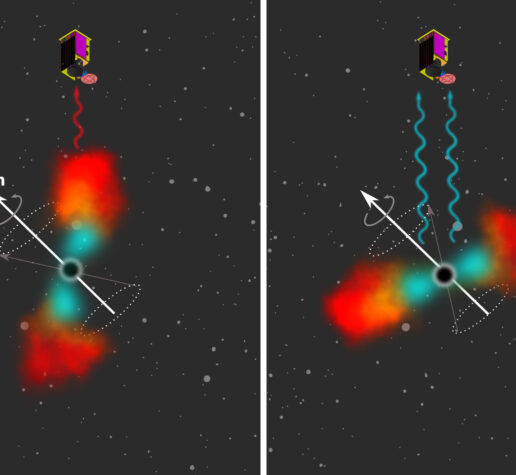
Blue-green-yellow splashes of colour with red-white islands against a blue background.
False-color image of the massive star formation region G333.23–0.06 from data obtained with the ALMA radio observatory. North is to the left. The insets show regions in which Li et al. were able to detect multiple systems of protostars. The star symbols indicate the location of each newly forming stars. The image covers a region 0.62 by 0.78 light-years in size (which on the sky covers a mere 7.5 times 9.5 arc seconds). For comparison: If you look at the sky along an outstretched thumb, it spans a viewing angle of around two degrees. One degree corresponds to 3600 arc seconds.
© S. Li, MPIA / J. Neidel, MPIA Graphics Department / Data: ALMA Observatory

For humans, the chance of giving birth to multiples is less than 2%...

Read More

Novel Regulator of Immune Evasion in Cancer identified

Novel regulator of immune evasion in cancer identified
Representative images from immunohistochemical staining of PD-L1, ATXN3, IRF1, and HIF-2α in human lung adenocarcinoma (LUAD) and melanoma patients. Courtesy of Deyu Fang, PhD. Credit: Journal of Clinical Investigation (2023). DOI: 10.1172/JCI167728

Northwestern Medicine investigators have identified a previously unknown regulator of tumor immune evasion, which may help improve the efficacy of current and future antitumor immunotherapies, according to recent findings published in the Journal of Clinical Investigation.

“The study provides a molecular insight into understanding why some cancer patients cannot be treated by the checkpoint blockade antitumor therapy, but others can,” said Deyu Fang, Ph.D...

Read More

New Fuel Cell Harvests Energy from Microbes in Soil to Power Sensors, Communications

New fuel cell harvests energy from microbes in soil to power sensors, communications
The clean fuel cell in the lab. Credit: Bill Yen/Northwestern University

A Northwestern University-led team of researchers has developed a new fuel cell that harvests energy from microbes living in dirt.

About the size of a standard paperback book, the completely soil-powered technology could fuel underground sensors used in precision agriculture and green infrastructure. This potentially could offer a sustainable, renewable alternative to batteries, which hold toxic, flammable chemicals that leach into the ground, are fraught with conflict-filled supply chains and contribute to the ever-growing problem of electronic waste.

To test the new fuel cell, the researchers used it to power sensors measuring soil moisture and detecting touch, a capability that could be valuable for track...

Read More