Batteries for Airborne Electric Vehicles that Take Off and Land Vertically

The operating phases of an eVTOL need varying amounts of power; some require the battery to discharge high amounts of current rapidly, reducing the distance the vehicle can travel before its battery must be recharged. Credit: Andy Sproles/ORNL, U.S. Dept. of Energy

eVTOL battery analysis reveals unique operating demands. Researchers at the Department of Energy’s Oak Ridge National Laboratory are taking cleaner transportation to the skies by creating and evaluating new batteries for airborne electric vehicles that take off and land vertically.

These aircraft, commonly called eVTOLs, range from delivery drones to urban air taxis. They are designed to rise into the air like a helicopter and fly using wing-borne lift like an airplane...

Read More

Condor Telescope reveals a New World for Astrophysicists

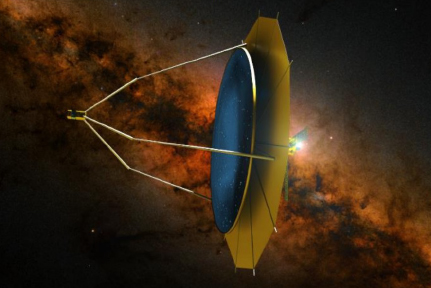
Condor Image
A view created by Condor and computer technologies of extremely faint shells of ionized gas surrounding the dwarf nova Z Camelopardalis. Credit: Condor Team

A new telescope called the “Condor Array Telescope” may open up a new world of the very-low-brightness universe for astrophysicists. Four new papers, published back to back in the Monthly Notices of the Royal Astronomical Society (MNRAS) this month, present the first scientific findings based on observations acquired by Condor. The project is a collaborative led by scientists in the Department of Physics and Astronomy at Stony Brook University and the American Museum of Natural History (AMNH).

According to lead researchers Kenneth M. Lanzetta, Ph.D...

Read More

New AI Technology enables 3D Capture and Editing of Real-Life Objects

New AI technology enables 3D capture and editing of real-life objects
Credit: Simon Fraser University

Imagine performing a sweep around an object with your smartphone and getting a realistic, fully editable 3D model that you can view from any angle. This is fast becoming reality, thanks to advances in AI.

Researchers at Simon Fraser University (SFU) in Canada have unveiled new AI technology for doing exactly this. Soon, rather than merely taking 2D photos, everyday consumers will be able to take 3D captures of real-life objects and edit their shapes and appearance as they wish, just as easily as they would with regular 2D photos today.

In a new paper appearing on the arXiv preprint server and presented at the 2023 Conference on Neural Information Processing Systems (NeurIPS) in New Orleans, Louisiana, researchers demonstrated a new technique called...

Read More

Scientists Propose New Theory that explains Sand Ripples on Mars and on Earth

Photo caption: Waves received in the wind tunnel of Ben Gurion University of the Negev with glass balls with a diameter of 90 microns. Two scales of waves can be seen in the image.
Small waves with a wavelength of centimeters and large waves with a wavelength of about 10 centimeters resemble waves due to the flow of water. The existence of two scales of waves on Mars was discovered by the Mars Curiosity Rover.| Photo: Hezi Yizhaq

Sand ripples are fascinating. They are symmetrical, yet wind — which causes them — is very much not. Furthermore, they can be found on Mars and on Earth. They would be even more fascinating if the same effect found on Mars could be found here on Earth as well. What if one unified theory could explain their formation on two different planets of our solar system?

Read More