To raise new questions, new possibilities, to regard old problems from a new angle, requires creative imagination and marks real advance in science.
~Albert Einstein
Read More
Old Newtonian physics claimed that things have an objective reality separate from our perception of them. Quantum physics, and particularly Heisenberg's Uncertainty Principle, reveal that, as our perception of an object changes, the object itself literally changes.
~Marianne Williamson
Read More
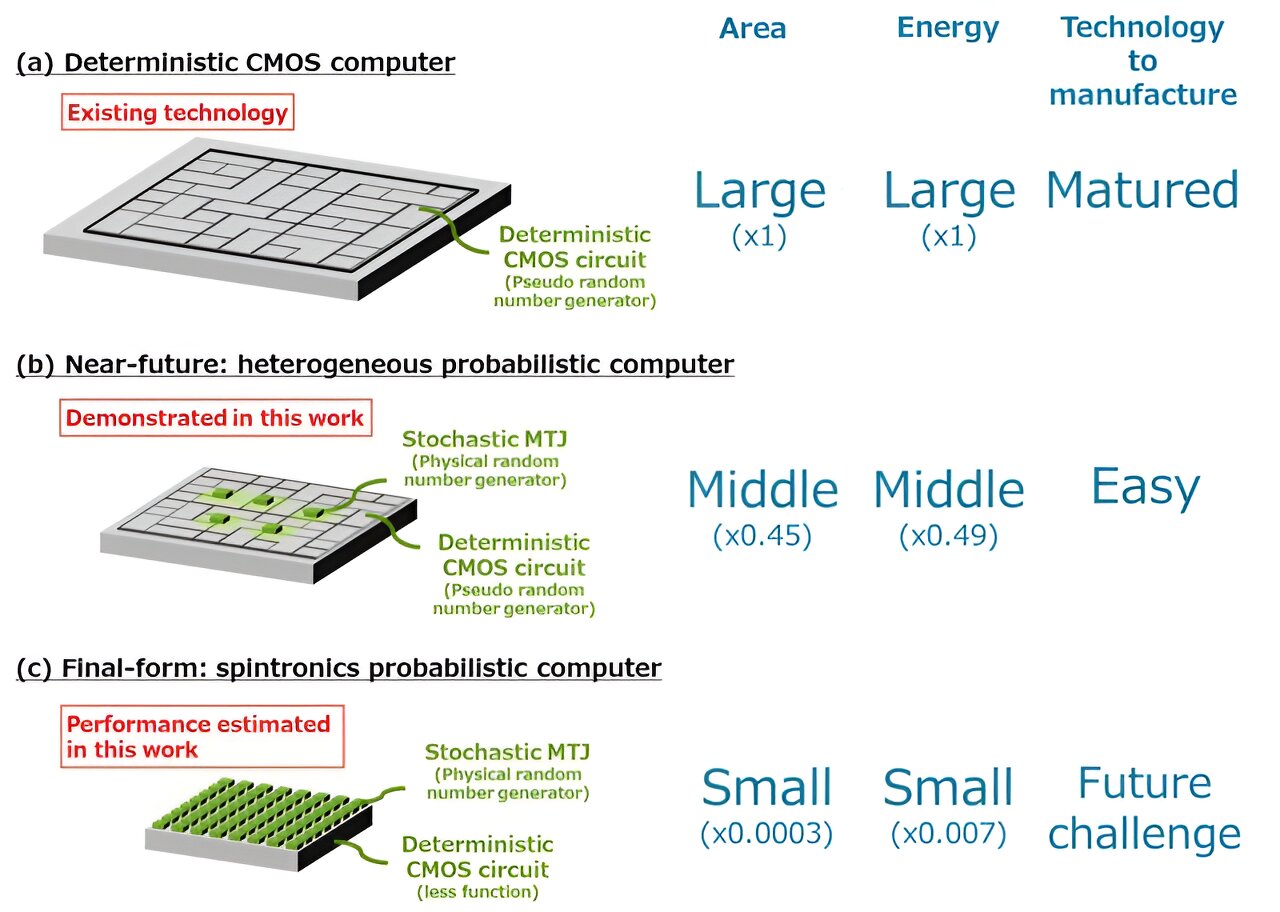
A schematic illustrating the difference in the current deterministic CMOS computer (a), near-future heterogeneous version of the probabilistic computer, and (c) the final form of the probabilistic computer fully based on the spintronics technology. The table on the right side represents the comparison between them in terms of the chip area, energy consumption, and manufacturability. Credit: Shunsuke Fukami and Kerem Camsari
Researchers at Tohoku University and the University of California, Santa Barbara, have unveiled a probabilistic computer prototype. Manufacturable with a near-future technology, the prototype combines a complementary metal-oxide semiconductor (CMOS) circuit with a limited number of stochastic nanomagnets, creating a heterogeneous probabilistic computer.
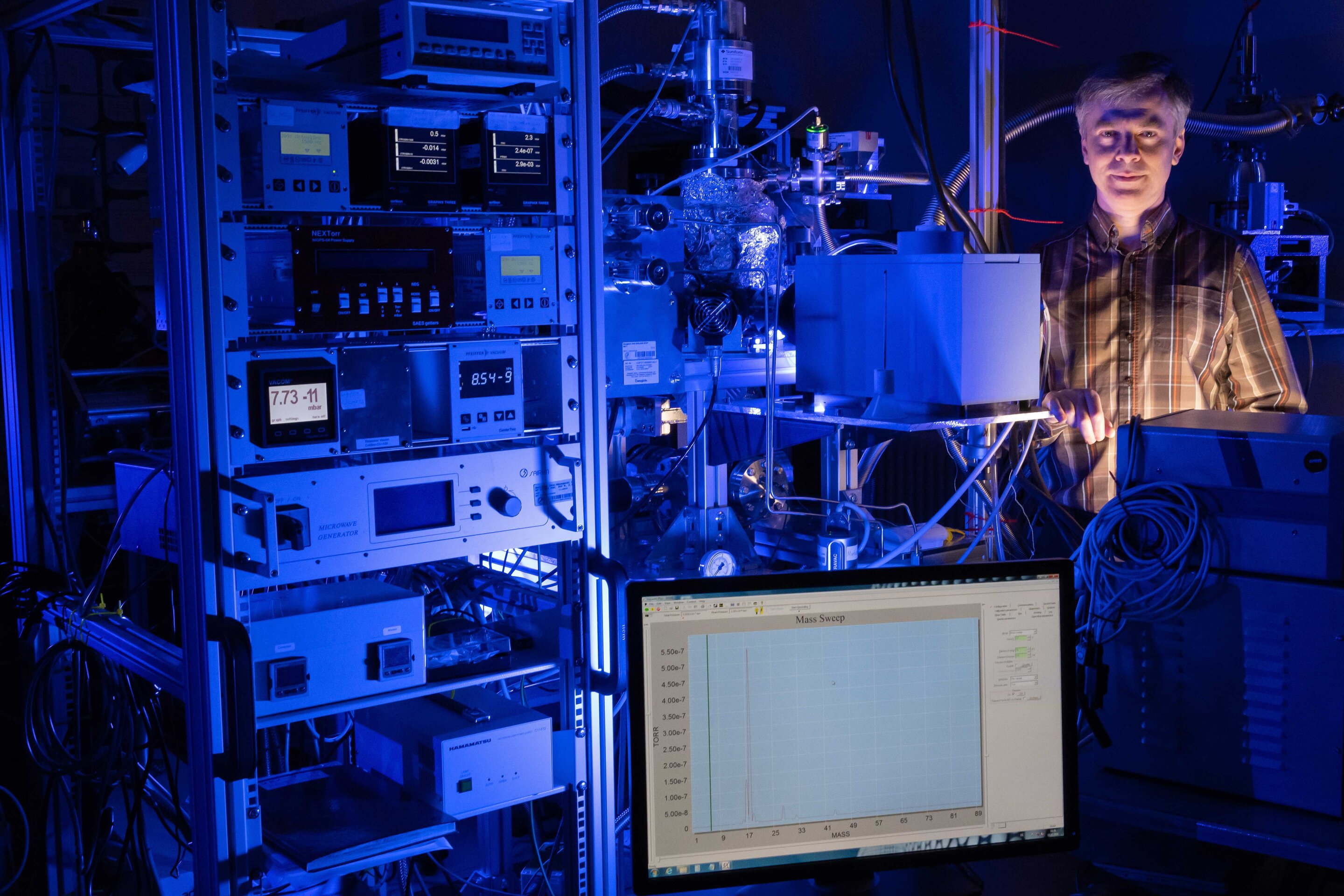
Dr. Serge Krasnokutski, Laboratory Astrophysics and Cluster Physics group at the Max Planck Institute for Astronomy at Friedrich Schiller University Jena, investigates the formation of biomolecules under space conditions with a vacuum chamber. Credit: Jens Meyer / University of Jena
A research team led by Dr. Serge Krasnokutski from the Astrophysics Laboratory at the Max Planck Institute for Astronomy at the University of Jena had already demonstrated that simple peptides can form on cosmic dust particles. However, it was previously assumed that this would not be possible if molecular ice, which covers the dust particle, contains water—which is usually the case.
Now the team, in collaboration with the University of Poitiers, France, has discovered that the presence of water molecu...
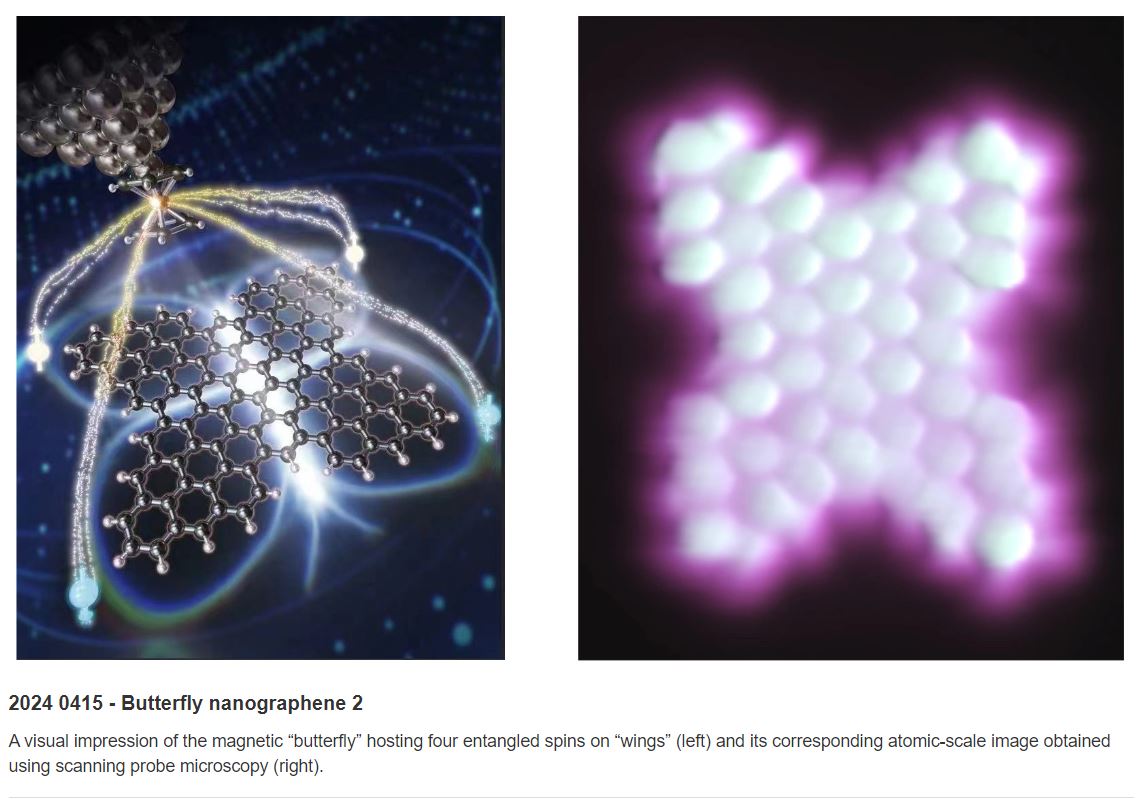
Researchers from the National University of Singapore (NUS) have developed a new design concept for creating next-generation carbon-based quantum materials, in the form of a tiny magnetic nanographene with a unique butterfly-shape hosting highly correlated spins. This new design has the potential to accelerate the advancement of quantum materials which are pivotal for the development of sophisticated quantum computing technologies poised to revolutionize information processing and high density storage capabilities.
The team was led by Associate Professor Lu Jiong from the NUS Department of Chemistry and Institute for Functional Intelligent Materials, together with Professor Wu Jishan who is also from the NUS Department of Chemistry, and international collaborators...
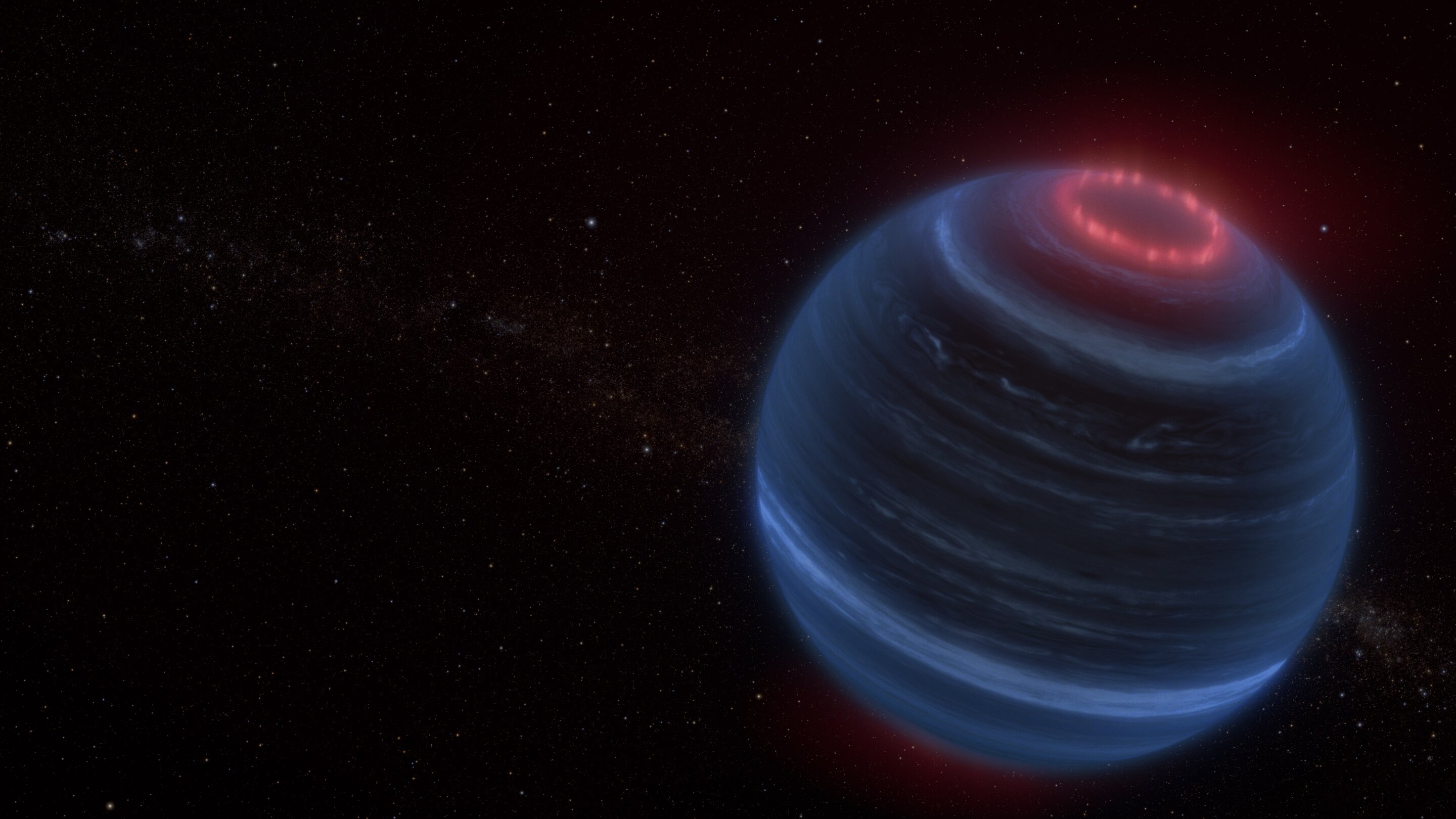
Using new observations from the James Webb Space Telescope (JWST), astronomers have discovered methane emission on a brown dwarf, an unexpected finding for such a cold and isolated world. Published in the journal Nature, the findings suggest that this brown dwarf might generate aurorae similar to those seen on our own planet as well as on Jupiter and Saturn.
More massive than planets but lighter than stars, brown dwarfs are ubiquitous in our solar neighborhood, with thousands identified. Last year, Jackie Faherty, a senior research scientist and senior education manager at the American Museum of Natural History, led a team of researchers who were awarded time on JWST to investigate 12 brown dwarfs.











Recent Comments