

Galaxies start life with their stars rotating in an orderly pattern but in some the motion of stars is more ...
Read More


Until we recognize the essential role of biology, our attempts to truly unify the universe will remain a train to nowhere. ~Robert Lanza Read More

Good health is not something we can buy. However, it can be an extremely valuable savings account. ~Anne Wilson Schaef Read More

The only way forward, if we are going to improve the quality of the environment, is to get everybody involved. ~Richard Rogers Read More

To raise new questions, new possibilities, to regard old problems from a new angle, requires creative imagination and marks real advance in science. ~Albert Einstein Read More

Old Newtonian physics claimed that things have an objective reality separate from our perception of them. Quantum physics, and particularly Heisenberg's Uncertainty Principle, reveal that, as our perception of an object changes, the object itself literally changes. ~Marianne Williamson Read More

Astronomy compels the soul to look upwards and leads us from this world to another. ~ Read More
April 3, 2024,
 Astronomy/Space
Galaxies start life with their stars rotating in an orderly pattern but in some the motion of stars is more ...
Read More
April 2, 2024,
Physics, Technology/Electronics
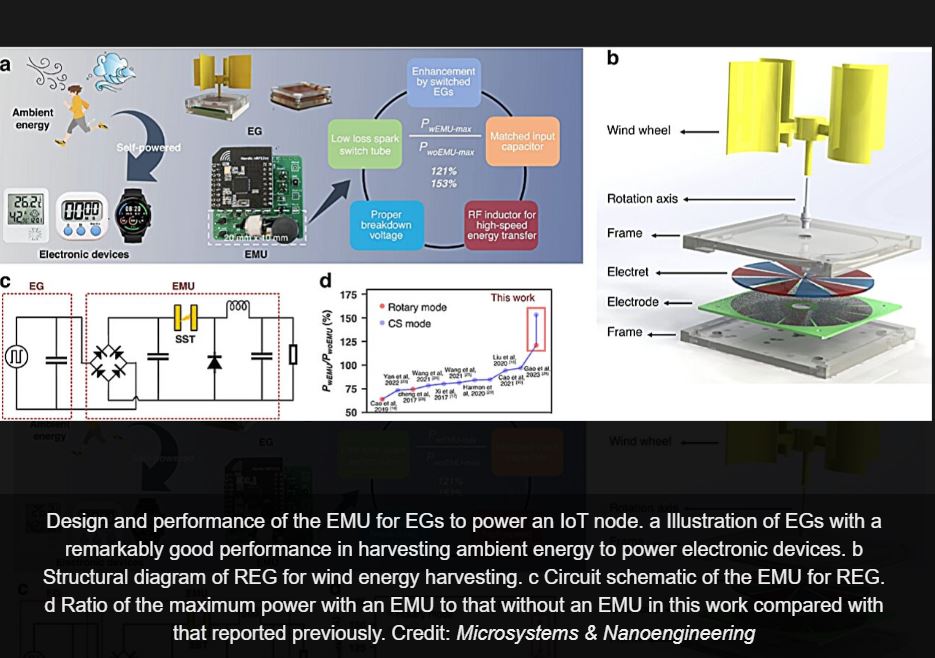
Researchers have developed a high-performance energy management unit (EMU) that significantly boosts the efficiency of electrostatic generators for Internet of Things (IoT) applications. This breakthrough addresses the challenge of high impedance mismatch between electrostatic generators and electronic devices, unlocking new possibilities for ambient energy harvesting.
Electrostatic generators have emerged as a promising solution for powering low-power devices in Internet of Things (IoT) networks, utilizing energy from environmental sources such as wind and human motion. Despite their potential, the effectiveness of these generators has been hampered by an impedance mismatch when connected to electronic devices, leading to low energy utilization efficiency.
A study published in ...
Read More
April 2, 2024,
Astronomy/Space
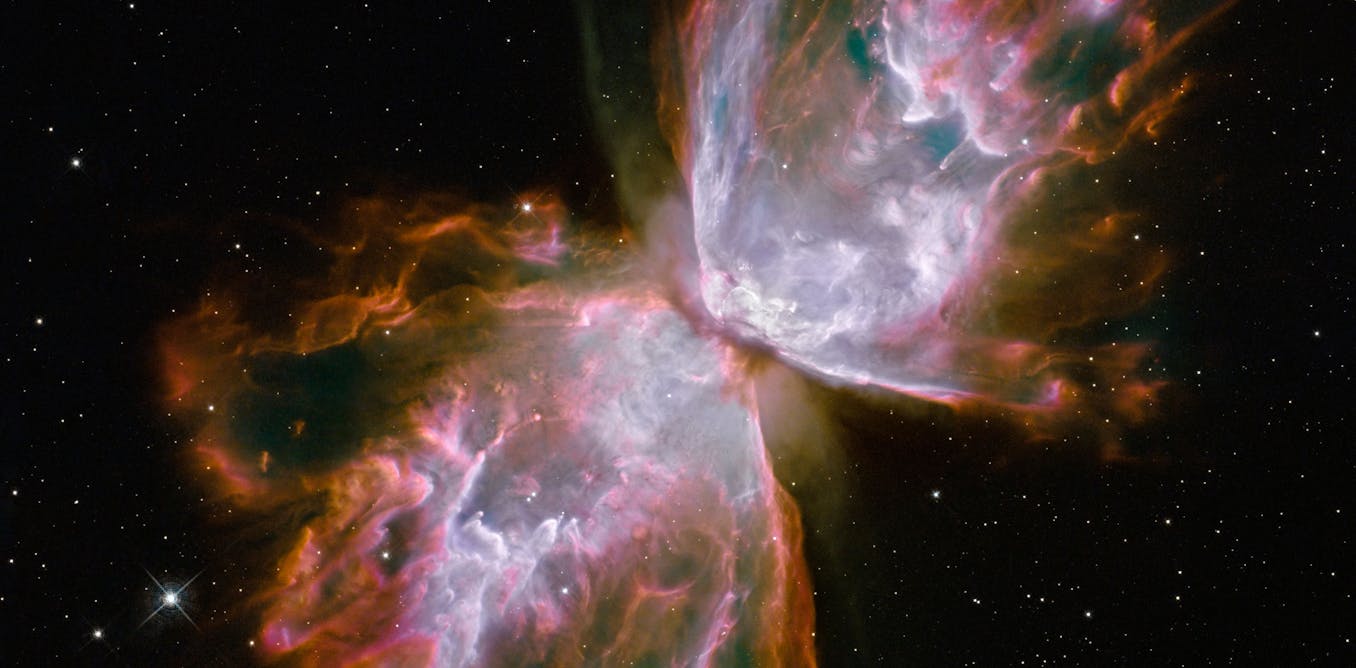
Stars like the sun are remarkably constant. They vary in brightness by only 0.1% over years and decades, thanks to the fusion of hydrogen into helium that powers them. This process will keep the sun shining steadily for about 5 billion more years, but when stars exhaust their nuclear fuel, their deaths can lead to pyrotechnics.
The sun will eventually die by growing large and then condensing into a type of star called a white dwarf. But stars more than eight times more massive than the sun die violently in an explosion called a supernova.
Supernovae happen across the Milky Way only a few times a century, and these violent explosions are usually remote enough that people here on Earth don’t n...
Read More
April 2, 2024,
Health/Medical, Biology/Biotechnology

Recent Comments