Largest ever radio sky survey maps the universe in unprecedented detail

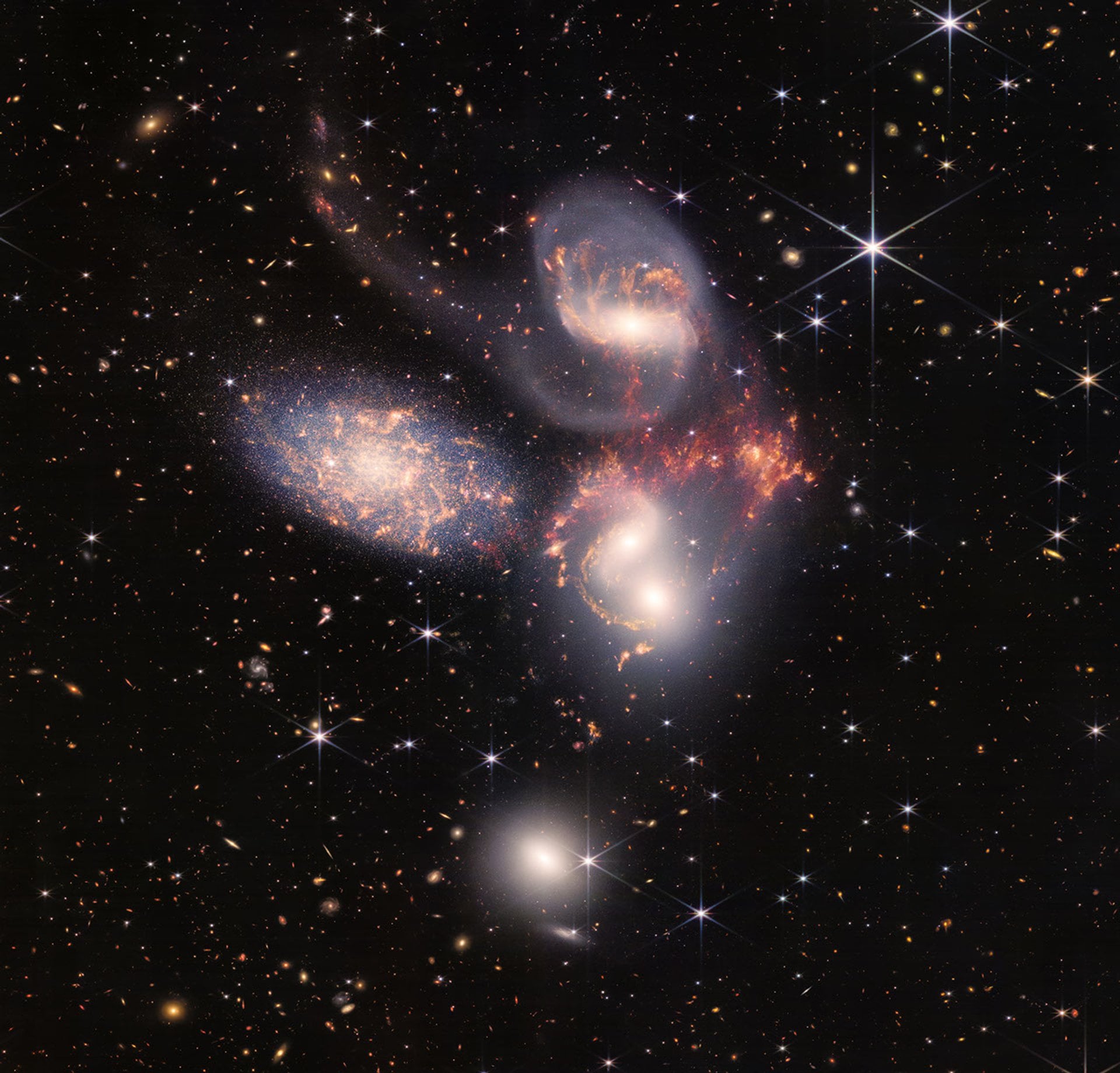
An international collaboration using the Low Frequency Array (LOFAR) has published an exceptionally detailed radio sky map, revealing 13.7 million cosmic sources and delivering the most complete census yet of actively growing supermassive black holes. It showcases an extraordinary variety of systems powered by these black holes, whose radio emission can extend for millions of light-years.

The newly released LOFAR Two-meter Sky Survey (LoTSS-DR3) marks a major milestone in radio astronomy and international scientific collaboration. The results will be published in Astronomy & Astrophysics.

By observing the sky at low radio frequencies, the survey reveals a dramatically different view of the universe than that seen at optical wavelengths...

Read More

Scientists find a mechanism showing how exercise protects the brain

Scientists find a mechanism for how exercise protects the brain
Credit: Cell (2026). DOI: 10.1016/j.cell.2026.01.024

Researchers at UC San Francisco have discovered a mechanism that could explain how exercise improves cognition by shoring up the brain’s protective barrier. With age, the network of blood vessels—called the blood–brain barrier—gets leaky, letting harmful compounds enter the brain. This causes inflammation, which is associated with cognitive decline and is seen in conditions like Alzheimer’s disease. The research is published in the journal Cell.

Six years ago, the team identified a brain-rejuvenating enzyme called GPLD1 that mice produced in their livers when they exercised. But they couldn’t understand how it worked, because it cannot get into the brain.

The new study answers that question...

Read More

The Moon is still shrinking and it could trigger more moonquakes

A small mare ridge in Northeast Mare Imbrium taken by the Lunar Reconnaissance Orbiter Camera. Image Credit: NASA/GSFC/Arizona State University

The shrinking Moon is still cracking—and scientists just found where it might quake next. Researchers have created the first worldwide map and detailed study of small mare ridges (SMRs), subtle geological features that signal tectonic activity on the Moon. The findings, published in The Planetary Science Journal, come from scientists at the National Air and Space Museum’s Center for Earth and Planetary Studies and their collaborators.

For the first time, scientists show that these ridges are relatively young and spread widely across the lunar maria, the broad, dark plains visible from Earth...

Read More

Laser-etched glass can store data for for 10,000 years, Microsoft says

Laser-etched glass can store data for millennia, Microsoft says
A written piece of glass (with a copy of Microsoft Flight Simulator map data on it). Credit: Microsoft Research

Thousands of years from now, what will remain of our digital era? The ever-growing vastness of human knowledge is no longer stored in libraries, but on hard drives that struggle to last decades, let alone millennia.

However, information written into glass by lasers could allow data to be preserved for more than 10,000 years, Microsoft announced in a study on Wednesday.

Since 2019, Microsoft’s Silica project has been trying to encode data on glass plates, in a throwback to the early days of photography, when negatives were also stored on glass.

The system uses silica glass, a common material that is resistant to changes in temperature, moisture and electromagnetic int...

Read More