Reinventing Cosmology: New research puts Age of Universe at 26.7 — not 13.7 — billion years

Galaxy

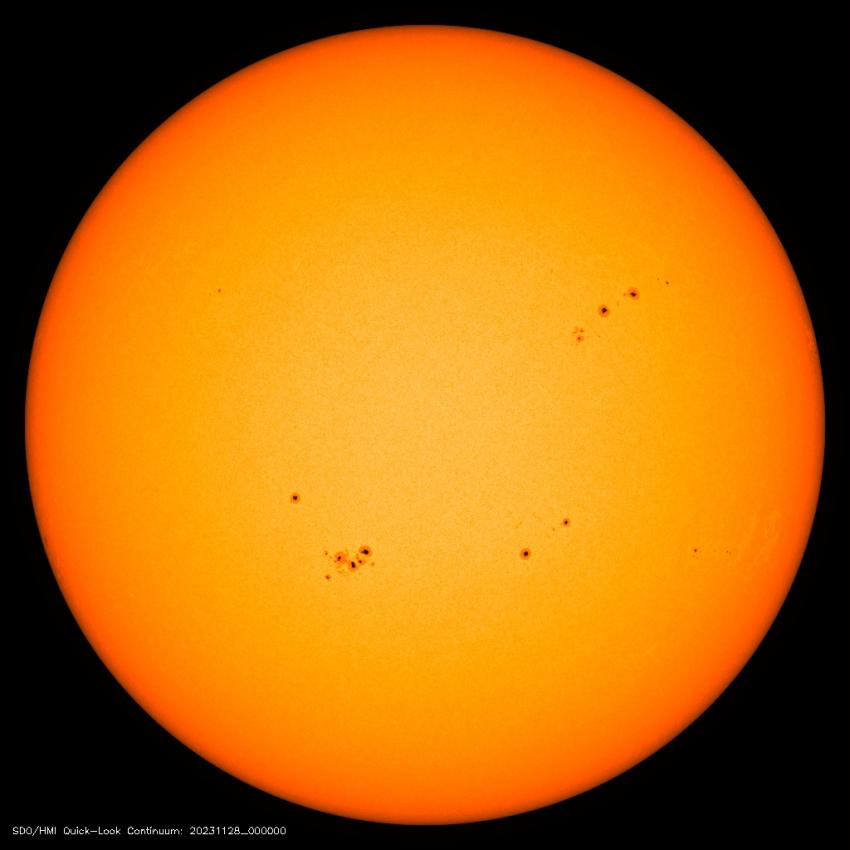
Our universe could be twice as old as current estimates, according to a new study that challenges the dominant cosmological model and sheds new light on the so-called “impossible early galaxy problem.”

“Our newly-devised model stretches the galaxy formation time by a several billion years, making the universe 26.7 billion years old, and not 13.7 as previously estimated,” says author Rajendra Gupta, adjunct professor of physics in the Faculty of Science at the University of Ottawa.

For years, astronomers and physicists have calculated the age of our universe by measuring the time elapsed since the Big Bang and by studying the oldest stars based on the redshift of light coming from distant galaxies...

Read More

A New Technique uses Remote Images to Gauge the Strength of Ancient and Active Rivers Beyond Earth

Radar image of a lake taken from high above Titan's surface shows liquid areas as dark blue and land areas as dark yellow
Caption:Images from the Cassini mission show river networks draining into lakes in Titan’s north polar region.
Credits:Image: NASA/JPL/USGS

Rivers have flowed on two other worlds in the solar system besides Earth: Mars, where dry tracks and craters are all that’s left of ancient rivers and lakes, and Titan, Saturn’s largest moon, where rivers of liquid methane still flow today.

A new technique developed by MIT geologists allows scientists to see how intensely rivers used to flow on Mars, and how they currently flow on Titan. The method uses satellite observations to estimate the rate at which rivers move fluid and sediment downstream.

Applying their new technique, the MIT team calculated how fast and deep rivers were in certain regions on Mars more than 1 billion years ago...

Read More

Researchers discover Neurons that Track and Regulate Blood Sugar Levels

picture of a brain neuron
Learning how certain brain neurons sense and react to variations in blood-sugar levels might lead to better diabetes treatments. Getty Images

New research has discovered neurons within the brain that detect and respond to changes in the level of sugar within the bloodstream.

Understanding how this blood sugar detection system works and how these neurocircuits operate would give researchers and doctors greater insights into how our brains regulate our blood sugar, and perhaps, how to target them therapeutically to treat metabolic diseases like diabetes and obesity, according to the study authors.

The study was published June 22 online in Diabetes.

“We’ve known for a long time that many neurons can detect sugar locally within the brain,” said Dr...

Read More

New Biodegradable Plastics are Compostable in your Backyard

A person working at a lab bench. The person is holding a tray of green powder and is scooping the powder into a metal mold shaped like the UW logo.
Mallory Parker, UW materials science and engineering doctoral student, adds spirulina powder to a UW logo mold. Once this mold goes in the hot-press, it will generate a UW logo-shaped piece of plastic.Mark Stone/University of Washington

We use plastics in almost every aspect of our lives. These materials are cheap to make and incredibly stable. The problem comes when we’re done using something plastic—it can persist in the environment for years. Over time, plastic will break down into smaller fragments, called microplastics, that can pose significant environmental and health concerns.

The best-case solution would be to use bio-based plastics that biodegrade instead, but many of those bioplastics are not designed to degrade in backyard composting conditions...

Read More