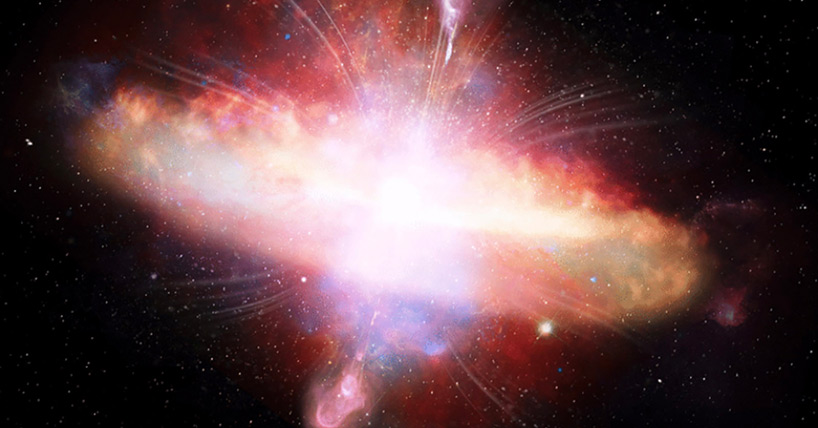
XRISM Spacecraft will Open New Window on the Xray Cosmos

Scientists studied NGC 7319, part of the visual grouping of galaxies called Stephan’s Quintet, using the Medium-Resolution Spectrometer (MRS) in the Mid-Infrared Instrument (MIRI) on NASA’s James Webb Space Telescope. The galaxy contains a supermassive black hole that is actively accreting material. The spectrometer features integral field units (IFUs) – each containing a camera and spectrograph. IFUs provided the Webb team with a collection of images of the galactic core’s spectral features, shown here. Blue-colored regions indicate movement toward the viewer and orange-colored regions represent movement away from the viewer. Powerful radiation and winds from the black hole ionize hot spots of super-heated gas, creating the argon and neon lines...
Read More

Older Adults who play Digital Puzzle Games have the Same Memory Abilities as People in their 20s, a new study has shown.

Age plays a part in the type of digital games that are best to stimulate memory

The study, from the University of York, also found that adults aged 60 and over who play digital puzzle games had a greater ability to ignore irrelevant distractions, but older adults who played strategy games did not show the same improvements in memory or concentration.

It is known that as humans age, their mental abilities tend to decrease, particularly the ability to remember a number of things at a single time — known as working memory. Working memory is thought to peak between the ages of 20 and 30 before slowly declining as a person gets older.

Previous research, however, has shown that the way we hold information in the brain changes as we get older, and so the York team looked at whether the ...

Read More

A new Bio-inspired Solar Leaf design with Increased Harvesting Eficiency

Concept of a PV-branch of PV-leaves
Concept of a PV-branch of PV-leaves. Gan Huang

New research suggests a new solar energy design, inspired by nature, may pave the way for future renewable energy technologies.

Photovoltaic solar energy is obtained by converting sunshine into electricity—and researchers from Imperial have developed a new leaf-like design with increased efficiency.

The new photovoltaic leaf (PV-leaf) technology uses low-cost materials and could inspire the next generation of renewable energy technologies.

A series of experiments has demonstrated that a PV-leaf can generate over 10% more electricity compared to conventional solar panels, which lose up to 70% of the incoming solar energy to the environment...

Read More

Ryugu Asteroid Origins in the Solar Nebula Decoded by Carbonates

Japan’s Aerospace Exploration Agency sent the Hayabusa2 spacecraft to 162173 Ryugu in 2019, an asteroid in orbit near Earth that is comprised of rocky fragments originating from a larger parent body. Multiple rovers brought samples from the asteroid’s surface back down to Earth for scientists to study.

The samples are indicative of chemically primitive meteorites, similar to Ivuna-type chondrites, and contain particular chemical compounds that suggest the presence of water. In particular, alterations of the asteroid’s surface by water on the parent body, at estimated temperatures up to 150°C, produced secondary minerals (including phyllosilicates, carbonates, sulfides and oxides) and the researchers aimed to understand the timescale and conditions over which these changes occurred...

Read More