

Credits: NASA, ESA, CSA, M. Matsuura (Cardiff University), R. Arendt (NASA’s Goddard Spaceflight Center & University of Maryland, Baltimore County), C...



Until we recognize the essential role of biology, our attempts to truly unify the universe will remain a train to nowhere. ~Robert Lanza Read More

Good health is not something we can buy. However, it can be an extremely valuable savings account. ~Anne Wilson Schaef Read More

The only way forward, if we are going to improve the quality of the environment, is to get everybody involved. ~Richard Rogers Read More

To raise new questions, new possibilities, to regard old problems from a new angle, requires creative imagination and marks real advance in science. ~Albert Einstein Read More

Old Newtonian physics claimed that things have an objective reality separate from our perception of them. Quantum physics, and particularly Heisenberg's Uncertainty Principle, reveal that, as our perception of an object changes, the object itself literally changes. ~Marianne Williamson Read More

Astronomy compels the soul to look upwards and leads us from this world to another. ~ Read More
September 5, 2023,
 Astronomy/Space
September 4, 2023,
Health/Medical, Biology/Biotechnology
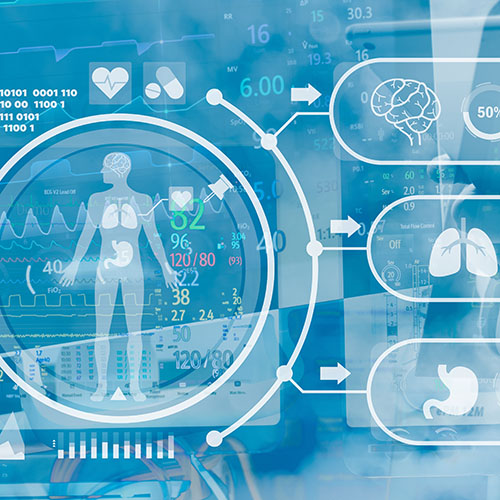
A novel study from the University of South Australia has identified a range of metabolic biomarkers that could help predict the risk of cancer.
Deploying machine learning to examine data from 459,169 participants in the UK Biobank, the study identified 84 features that could signal increased cancer risk.
Several markers also signalled chronic kidney or liver disease, highlighting the significance of exploring the underlying pathogenic mechanisms of these diseases for their potential connections with cancer.
The study, “Hypothesis-free discovery of novel cancer predictors using machine learning,” was conducted by UniSA researchers: Dr Iqbal Madakkatel, Dr Amanda Lumsden, Dr Anwar Mulugeta, and Professor Elina Hyppönen, with University of Adelaide’s Professor Ian Olver.
“We...
Read More
September 4, 2023,
Physics, Technology/Electronics
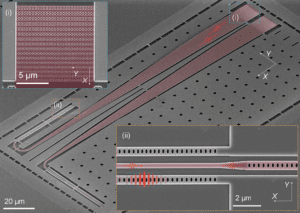
A new atomic device sends high-fidelity quantum information over fiber optic networks. Researchers have a new way to connect quantum devices over long distances, a necessary step toward allowing the technology to play a role in future communications systems.
While today’s classical data signals can get amplified across a city or an ocean, quantum signals cannot. They must be repeated in intervals — that is, stopped, copied and passed on by specialized machines called quantum repeaters...
Read More
September 4, 2023,
Astronomy/Space
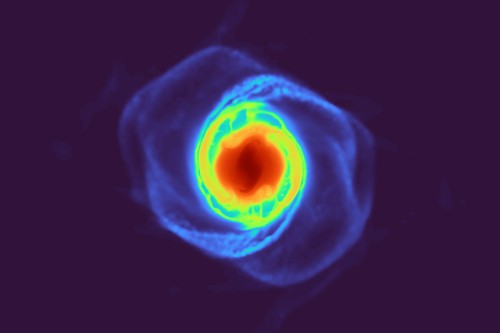
A Neptune-sized planet denser than steel has been discovered by an international team of astronomers, who believe its composition could be the result of a giant planetary clash. TOI-1853b’s mass is almost twice that of any other similar-sized planet known and its density is incredibly high, meaning that it is made up of a larger fraction of rock than would typically be expected at that scale.
In the study, published August 30 in Nature, scientists led by Luca Naponiello of University of Rome Tor Vergata and the University of Bristol suggest that this is the result of planetary collisions. These huge impacts would have removed some of the lighter atmosphere and water leaving a multitude of rock behind.
Senior Research Associate and co author Dr...
Read More
Recent Comments