








- Black hole jets reach far beyond galaxies’ visible edges, potentially deciding their fate
- Kidney disease, heart failure or death risk climbs to 55% 10 years after type 2 diabetes diagnosis
- James Webb reveals why planet formation is a race against time
- New form of flexible boron is 10 million times more electrically conductive
Blood Factor Can Turn Back Time in the Aging Brain
August 17, 2023,
 Health/Medical, Biology/Biotechnology
Researchers fabricate Phase-Heterojunction All-Inorganic Perovskite Solar Cells with an Efficiency Above 21.5%
August 17, 2023,
Physics, Technology/Electronics, Chemistry/Nanotechnology
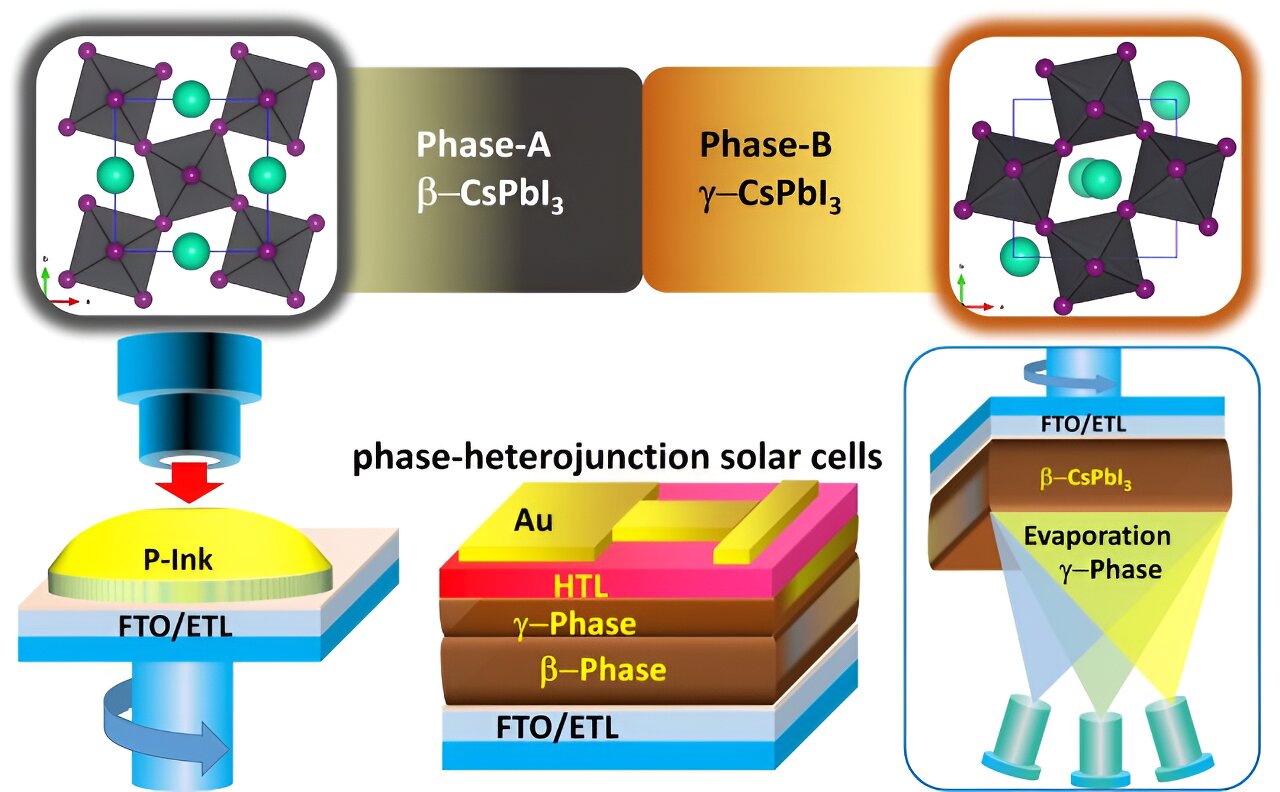
Solar technologies have become increasingly advanced over the years, with the discovery of new photovoltaic materials and designs. While solar cells based on a mixture of organic and inorganic halide perovskite materials have been the topic of numerous research studies and achieved promising performances, these cells are often difficult to fabricate on a large-scale.
Researchers at Chonnam University in South Korea recently introduced an alternative solar cell design fully based on inorganic perovskites. Their solar cells, introduced in Nature Energy, could be easier to fabricate on a large-scale, while nonetheless achieving promising power conversion efficiencies (PCEs).
“...
Read MoreXRISM Spacecraft will Open New Window on the Xray Cosmos
August 17, 2023,
Astronomy/Space

Older Adults who play Digital Puzzle Games have the Same Memory Abilities as People in their 20s, a new study has shown.
August 16, 2023,
Health/Medical, Biology/Biotechnology

The study, from the University of York, also found that adults aged 60 and over who play digital puzzle games had a greater ability to ignore irrelevant distractions, but older adults who played strategy games did not show the same improvements in memory or concentration.
It is known that as humans age, their mental abilities tend to decrease, particularly the ability to remember a number of things at a single time — known as working memory. Working memory is thought to peak between the ages of 20 and 30 before slowly declining as a person gets older.
Previous research, however, has shown that the way we hold information in the brain changes as we get older, and so the York team looked at whether the ...
Read More
Recent Comments