T cells can Activate Themselves to Fight Tumors

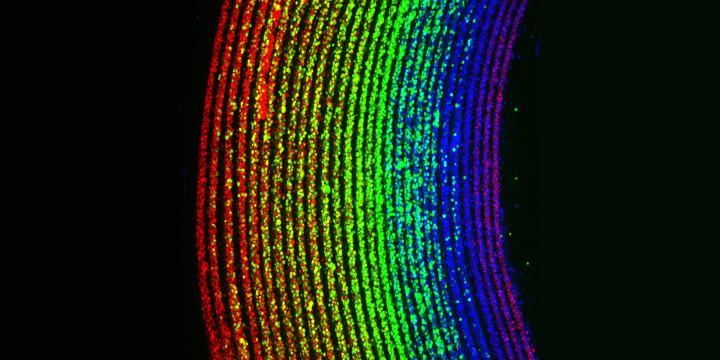
Immunofluorescence imaging captures an auto-signaling T cell
Immunofluorescence imaging captures an auto-signaling T cell. Photo credit: NIAID.

When you need a bit of motivation, it often has to come from within. New research suggests cancer-fighting immune cells have found a way to do just that.

Scientists at University of California San Diego have discovered a property of T cells that could inspire new anti-tumor therapeutics. Through a previously undescribed form of cell auto-signaling, T cells were shown to activate themselves in peripheral tissues, fueling their ability to attack tumors.

The study, published in Immunity, was led by study first author and postdoctoral fellow Yunlong Zhao, Ph.D., and co-senior authors Enfu Hui, Ph.D., professor in the School of Biological Sciences at UC San Diego and Jack D. Bui, MD, Ph.D...

Read More

The Influence of AI on Trust in Human Interaction

Professorerna Jonas Ivarsson och Oskar Lindwall
Jonas Ivarsson and Oskar Lindwall

As AI becomes increasingly realistic, our trust in those with whom we communicate may be compromised. Researchers at the University of Gothenburg have examined how advanced AI systems impact our trust in the individuals we interact with.

In one scenario, a would-be scammer, believing he is calling an elderly man, is instead connected to a computer system that communicates through pre-recorded loops. The scammer spends considerable time attempting the fraud, patiently listening to the “man’s” somewhat confusing and repetitive stories. Oskar Lindwall, a professor of communication at the University of Gothenburg, observes that it often takes a long time for people to realize they are interacting with a technical system.

He has, in collaboration with...

Read More

Thirsty on the Moon? Just throw some Regolith in the Microwave

A crucible that could be used to extract water from Lunar regolith. Credit: Cole, et al

No matter where we go in the universe, we’re going to need water. Thus far, human missions to Earth orbit and the moon have taken water with them. But while that works for short missions, it isn’t practical in the long term. Water is heavy, and it would take far too much fuel to bring sufficient water to sustain long-term bases on the moon or Mars. So we’ll have to use the water we can extract locally.

Fortunately, water is a common molecule in the universe. Even the moon has plenty of water to sustain a lunar colony. The only real challenge is how to extract it. As a recent study published in Acta Astronautica shows, that might be as easy as popping things into a microwave oven.

Although wate...

Read More

New Hope for Vision Regeneration by Reactivating Dormant Cells in the Retina

New hope for vision regeneration by reactivating dormant cells in the retina
Ikzf1/4 expression induces morphological reprogramming of MG ex vivo. Credit: Proceedings of the National Academy of Sciences (2023). DOI: 10.1073/pnas.2122168120

There’s new hope for potentially restoring vision in patients suffering from degenerative retinal disease, thanks to work by researchers at Université de Montréal.

Published this week in Proceedings of the National Academy of Sciences, the research was led by UdeM medical professor Michel Cayouette, director of cellular neurobiology research at the UdeM-affiliated Montreal Clinical Research Institute.

His research team discovered that cells that lie dormant in the retina (glial cells) can be induced to tansform into cells sharing some properties with cone photoreceptors, which allow people to do things like perceive c...

Read More