To raise new questions, new possibilities, to regard old problems from a new angle, requires creative imagination and marks real advance in science.
~Albert Einstein
Read More
Old Newtonian physics claimed that things have an objective reality separate from our perception of them. Quantum physics, and particularly Heisenberg's Uncertainty Principle, reveal that, as our perception of an object changes, the object itself literally changes.
~Marianne Williamson
Read More
This artist’s concept portrays the star PDS 70 and its inner protoplanetary disk. New measurements by NASA’s James Webb Space Telescope have detected water vapor at distances of less than 100 million miles from the star – the region where rocky, terrestrial planets may be forming. This is the first detection of water in the terrestrial region of a disk already known to host two or more protoplanets, one of which is shown at upper right. Credits: NASA, ESA, CSA, J. Olmsted (STScI)
Water is essential for life as we know it. However, scientists debate how it reached the Earth and whether the same processes could seed rocky exoplanets orbiting distant stars. New insights may come from the planetary system PDS 70, located 370 light-years away...
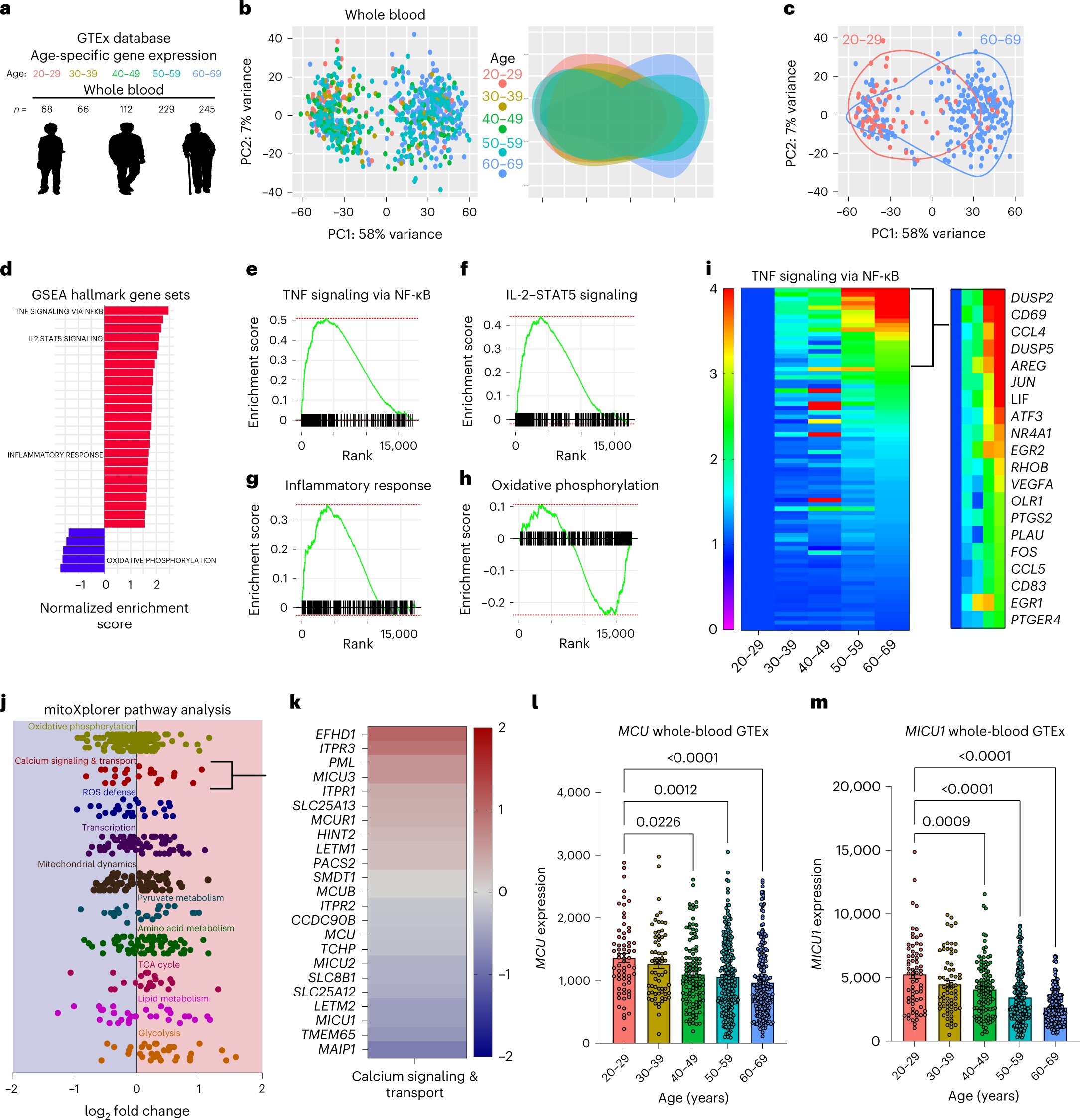
Age-related changes in whole-blood gene expression are associated with increased inflammatory gene transcription and decreased expression of genes encoding mitochondrial Ca2+ transport. Credit: Nature Aging (2023). DOI: 10.1038/s43587-023-00436-8
University of Virginia School of Medicine researchers have discovered a key driver of chronic inflammation that accelerates aging, a finding that could lead to longer, healthier lives and the possible prevention of age-related conditions such as deadly heart disease and devastating brain disorders.
The harmful inflammation is driven by improper calcium signaling in the mitochondria of certain immune cells, researchers found. Mitochondria are the power generators in all cells, and they rely heavily on calcium signaling.
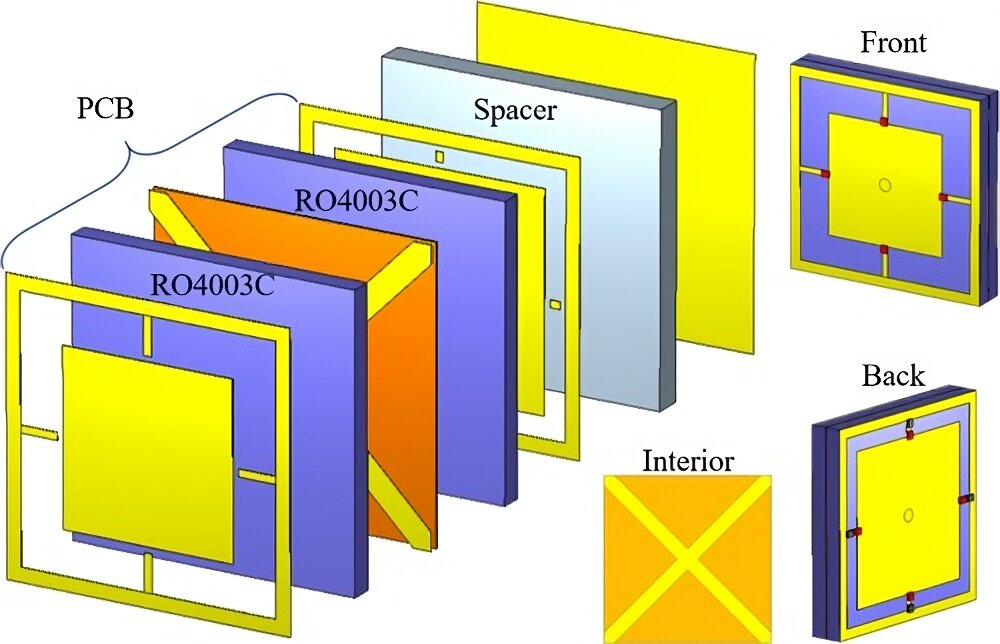
Dual-resonance unit cell with three copper layers on a printed circuit board and a backplane. The front and back of the unit cell are also shown, which, respectively, host a varactor and series varactor-resistor pair. Credit: Physical Review Applied (2023). DOI: 10.1103/PhysRevApplied.20.014004
Cities can be obstacle courses for communications signals. A radio signal must travel from a cell phone to a router to a cell tower, and onward to its recipient—all while bouncing between walls, buildings and other structures. When it hits an obstacle, the radio wave gets scattered, diminishing the signal. This in turn reduces the bandwidth. At the same time, the signal must compete with the bandwidth needs of numerous other devices in the area...
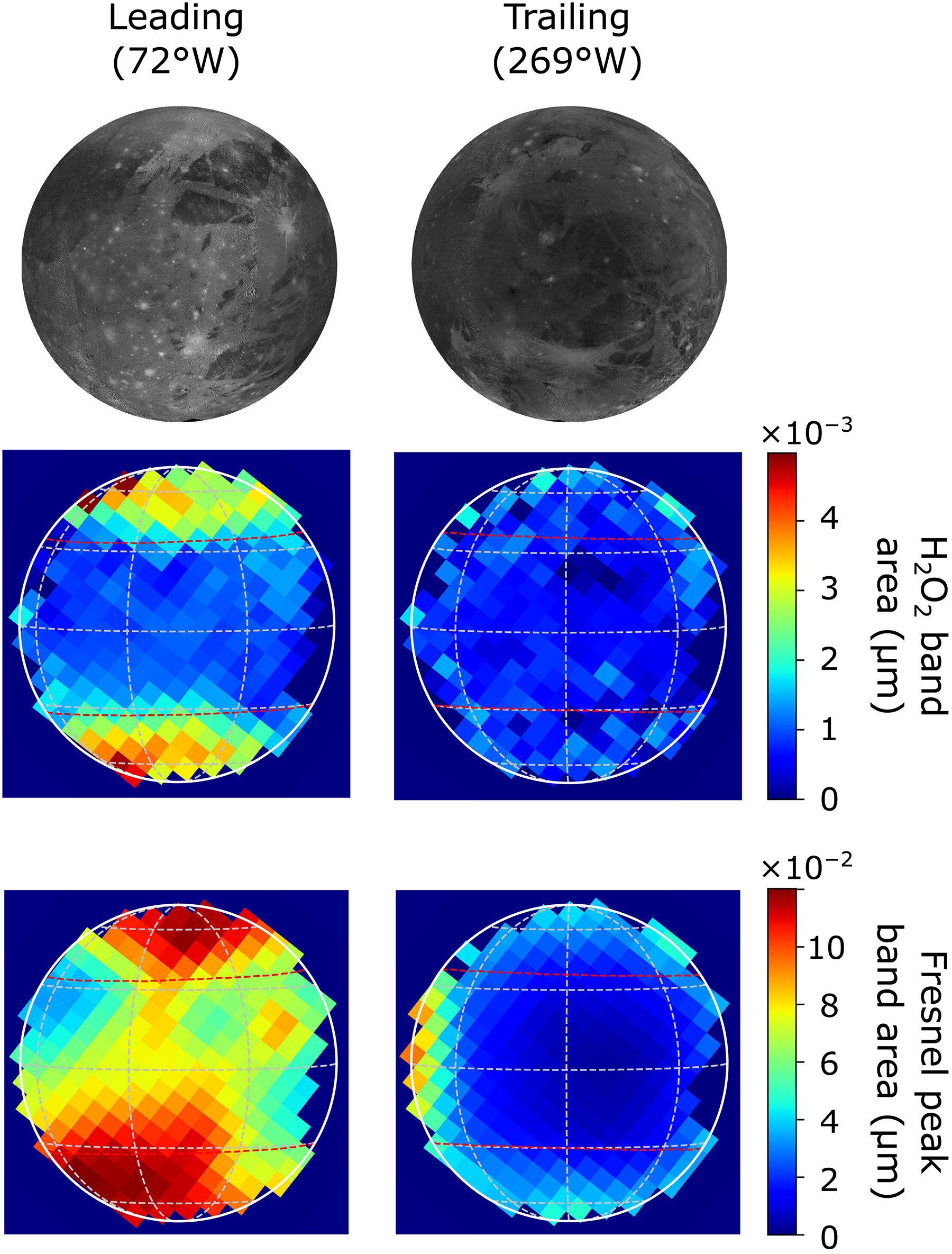
Maps of Ganymede’s 3.5 μm H2O2 absorption compared to those of the 3.1 μm Fresnel peaks of water ice and corresponding projections of the U.S. Geological Survey Voyager–Galileo imaging mosaic. H2O2 appears constrained to the upper latitudes, particularly on the leading hemisphere, which exhibits sharp boundaries at approximately ±30° to 35° latitude. These boundaries are roughly coincident with the onset of Ganymede’s polar frost caps and with the latitudes at which most of the impinging Jovian magnetospheric particles can access the surface. Maps of the Fresnel reflection peak of water ice, which generally track the distribution of ice deduced from shorter-wavelength water bands, also show the areas of greatest H2O2 on the leading hemisphere to be enriched in water ice...Read More











Recent Comments