JWST confirms Giant Planet Atmospheres Vary Widely

An international team of astronomers has found the atmospheric compositions of giant planets out in the galaxy do not fit our own solar system trend.

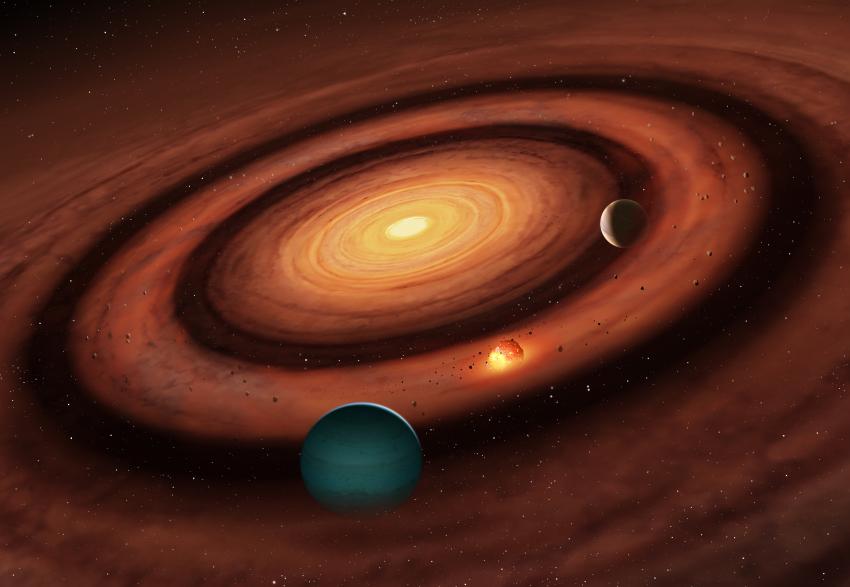
Using NASA’s James Webb Space Telescope (JWST), the researchers discovered that the atmosphere of exoplanet HD149026b, a ‘hot Jupiter’ orbiting a star comparable to our sun, is super-abundant in the heavier elements carbon and oxygen — far above what scientists would expect for a planet of its mass.

These findings, published in “High atmospheric metal enrichment for a Saturn-mass planet” in Nature on March 27, provide insight into planet formation.

“It appears that every giant planet is different, and we’re starting to see those differences thanks to JWST,” said Jonathan Lunine, professor in the physical sciences at Cornell Univ...

Read More

A Plant-based Compound that Inhibits Reactivation of HIV viral Reservoir, giving the Immune System a break

Researchers identify a plant-based compound that inhibits reactivation of the HIV viral reservoir, giving the immune system a br
Overview of HIV inhibitor screening strategy and identification of (–)-hopeaphenol. (A) Representative flow cytometry examples of HIV-GFP reporter expression in unstimulated live J-Lat 9.2 cells treated with 0.1% DMSO control (left), live cells stimulated to express HIV-GFP by 0.1 μg/mL of the control latency-reversing agent PMA (center), and suppression of PMA-induced virus expression in live cells by 10 μM hopeaphenol (right); (B) chemical structure of (–)-hopeaphenol; (C) effects of hopeaphenol on PMA-induced HIV production in J-Lat 9.2 cells. Blue dotted line denotes half-maximal inhibition. In panel C, results denote the mean ± SD from three independent experiments. Credit: Antimicrobial Agents and Chemotherapy (2023). DOI: 10.1128/aac.01600-22

As of 2022, approximately...

Read More

Researchers achieve the First Silicon Integrated ECRAM for a Practical AI Accelerator

Illinois researchers achieve the first silicon integrated ECRAM for a practical AI accelerator
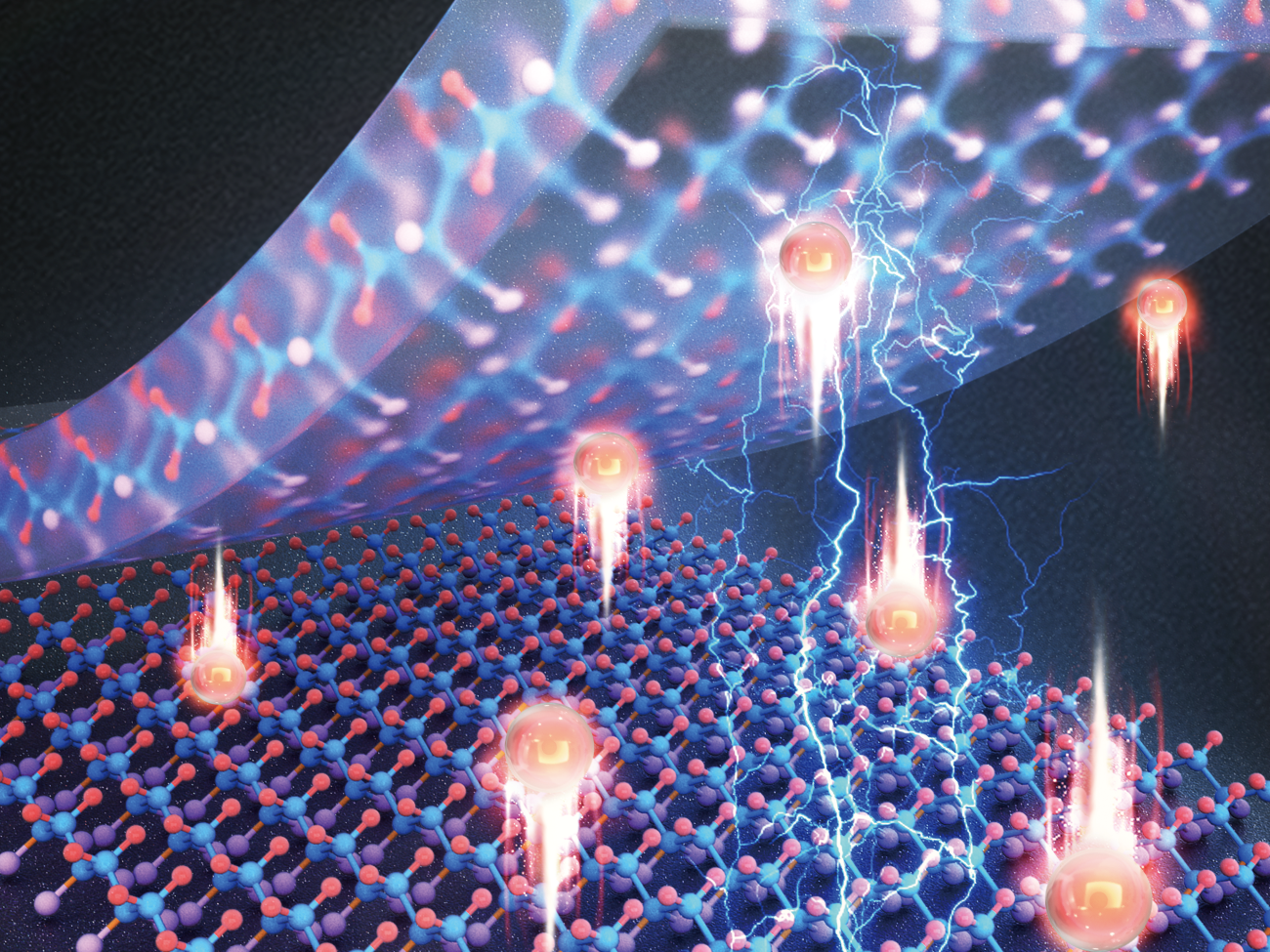
ECRAM array. Credit: The Grainger College of Engineering at University of Illinois Urbana-Champaign

The transformative changes brought by deep learning and artificial intelligence are accompanied by immense costs. For example, OpenAI’s ChatGPT algorithm costs at least $100,000 every day to operate. This could be reduced with accelerators, or computer hardware designed to efficiently perform the specific operations of deep learning. However, such a device is only viable if it can be integrated with mainstream silicon-based computing hardware on the material level.

This was preventing the implementation of one highly promising deep learning accelerator—arrays of electrochemical random-access memory, or ECRAM—until a research team at the University of Illinois Urbana-Champaign achieved...

Read More

For the first time, astronomers have linked a mysterious Fast Radio Burst with Gravitational Waves

For the first time, astronomers have linked a mysterious fast radio burst with gravitational waves
Credit: ASKAP, CSIRO

We have just published evidence in Nature Astronomy for what might be producing mysterious bursts of radio waves coming from distant galaxies, known as fast radio bursts or FRBs.

Two colliding neutron stars—each the super-dense core of an exploded star—produced a burst of gravitational waves when they merged into a “supramassive” neutron star. We found that two and a half hours later they produced an FRB when the neutron star collapsed into a black hole.

Or so we think. The key piece of evidence that would confirm or refute our theory—an optical or gamma-ray flash coming from the direction of the fast radio burst—vanished almost four years ago. In a few months, we might get another chance to find out if we are correct.

Brief and powerful
FRBs are in...

Read More