Our Galaxy’s Black Hole Not as Sleepy as thought

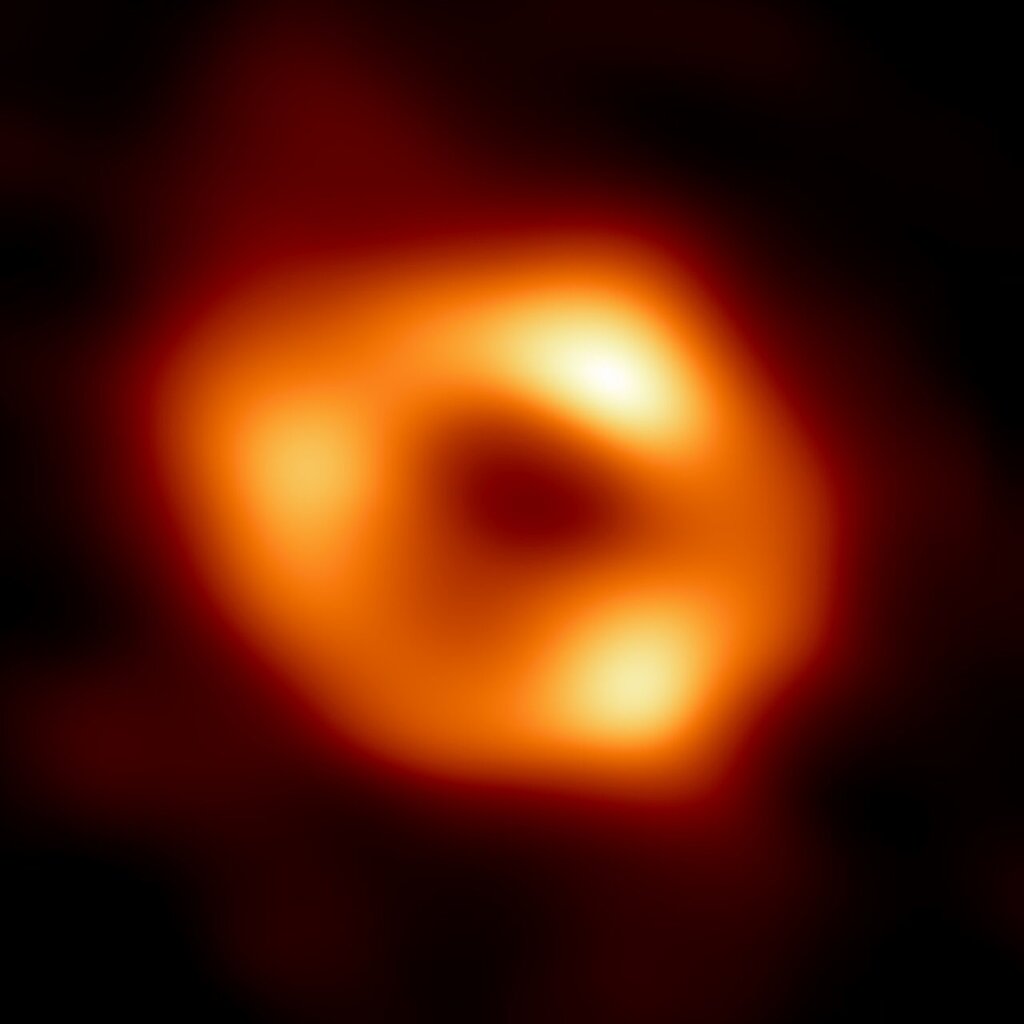
The first ever image of Sagittarius A*, the supermassive black hole that sit at the centre of the Milky Way galaxy
The first ever image of Sagittarius A*, the supermassive black hole that sit at the centre of the Milky Way galaxy.

The supermassive black hole lurking at the center of our Milky Way galaxy is not as dormant as had been thought, a new study shows.

The slumbering giant woke up around 200 years ago to gobble up some nearby cosmic objects before going back to sleep, according to the study published in the journal Nature on Wednesday.

NASA’s IXPE space observatory spotted an Xray echo of this powerful resurgence of activity, the researchers said.

The supermassive black hole Sagittarius A—abbreviated to Sgr A—is four million times more massive than the Sun. It sits 27,000 light years from Earth at the center of the Milky Way’s spiral.

Last year astronomers revealed the first...

Read More

Helping ‘Good’ Gut Bacteria and Clearing out the ‘Bad’ – all in one treatment

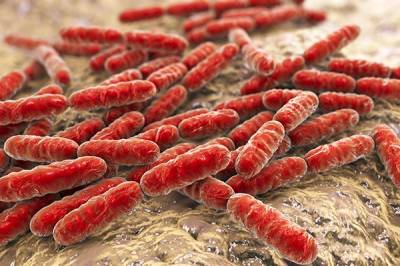
An illustration of several rod-shaped bacteria.
Probiotic bacteria, like those illustrated here, could one day be delivered to the body on spherical microgels.
Kateryna Kon/Shutterstock.com

Probiotics can help maintain a healthy gut microbiome or restore populations of “good bacteria” after a heavy course of antibiotics. But now, they could also be used as an effective treatment strategy for certain intestinal diseases, such as Crohn’s disease. Researchers reporting in ACS Central Science have developed a microgel delivery system for probiotics that keeps “good” bacteria safe while actively clearing out “bad” ones. In mice, the system treated intestinal inflammation without side effects.

In the digestive system, there’s a delicate balance of bacterial populations...

Read More

AI that uses Sketches to Detect Objects within an Image could Boost Tumor Detection, and Search for Rare Bird Species

Flock of birds - pixabay source

Teaching machine learning tools to detect specific objects in a specific image and discount others is a “game-changer” that could lead to advancements in cancer detection, according to leading researchers from the University of Surrey.

Surrey is set to present its unique sketch-based object detection tool at this year’s Computer Vision, Pattern, and Recognition Conference (CVPR). The tool allows the user to sketch an object, which the AI will use as a basis to search within an image to find something that matches the sketch — while discounting more general options.

Professor Yi-Zhe Song, leads this research at the University of Surrey’s Institute for People-Centred AI. He commented:

“An artist’s sketch is full of individual cues that words cannot convey concisely, reiterating...

Read More

Astronomers explore the Properties of Ultra-Diffuse Galaxy UGC 9050-Dw1

Study explores the properties of ultra-diffuse galaxy UGC 9050-Dw1
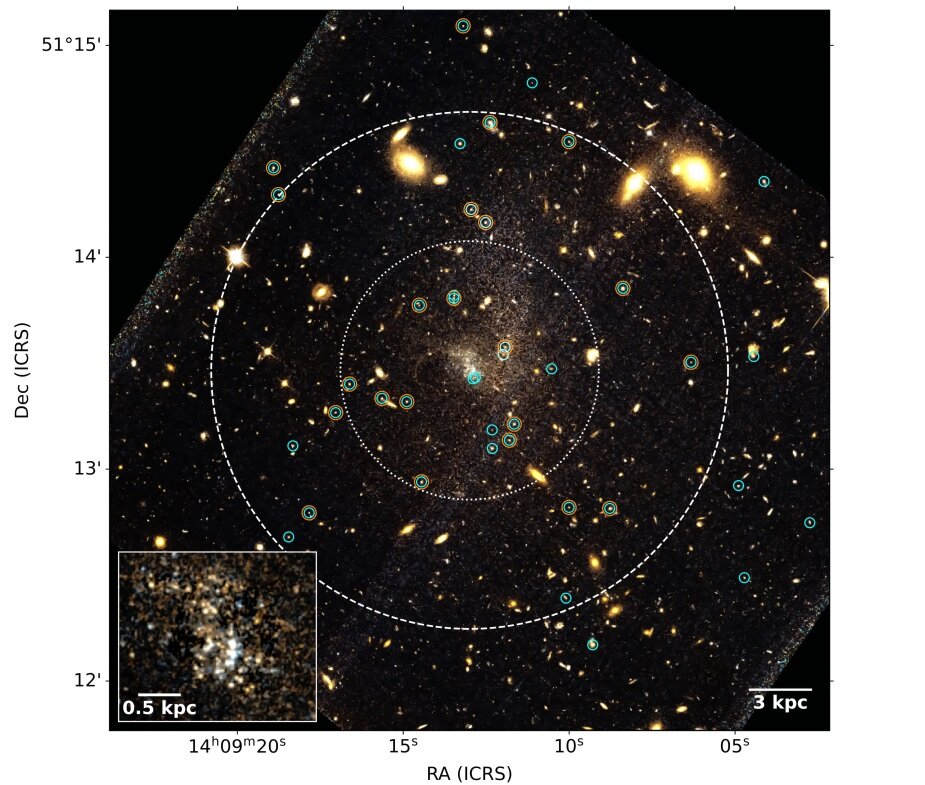
HST ACS/WFC F555W/F814W composite color image of UGC 9050-Dw1, which consists of very diffuse stellar light and an amorphous blue central clump of a relatively higher surface brightness. The inset at the lower left depicts a high contrast zoom-in of the central region of the UDG. Credit: Fielder et al, 2023

Using the Hubble Space Telescope (HST) and Jansky Very Large Array (VLA), astronomers have investigated an ultra-diffuse galaxy known as UGC 9050-Dw1. Results of the study, published June 9 on the pre-print server arXiv, yield important insights into the properties of this galaxy.

Ultra-diffuse galaxies (UDGs) are extremely-low-density galaxies. The largest UDGs have sizes similar to the Milky Way, but have only about 1% as many stars as our home galaxy...

Read More