

Pangolins are fascinating creatures. This animal looks like a walking pine cone, as it is the only mammal completely covered with hard scales. The scales are made of keratin, just like our hair and nails...
Read More


Until we recognize the essential role of biology, our attempts to truly unify the universe will remain a train to nowhere. ~Robert Lanza Read More

Good health is not something we can buy. However, it can be an extremely valuable savings account. ~Anne Wilson Schaef Read More

The only way forward, if we are going to improve the quality of the environment, is to get everybody involved. ~Richard Rogers Read More

To raise new questions, new possibilities, to regard old problems from a new angle, requires creative imagination and marks real advance in science. ~Albert Einstein Read More

Old Newtonian physics claimed that things have an objective reality separate from our perception of them. Quantum physics, and particularly Heisenberg's Uncertainty Principle, reveal that, as our perception of an object changes, the object itself literally changes. ~Marianne Williamson Read More

Astronomy compels the soul to look upwards and leads us from this world to another. ~ Read More
June 21, 2023,
 Physics, Health/Medical, Biology/Biotechnology
Pangolins are fascinating creatures. This animal looks like a walking pine cone, as it is the only mammal completely covered with hard scales. The scales are made of keratin, just like our hair and nails...
Read More
Using data from the Spitzer space observatory, Dr. Susana Iglesias-Groth, a researcher from The Instituto de Astrofísica de Canarias (IAC), has found evidence for the existence of the amino acid tryptophan in the interstellar material in a nearby star-forming region. The research is published in Monthly Notices of the Royal Astronomical Society.
High amounts of tryptophan were detected in the Perseus molecular complex, specifically in the IC348 star system, a star-forming region that lies 1,000 light years away from Earth—relatively close in astronomical terms. The region is generally invisible to the naked eye, but shines brightly when viewed in infrared wavelengths.
Tryptophan is one of...
Read More
June 21, 2023,
Health/Medical, Biology/Biotechnology
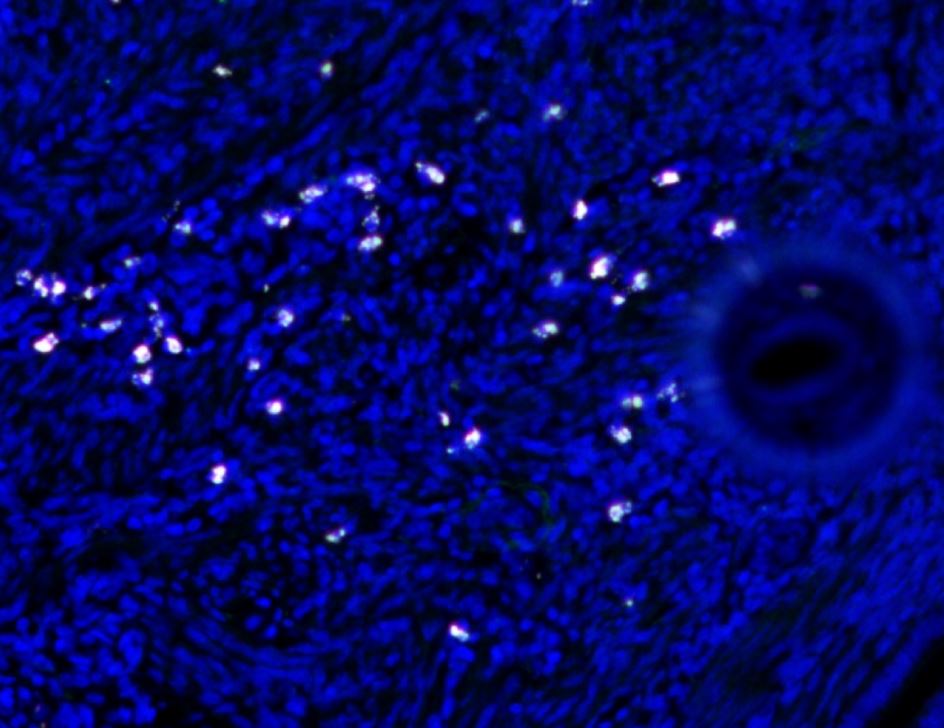
A research group from the Graduate School of Medicine and iGCORE at Nagoya University in Japan, has discovered that using an antibiotic to target Fusobacterium reduced the formation of lesions associated with endometriosis, a gynecological disorder characterized by endometrial tissue usually found inside the uterus being found outside it. Their findings suggest an alternative treatment for this disorder. The study was published in Science Translational Medicine.
Endometriosis affects one in ten women between the ages of 15 and 49. The disorder can cause lifelong health problems, including pelvic pain and infertility...
Read More
June 21, 2023,
Chemistry/Nanotechnology, Environment/Geology
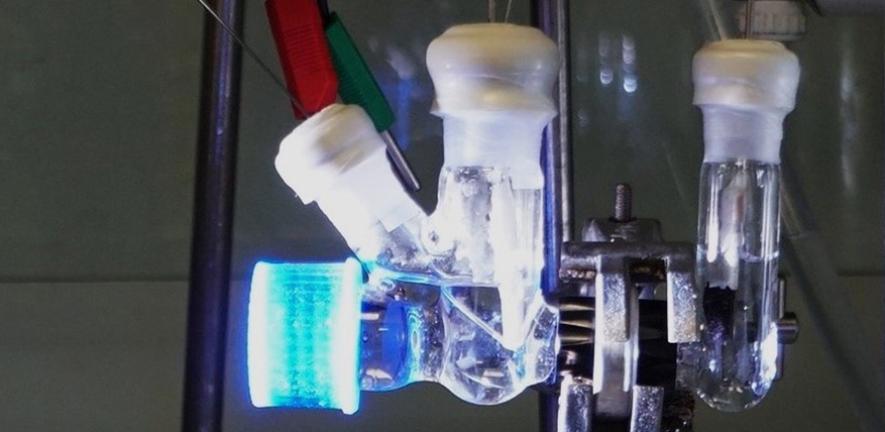
Researchers have demonstrated how CO2 can be captured from industrial processes – or even directly from the air – and transformed into clean, sustainable fuels using just the energy from the Sun.
The researchers, from the University of Cambridge, developed a solar-powered reactor that converts captured CO2 and plastic waste into sustainable fuels and other valuable chemical products. In tests, CO2 was converted into syngas, a key building block for sustainable liquid fuels, and plastic bottles were converted into glycolic acid, which is widely used in the cosmetics industry.
Unlike earlier tests of their solar fuels tec...
Read More
Recent Comments