To raise new questions, new possibilities, to regard old problems from a new angle, requires creative imagination and marks real advance in science.
~Albert Einstein
Read More
Old Newtonian physics claimed that things have an objective reality separate from our perception of them. Quantum physics, and particularly Heisenberg's Uncertainty Principle, reveal that, as our perception of an object changes, the object itself literally changes.
~Marianne Williamson
Read More
An artist’s conceptual rendering of interactions between a prospective exoplanet and its star. Plasma emitted from the star is deflected by the exoplanet’s magnetic field then interacts with the star’s magnetic field, resulting in an aurora on the star and the emission of radio waves. Credit: National Science Foundation/Alice Kitterman
Earth’s magnetic field does more than keep everyone’s compass needles pointed in the same direction. It also helps preserve Earth’s sliver of life-sustaining atmosphere by deflecting high energy particles and plasma regularly blasted out of the sun...
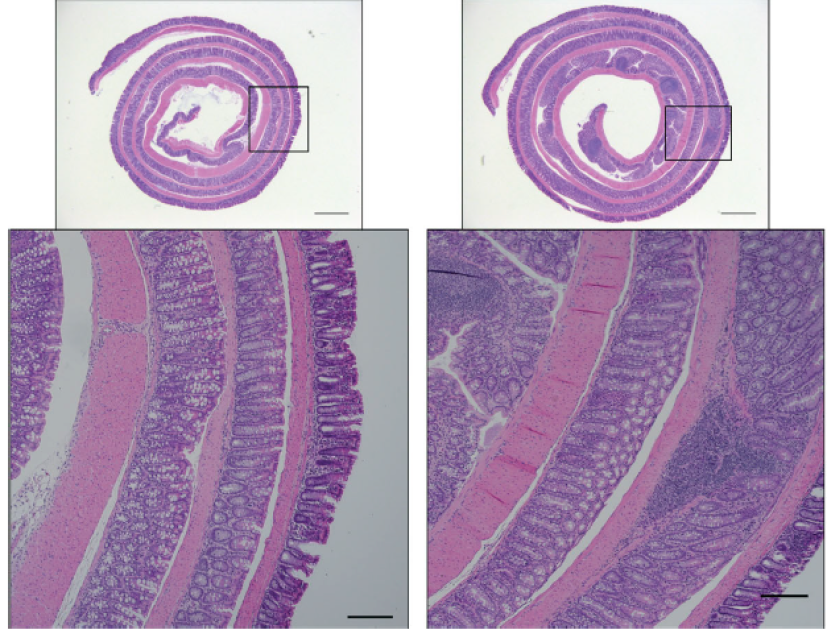
Harmful intestinal inflammation might be prevented with a one-two punch. Fresh insights into how our bodies interact with the microbes living in our guts suggest that a two-drug combination may offer a new way to treat inflammatory bowel diseases such as Crohn’s disease and ulcerative colitis.
The potential treatment pathway emerges from a study led by experts at Cincinnati Children’s published online March 28, 2023, in the Journal of Experimental Medicine. Co-first authors were Garrett Overcast, PhD, and Hannah Meibers, BS. Corresponding author was Chandrashekhar Pasare, DVM, PhD, Division of Immunobiology and co-director, Center for Inflammation and Tolerance.
The research team conducted numerous experiments to learn about how immune cells located in the lining of the intestin...
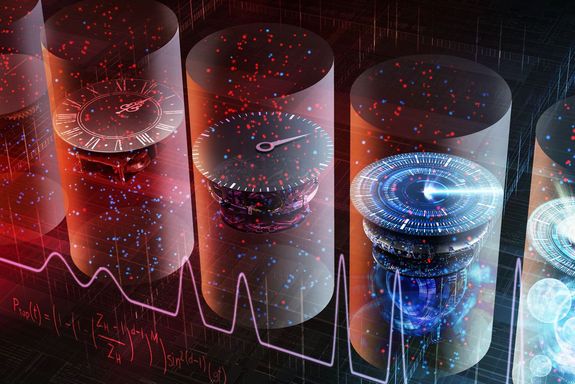
Erasing data perfectly and reaching the lowest possible temperature — those two things seem to be completely different, but they are closely intertwined. The absolute lowest temperature possible is -273.15 degrees Celsius. It is never possible to cool any object exactly to this temperature — one can only approach absolute zero. This is the third law of thermodynamics.
A research team at TU Wien (Vienna) has now investigated the question: How can this law be reconciled with the rules of quantum physics? They succeeded in developing a “quantum version” of the third law of thermodynamics: Theoretically, absolute ze...
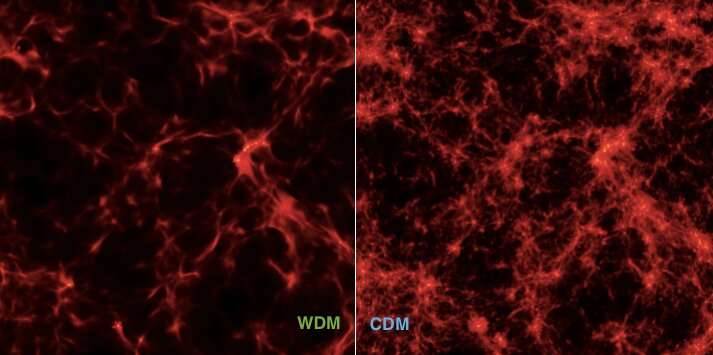
Distribution of primordial matter in cosmological models with hot dark matter (WDM, left) and cold dark matter. Credit: CDM, destra
Astrophysicists in Italy have shed new light on the nature of matter from the James Webb Space Telescope (JWST) detection of galaxies from 13 billion years ago and novel state-of-the-art numerical simulations of the first galaxies. The study adds another piece to the puzzle of the nature of matter in the universe.
While the commonly accepted paradigm of structure formation is based on non-relativistic matter that interacts only gravitationally, that is “cold” dark matter, alternative possibilities advocated to solve small-scale problems of the standard scenario rely on the hypothesis that dark matter is made of warm particles that possess a small, non-n...











Recent Comments