








- Machine learning detects bacterial invasion and DNA damage in human cells
- Earth and Mars: Built from different cosmic recipes
- A molecular switch syncs fat burning to the body clock, our diet and the temperature around us
- Ions help electrons hop through porous material with potential for brain-inspired computing
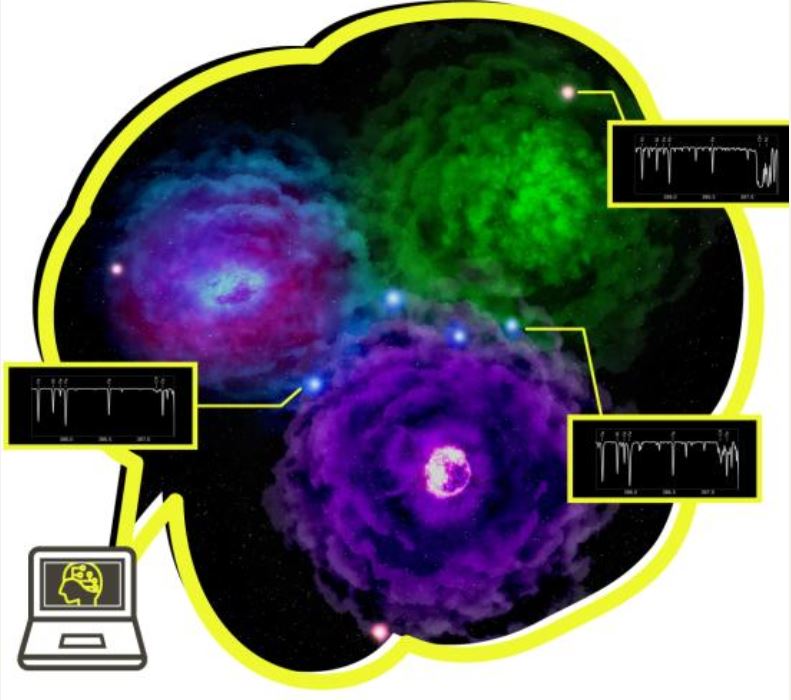
AI finds the First Stars were Not Alone
March 28, 2023,
 Astronomy/Space
How Fit is your Gut Microbiome? New research shows duration and not intensity of exercise is most important
March 28, 2023,
Health/Medical, Biology/Biotechnology

It is well known that the microbiomes of athletes are different from of those who are sedentary. To investigate how exercise shapes the gut microbiota in non-athletes, the study assessed information on the type, time and intensity of exercise in relation to microbiomes in a large cohort of middle-aged adults.
Exercise has many benefits – strengthening muscles and bones, preventing disease and extending lifespan. It is also known to change the composition and activity of the trillions of microbes in our guts known as the microbiome.
It is well known that the microbiomes of athletes are different from those who are sedentary. This is not overly surprising according to the author and PhD student Shrushti Shah...
Read MoreLooking from different perspectives! Proper Electronic Structure of Near-Infrared Absorbing Functional Dyes discovered
March 28, 2023,
Physics, Chemistry/Nanotechnology
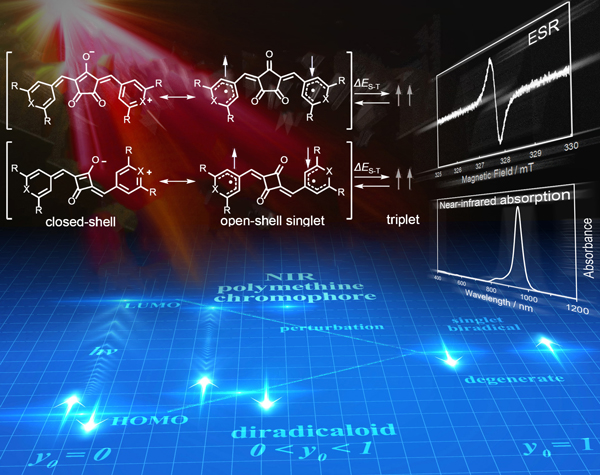
A big step toward the development of dyes with long-wavelength near-infrared absorption. A research group has discovered that near-infrared absorbing dyes, which had previously been considered to have closed-shell electronic structures, have an intermediate electronic structure, between closed- and open-shell structures. They also found that as the wavelength of near-infrared light that can be absorbed becomes longer the contribution of open-shell forms increases within the dye. These newly discovered characteristics are expected to be utilized to develop new near-infrared absorbing dyes that can absorb longer wavelength near-infrared light.
Near-infrared light, whose wavelength is longer than visible light, is invisible and can pass through many substances...
Read MoreArtificial Intelligence discovers Secret Equation for ‘Weighing’ Galaxy Clusters
March 28, 2023,
Physics, Astronomy/Space
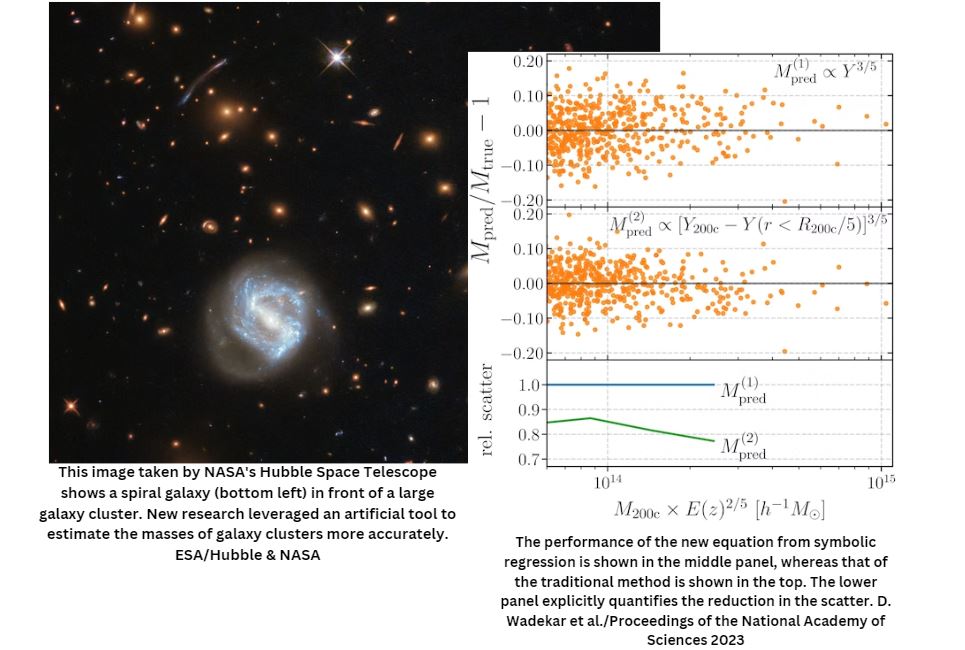
Astrophysicists at the Institute for Advanced Study, the Flatiron Institute and their colleagues have leveraged artificial intelligence to uncover a better way to estimate the mass of colossal clusters of galaxies. The AI discovered that by just adding a simple term to an existing equation, scientists can produce far better mass estimates than they previously had.
The improved estimates will enable scientists to calculate the fundamental properties of the universe more accurately, the astrophysicists reported March 17, 2023, in the Proceedings of the National Academy of Sciences.
“It’s such a simple thing; that’s the beauty of this,” says study co-author Francisco Villaescusa-Navarro, a research scientist at the Flatiron Institute’s Center for Computational Astrophysics (CCA) in...
Read More
Recent Comments