Common Dry Cleaning Chemical linked to Parkinson’s

dry cleaning
Credit: Unsplash/CC0 Public Domain

A common and widely used chemical may be fueling the rise of the world’s fastest growing brain condition—Parkinson’s disease. For the past 100 years, trichloroethylene (TCE) has been used to decaffeinate coffee, degrease metal, and dry clean clothes. It contaminates the Marine Corps base Camp Lejeune, 15 toxic Superfund sites in Silicon Valley, and up to one-third of groundwater in the U.S. TCE causes cancer, is linked to miscarriages and congenital heart disease, and is associated with a 500% increased risk of Parkinson’s disease.

In a hypothesis paper in the Journal of Parkinson’s Disease, an international team of researchers—including University of Rochester Medical Center (URMC) neurologists Ray Dorsey, MD, Ruth Schneider, MD, and Karl Kiebur...

Read More

Webb captures rarely seen Prelude to a Supernova

Wolf-Rayet 124 (NIRCam and MIRI composite image)

A Wolf-Rayet star is a rare prelude to the famous final act of a massive star: the supernova. As one of its first observations in 2022, the NASA/ESA/CSA James Webb Space Telescope captured the Wolf-Rayet star WR 124 in unprecedented detail. A distinctive halo of gas and dust frames the star and glows in the infrared light detected by Webb, displaying knotty structure and a history of episodic ejections.

Despite being the scene of an impending stellar “death,” astronomers also look to Wolf-Rayet stars for insight into new beginnings. Cosmic dust is forming in the turbulent nebulas surrounding these stars, dust that is composed of the heavy-element building blocks of the modern universe, including life on Earth.

The rare sight of a W...

Read More

Molecular Component of Caffeine may play a Role in Gut Health

Molecular component of caffeine may play a role in gut health
Credit: Immunity (2023). DOI: 10.1016/j.immuni.2023.02.018

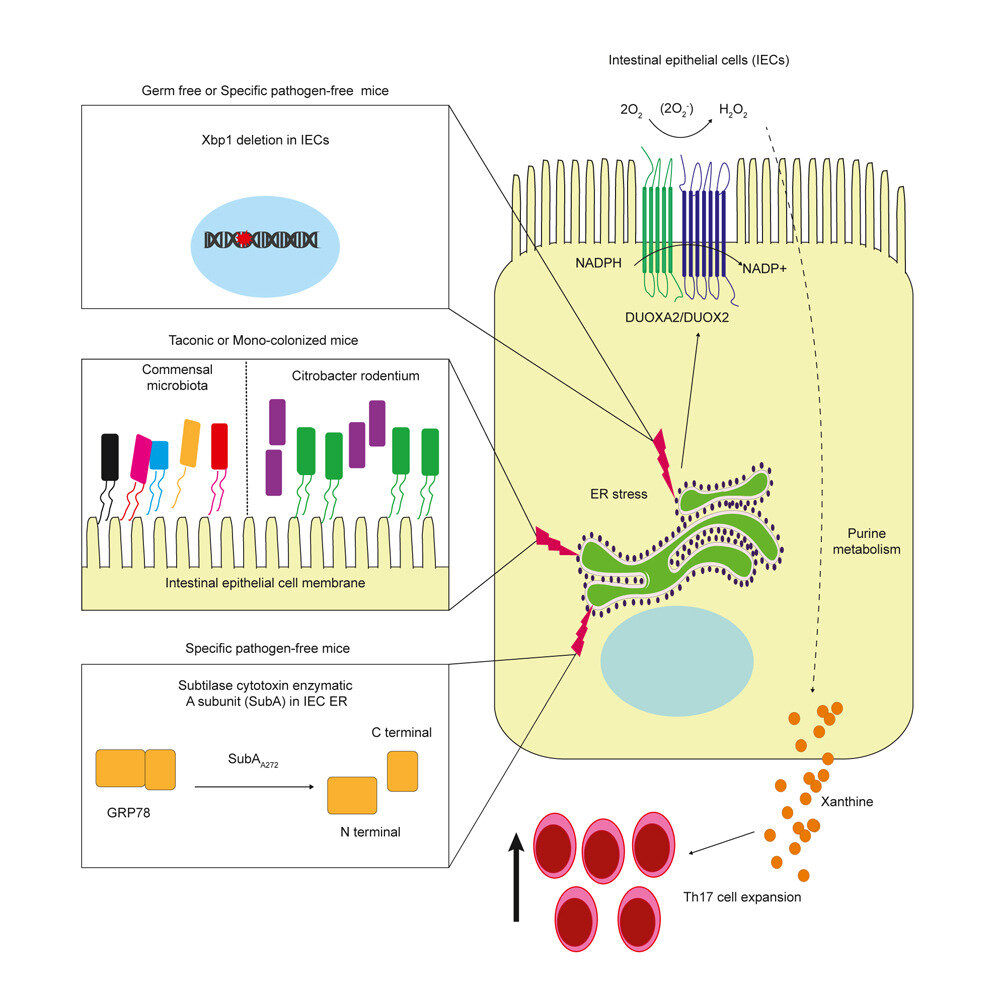
Brigham researchers studying how and why certain cell types proliferate in the gut found that xanthine, which is found in coffee, tea and chocolate, may play a role in Th17 differentiation. Insights may help investigators better understand gut health and the development of conditions such as inflammatory bowel disease.

The gut is home to a cast of microbes that influence health and disease. Some types of microorganisms are thought to contribute to the development of inflammatory conditions, such as inflammatory bowel disease (IBD), but the exact cascade of events that leads from microbes to immune cells to disease remains mysterious.

A new study by investigators from Brigham and Women’s Hospital explores exactly what lead...

Read More

A High-Performance Semiconductor Material could help Slash Heat Emissions

A game-changing, high-performance semiconductor material could help slash heat emissions
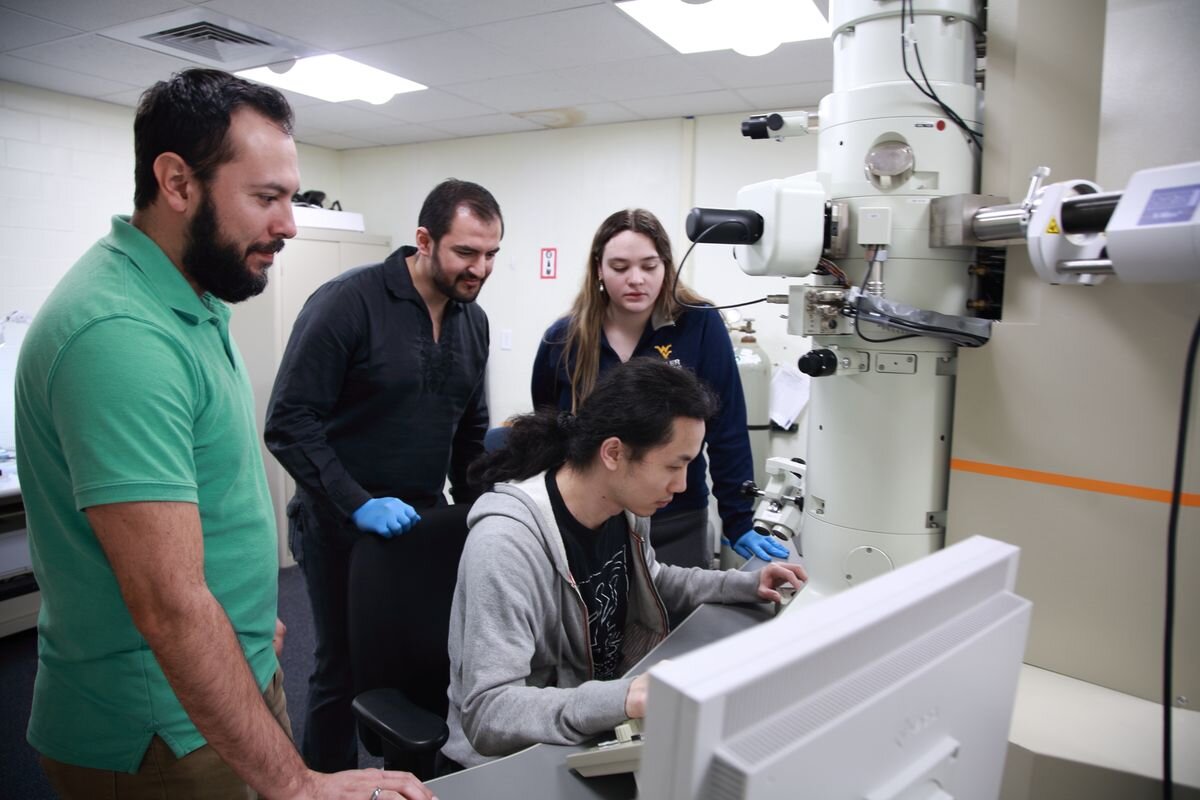
WVU researchers Sergio Andres Paredes Navia, Cesar Octavio Romo de la Cruz, Liang Liang and Ellena Gemmen use an electron microscope to study the nanostructure of a new oxide ceramic material with the potential to make thermoelectric generators efficient enough to capture a significant portion of the waste heat that industrial systems like power plants emit. Credit: West Virginia Universit

Researchers at West Virginia University have engineered a material with the potential to dramatically cut the amount of heat power plants release into the atmosphere.

A team led by Xueyan Song, professor and George B. Berry Chair of Engineering at the Benjamin M...

Read More