ALMA traces History of Water in Planet Formation back to the Interstellar Medium

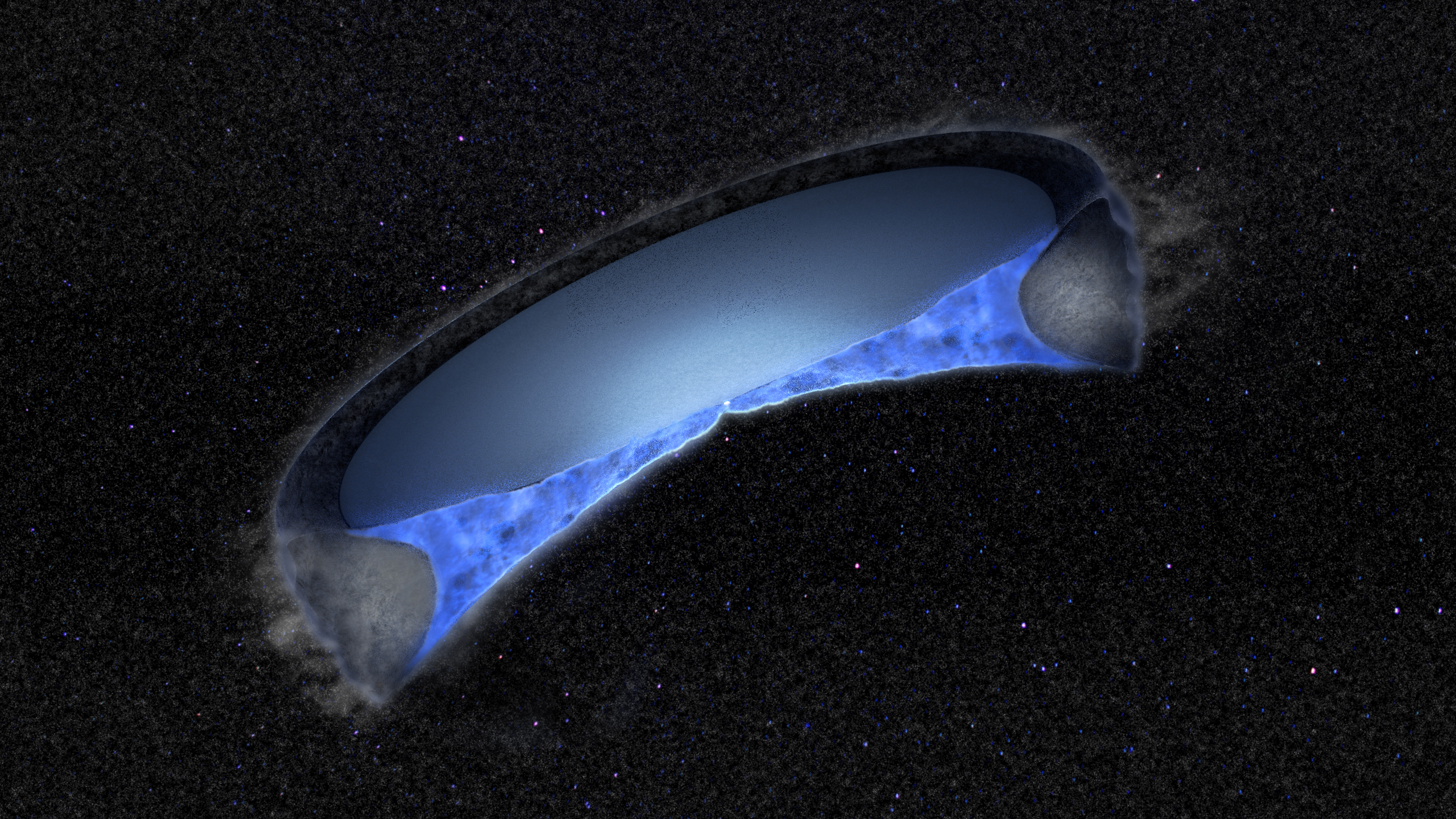
Credit: ALMA (ESO/NAOJ/NRAO), B. Saxton (NRAO/AUI/NSF)

Scientists studying a nearby protostar have detected the presence of water in its circumstellar disk. The new observations made with the Atacama Large Millimeter/submillimeter Array (ALMA) mark the first detection of water being inherited into a protoplanetary disk without significant changes to its composition. These results further suggest that the water in our Solar System formed billions of years before the Sun. The new observations are published today in Nature.

V883 Orionis is a protostar located roughly 1,305 light-years from Earth in the constellation Orion...

Read More

Potential New Therapeutic Target for Inflammatory Diseases such as Lupus and Sepsis

Trinity and Cambridge scientists unearth potential new therapeutic target for inflammatory diseases

Scientists working in the School of Biochemistry and Immunology in the Trinity Biomedical Sciences Institute at Trinity College Dublin have made an important breakthrough in understanding what goes wrong in our bodies during the progression of inflammatory diseases and – in doing so – unearthed a potential new therapeutic target.

The scientists have found that an enzyme called Fumarate Hydratase is repressed in macrophages, a frontline inflammatory cell type implicated in a range of diseases including Lupus, Arthritis, Sepsis and COVID-19.

Professor Luke O’Neill, Professor of Biochemistry at Trinity is the lead author of the research article that has just been published in leading international journal, Nature. He said:

“No-one has made a link from Fumarate Hydratase to infla...

Read More

Complex Oxides could Power the Computers of the future

Complex oxides could power the computers of the future
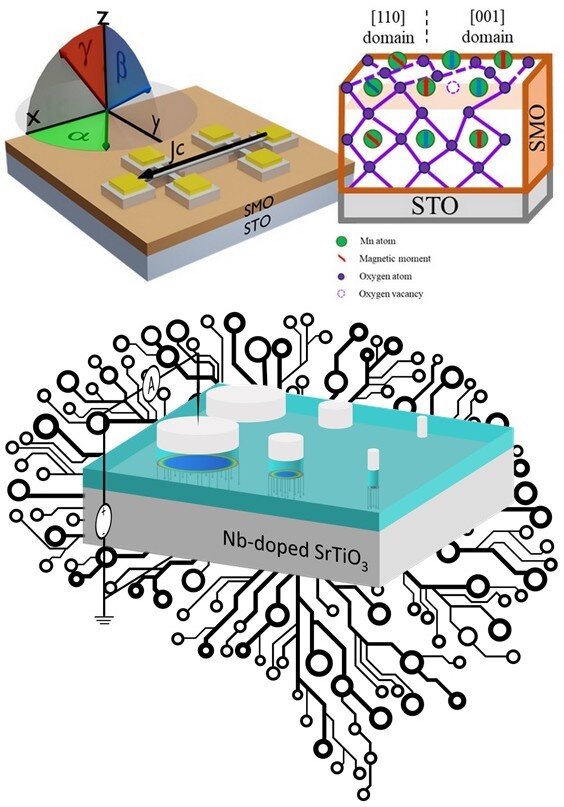
These are the devices for computer architectures ‘beyond CMOS’ created by Job van Rijn (upper panel) and Anouk Goossens (lower panel). Credit: Banerjee group, University of Groningen

As the evolution of standard microchips is coming to an end, scientists are looking for a revolution. The big challenges are to design chips that are more energy efficient and to design devices that combine memory and logic (memristors). Materials scientists from the University of Groningen, the Netherlands, describe in two papers how complex oxides can be used to create very energy-efficient magneto-electric spin-orbit (MESO) devices and memristive devices with reduced dimensions.

The development of classic silicon-based computers is approaching its limits...

Read More

Stars can Eat their Planets, and Spit them Back Out Again

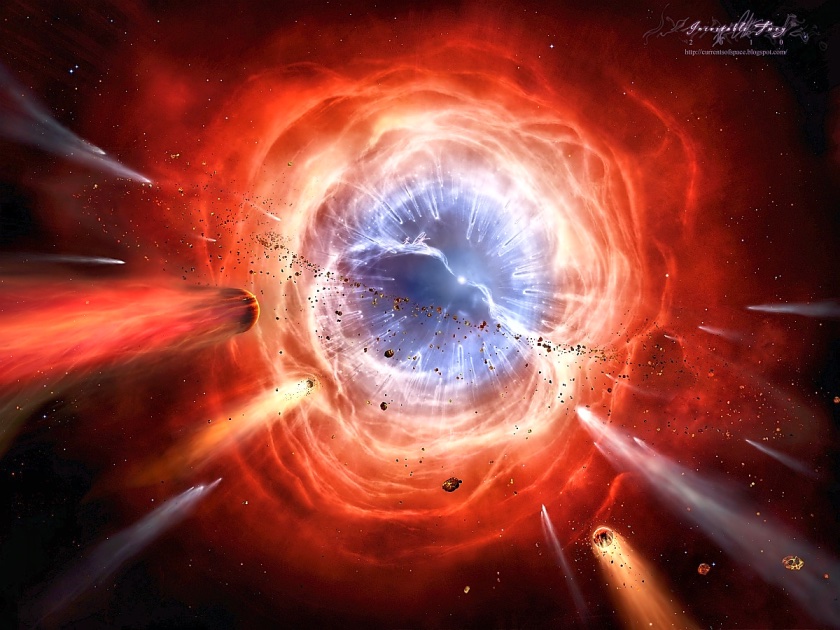
As tragic as it is, engulfment of a planetary object by its stellar parent is a common scenario throughout the universe. But it doesn’t have to end in doom. A team of astrophysicists have used computer simulations to discover that planets can not only survive when their star eats them, but they can also drive its future evolution.

Models of the formation of planetary systems have shown that many planets often end up being consumed by their parent star. It’s simply a matter of orbital dynamics. Random interactions among newly forming planets and the protoplanetary disk that surrounds a young star can send planets on chaotic trajectories. Some of those trajectories end up driving the planet out of the system altogether, while other trajectories send them hurdling into the star.

An...

Read More