Black Holes in Eccentric Orbit

Numerical simulation representing the curvature of spacetime during the merger of the two black holes.Image: AG Bernuzzi/Universität Jena

A research team has reconstructed the origin of an unusual gravitational wave signal. The signal GW190521 may result from the merger of two massive black holes that captured each other in their gravitational field and then collided while spinning around each other in a rapid, eccentric motion.

When black holes collide in the universe, the clash shakes up space and time: the amount of energy released during the merger is so great that it causes space-time to oscillate, similar to waves on the surface of water...

Read More

New Quantum Tool Developed in Groundbreaking Experimental Achievement

Advance of Quantum Wave

Scientists recreate properties of light in neutral fundamental particles called neutrons. For the first time in experimental history, researchers at the Institute for Quantum Computing (IQC) have created a device that generates twisted neutrons with well-defined orbital angular momentum. Previously considered an impossibility, this groundbreaking scientific accomplishment provides a brand new avenue for researchers to study the development of next-generation quantum materials with applications ranging from quantum computing to identifying and solving new problems in fundamental physics.

“Neutrons are a powerful probe for the characterization of emerging quantum materials because they have several unique features,” said Dr...

Read More

Elusive, Dusty Inner Region of Distant Galaxy

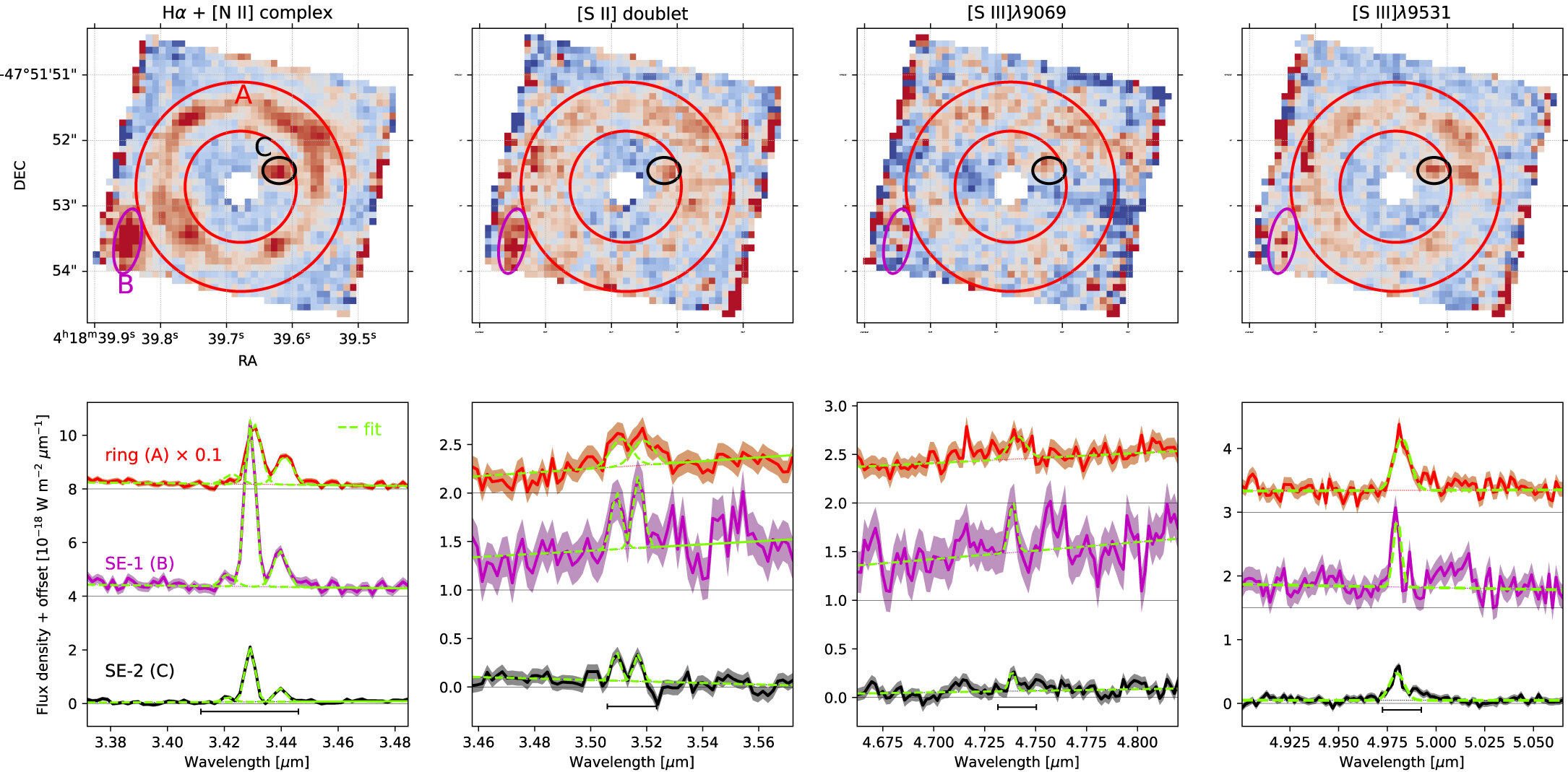
The long-sought after innermost dusty ring was detected with the highest spatial resolution in the infrared wavelengths ever used. An international team of scientists has achieved the milestone of directly observing the long-sought, innermost dusty ring around a supermassive black hole, at a right angle to its emerging jet. Such a structure was thought to exist in the nucleus of galaxies but had been difficult to observe directly because intervening material obscured our line of sight.

Now the inner disk is detected using the highest spatial resolution in the infrared wavelengths ever done for an extragalactic object. The new discovery was just published in The Astrophysical Journal.

“This is a very exciting step forward to view the inner region of a distant galaxy with such fin...

Read More

Powerhouses of the Cells: Mitochondria have a Waste Disposal Mechanism to get rid of Mutated mtDNA

Electron micrograph of nucleoid extraction in a cell and schematic representation of the new mechanism. Copyright: David Pla-Martin

A research team has identified a molecular target that could open up new therapeutic options to treat aging-associated diseases like Parkinson’s. Scientists at the University of Cologne have discovered how cells can eliminate mutated mitochondrial DNA (mtDNA). Mitochondria are the powerhouses of our cells. Due to their evolutionary descent from bacteria, they still have genetic material packaged in chromosome-like structures (nucleoids). They convert the chemical energy in our food into a biologically usable form...

Read More