Next Generation Material that Adapts to its History

Material that learns
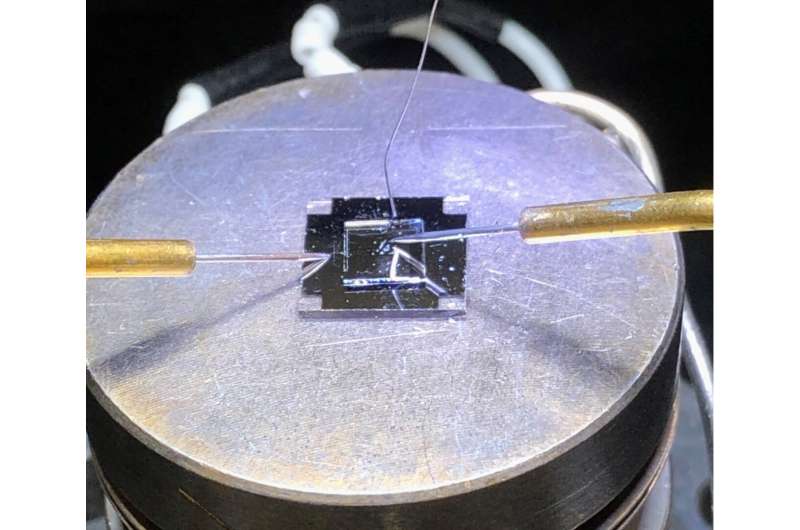
The shape and conductivity of the pillars formed by magnetic beads in a magnetic field depend on the fields’ strength and history.

Responsive material changes its behavior based on earlier conditions
Inspired by living systems, researchers at Aalto University have developed a new material that changes its electrical behaviour based on previous experience, effectively giving it a basic form of adaptive memory. Such adaptive materials could play a vital role in the next generation of medical and environmental sensors, as well as in soft robots or active surfaces.

Responsive materials have become common in a range of applications, from glasses that darken in sunlight to drug delivery systems...

Read More

Study of ‘Polluted’ White Dwarfs finds that Stars and Planets Grow Together

Artist's impression of planet formation

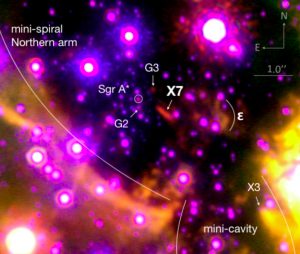
A team of astronomers have found that planet formation in our young Solar System started much earlier than previously thought, with the building blocks of planets growing at the same time as their parent star.

A study of some of the oldest stars in the Universe suggests that the building blocks of planets like Jupiter and Saturn begin to form while a young star is growing. It had been thought that planets only form once a star has reached its final size, but new results, published in the journal Nature Astronomy, suggests that stars and planets ‘grow up’ together.

The research, led by the University of Cambridge, changes our understanding of how planetary systems, including our own Solar System, formed, potentially solving a major puzzle in astronomy.

“We have a pretty good i...

Read More

What happens to our Dopamine system when we Experience Aversive Events?

A new study at the Netherlands Institute for Neuroscience has examined how the dopamine system processes aversive unpleasant events.

It is well known that the dopamine system plays a crucial role in motivation, learning and movement. One of the main functions of dopamine is to predict the occurrence of rewarding experiences and the availability of rewards in our environment. In this context, the dopamine system informs our brains about so-called ‘reward prediction errors’ — the difference between received and predicted rewards. Dopamine neurons become more active when a reward occurs unexpectedly or if it is bigger than expected, and they show depressed activity when we receive less reward than predicted...

Read More

Researcher Lauded for Superb Solution of Algorithmic Riddle from the 1950s

Road network with cars
Photo: Getty

Solving the riddle can reduce electric car battery consumption and make life tougher for currency speculators in the future. The discovery has just won the award for best research article and was honored at the field’s most prestigious conference in the United States.

For more than half a century, researchers around the world have been struggling with an algorithmic problem known as “the single source shortest path problem.” The problem is essentially about how to devise a mathematical recipe that best finds the shortest route between a node and all other nodes in a network, where there may be connections with negative weights.

Sound complicated? Possibly...

Read More