Scientists Make Breakthrough for ‘Next Generation’ Cancer Treatment

Getty images

Scientists at the University of East Anglia are a step closer to creating a new generation of light-activated cancer treatments. The futuristic sounding treatment would work by switching on LED lights embedded close to a tumour, which would then activate biotherapeutic drugs.

These new treatments would be highly targeted and more effective than current state-of-the-art cancer immunotherapies.

New research published today reveals the science behind this innovative idea.

It shows how the UEA team have engineered antibody fragments – which not only ‘fuse’ with their target but are also light activated.

It means that in future, immunotherapy treatments could be engineered to attack tumours more precisely than ever before.

The principal scientist for this study, ...

Read More
Electronic Metadevices Break Barriers to Ultrafast Communications

© iStock/wragg
Samizadeh Nikoo, M., Matioli, E. Electronic metadevices for terahertz applications. Nature 614, 451–455 (2023). https://doi.org/10.1038/s41586-022-05595-z

EPFL researchers have come up with a new approach to electronics that involves engineering metastructures at the sub-wavelength scale. It could launch the next generation of ultra-fast devices for exchanging massive amounts of data, with applications in 6G communications and beyond.

Until now, the ability to make electronic devices faster has come down to a simple principle: scaling down transistors and other components. But this approach is reaching its limit, as the benefits of shrinking are counterbalanced by detrimental effects like resistance and decreased output power.

Elison Matioli of the Power and Wide-band-gap Elect...

Read More

Astrophysics: Scientists observe High-speed Star Formation

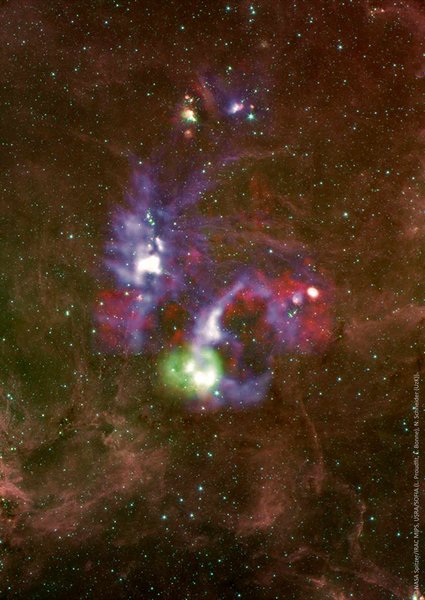
New observations have brought to light that stars can form through the dynamic interaction of gas within interstellar gas clouds. This process unfolds faster than previously assumed, research within the FEEDBACK programme on board the flying observatory SOFIA revealed.

Even though SOFIA is no longer in operation, the data collected so far are essential for basic astronomical research because there is no longer an instrument that extensively maps the sky in this wavelength range (typically 60 to 200 micrometres). The now active James Webb Space Telescope observes in the infrared at shorter wavelengths and focuses on spatially small areas...

Read More

Multiple Sclerosis Discovery could End Disease’s Chronic Inflammation

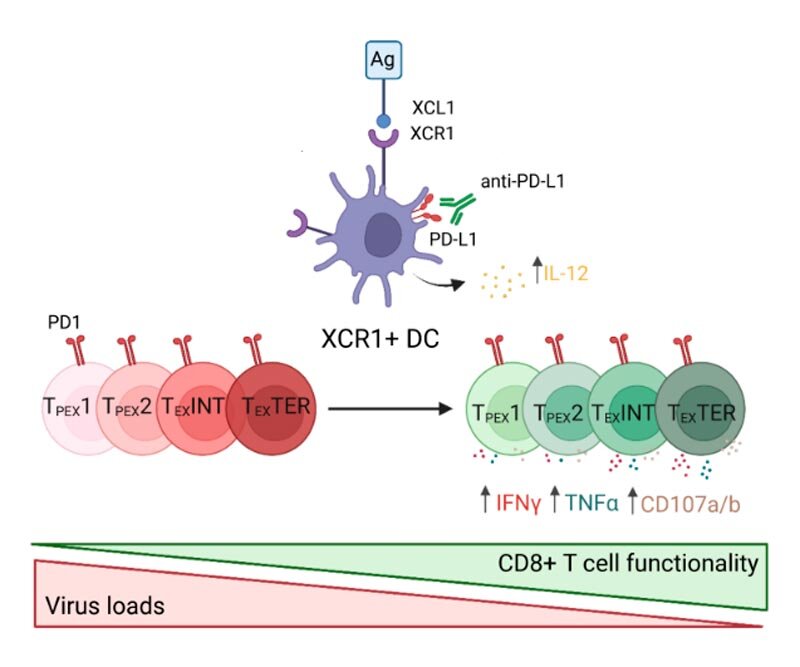
Cell type key to successful immunotherapies for chronic viral infections identified
Diagram of the finding. Credit: Cell Reports (2023). DOI: 10.1016/j.celrep.2023.112123

University of Virginia Health neuroscientists have discovered a potential way to disrupt the chronic inflammation responsible for multiple sclerosis.

UVA’s new study identifies a vital contributor to the hyperactive autoimmune response and neuroinflammation that are the hallmarks of MS. Blocking this lynchpin in a research model of MS alleviated the inflammation, giving researchers a prime target in developing new treatments for multiple sclerosis and other autoimmune diseases.

The research was conducted by Andrea Merchak, a doctoral candidate in neuroscience, and her colleagues in the lab of Alban Gaultier of the University of Virginia School of Medicine’s Department of Neuroscience and its Ce...

Read More