How Planets can be an Anti-Aging Formula for Stars

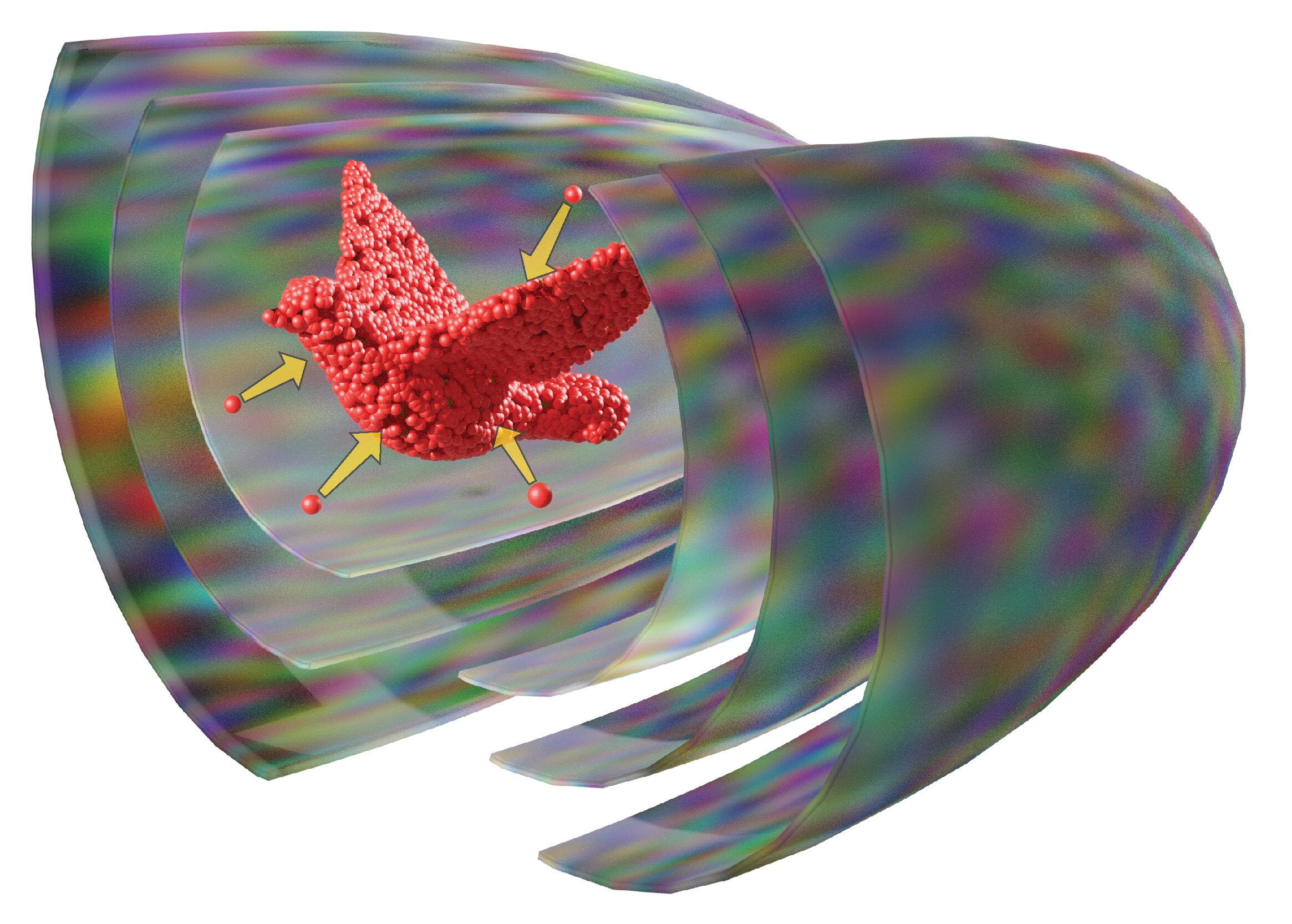
The team examined systems containing a star orbited by a hot Jupiter, accompanied by a star without such a planet.

Planets can force their host stars to act younger than their age, according to a new study of multiple systems using NASA’s Chandra X-ray Observatory. This may be the best evidence to date that some planets apparently slow down the aging process for their host stars.

While the anti-aging property of “hot Jupiters” (that is, gas giant exoplanets that orbit a star at Mercury’s distance or closer) has been seen before, this result is the first time it has been systematically documented, providing the strongest test yet of this exotic phenomenon.

“In medicine, you need a lot of patients enrolled in a study to know if the effects are real or some sort of outlier,” said Ni...

Read More

How Magnetism could help explain the Earth-Moon System’s Formation

How magnetism could help explain Earth's formation
Credit: NASA/JPL

There are several theories about how Earth and its moon were formed, most involving a giant impact. Now scientists at the University of Leeds and the University of Chicago have analyzed the dynamics of fluids and electrically conducting fluids and concluded that Earth must have been magnetized either before the impact or as a result of it.

They claim this could help to narrow down the theories of the Earth-moon formation and inform future research into what really happened. Their work is published in Proceedings of the National Academy of Sciences.

Professor David Hughes, an applied mathematician in the School of Mathematics at the University of Leeds, said, “Our new idea is to point out that our theoretical understanding of the Earth’s magnetic field today can a...

Read More

Smart Windows that can Polarize Sunlight could offer a Low Energy Alternative to Wi-Fi

An enlightened route to wireless communications
Illustration of the polarizer effect on the polarized light. Credit: IEEE Photonics Journal (2022). DOI: 10.1109/JPHOT.2022.3200833

Sunshine streaming through a window could be directly harnessed for wireless data transmission to electronic devices. KAUST researchers have designed a smart glass system that can modulate the sunlight passing through it, encoding data into the light that can be detected and decoded by devices in the room. The use of sunlight to send data would offer a greener mode of communication compared to conventional Wi-Fi or cellular data transmission.

Basem Shihada had been exploring data encoding into an artificial light source when he had the lightbulb moment to use sunshine...

Read More

Iron induces Chronic Heart Failure in Half of Heart Attack Survivors

figure 1
An overarching model of how hemorrhagic infarction promotes chronic heart failure via fat deposition.

A multi-institution study led by Rohan Dharmakumar, PhD, of Indiana University School of Medicine, has identified that iron drives the formation of fatty tissue in the heart and leads to chronic heart failure in about fifty percent of heart attack survivors. The discovery, recently published in Nature Communications, paves the way for treatments that have the potential to prevent heart failure in nearly half a million people a year in the United States, and many millions more worldwide.

“For the first time, we have identified a root cause of chronic heart failure following a heart attack,” Dharmakumar said.

Dharmakumar is executive director of IU’s Krannert Cardiovascular Researc...

Read More