To raise new questions, new possibilities, to regard old problems from a new angle, requires creative imagination and marks real advance in science.
~Albert Einstein
Read More
Old Newtonian physics claimed that things have an objective reality separate from our perception of them. Quantum physics, and particularly Heisenberg's Uncertainty Principle, reveal that, as our perception of an object changes, the object itself literally changes.
~Marianne Williamson
Read More
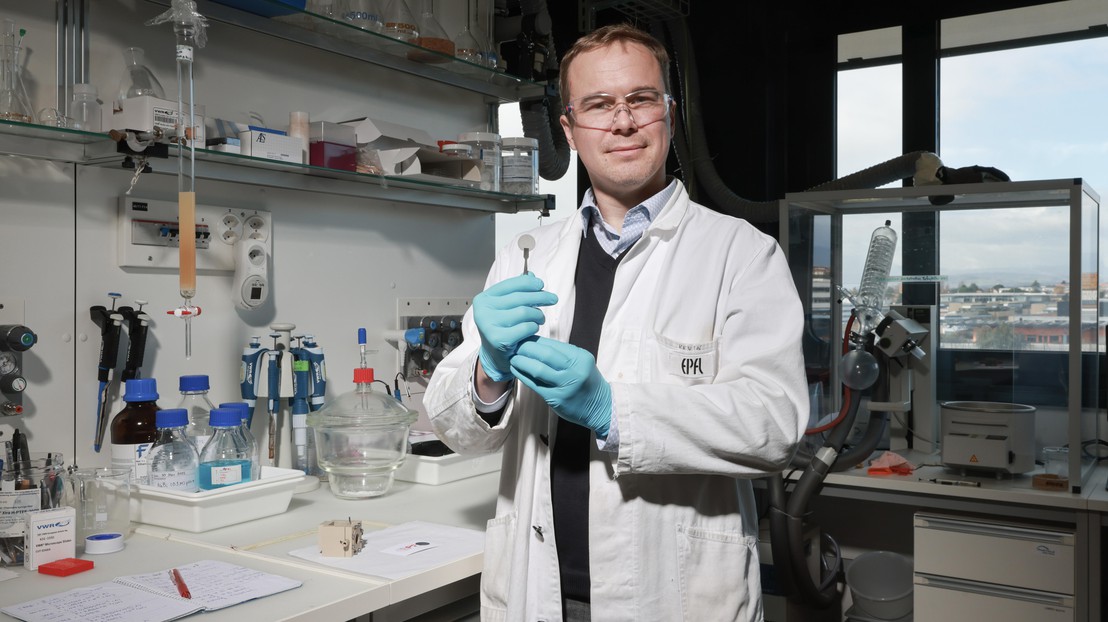
EPFL chemical engineers have invented a solar-powered artificial leaf, built on a novel electrode which is transparent and porous, capable of harvesting water from the air for conversion into hydrogen fuel. The semiconductor-based technology is scalable and easy to prepare.
A device that can harvest water from the air and provide hydrogen fuel — entirely powered by solar energy — has been a dream for researchers for decades. Now, EPFL chemical engineer Kevin Sivula and his team have made a significant step towards bringing this vision closer to reality...
Credit: NASA / Goddard Space Flight Center / Jeremy Schnittman
Black holes form natural time machines that allow travel to both the past and the future. But don’t expect to be heading back to visit the dinosaurs any time soon.
At present, we don’t have spacecraft that could get us anywhere near a black hole. But, even leaving that small detail aside, attempting to travel into the past using a black hole might be the last thing you ever do.
What are black holes?
A black hole is an extremely massive object that is typically formed when a dying star collapses in on itself.
Like planets and stars, black holes have gravitational fields around them. A gravitational field is what keeps us stuck to Earth, and what keeps Earth revolving around the Sun.
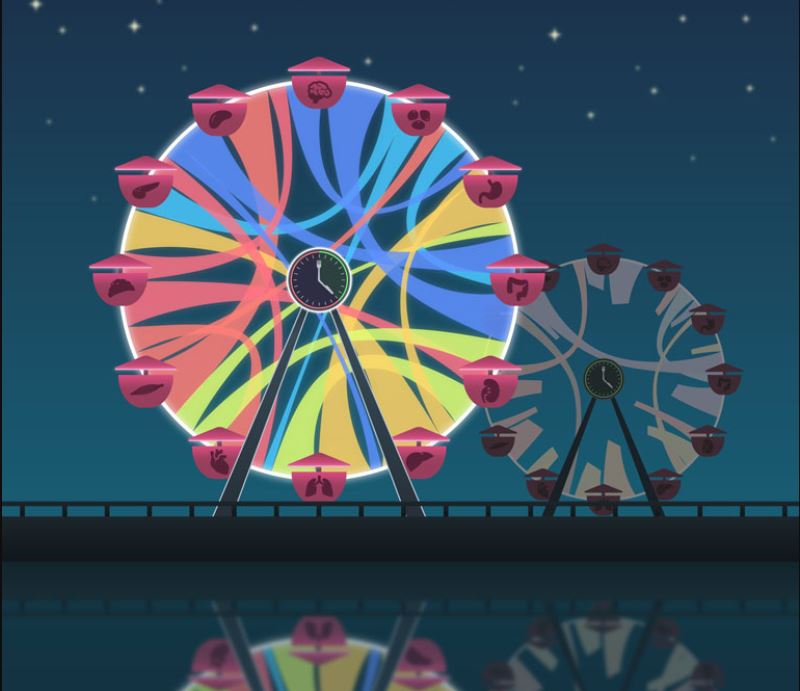
Time-restricted eating reshapes gene expression throughout the body. In this illustration, the Ferris wheel displays the interconnected organ systems working smoothly during time-restricted eating, which is represented by the clock in the middle. Credit: Salk Institute
Salk researchers find that timing calorie intake synchronizes circadian rhythms across multiple systems in mice. Scientists show in mice how time-restricted eating influences gene expression across more than 22 regions of the body and brain. The findings have implications for a wide range of health conditions where time-restricted eating has shown potential benefits, including diabetes, heart disease, hypertension, and cancer.
Numerous studies have shown health benefits of time-restricted eating including increase in l...
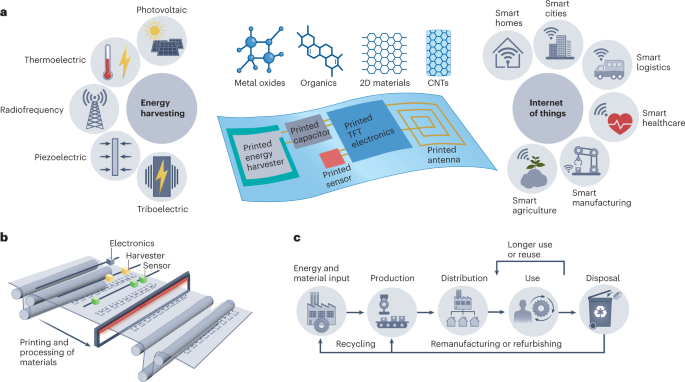
Creating smart sensors to embed in our everyday objects and environments for the Internet of Things (IoT) would vastly improve daily life — but requires trillions of such small devices. Simon Fraser University professor Vincenzo Pecunia believes that emerging alternative semiconductors that are printable, low-cost and eco-friendly could lead the way to a cheaper and more sustainable IoT.
Leading a multinational team of top experts in various areas of printable electronics, Pecunia has identified key priorities and promising avenues for printable electronics to enable self-powered, eco-friendly smart sensors. His forward-looking insights are outlined in his paper published on Dec. 28 in Nature Electronics.












Recent Comments