To raise new questions, new possibilities, to regard old problems from a new angle, requires creative imagination and marks real advance in science.
~Albert Einstein
Read More
Old Newtonian physics claimed that things have an objective reality separate from our perception of them. Quantum physics, and particularly Heisenberg's Uncertainty Principle, reveal that, as our perception of an object changes, the object itself literally changes.
~Marianne Williamson
Read More
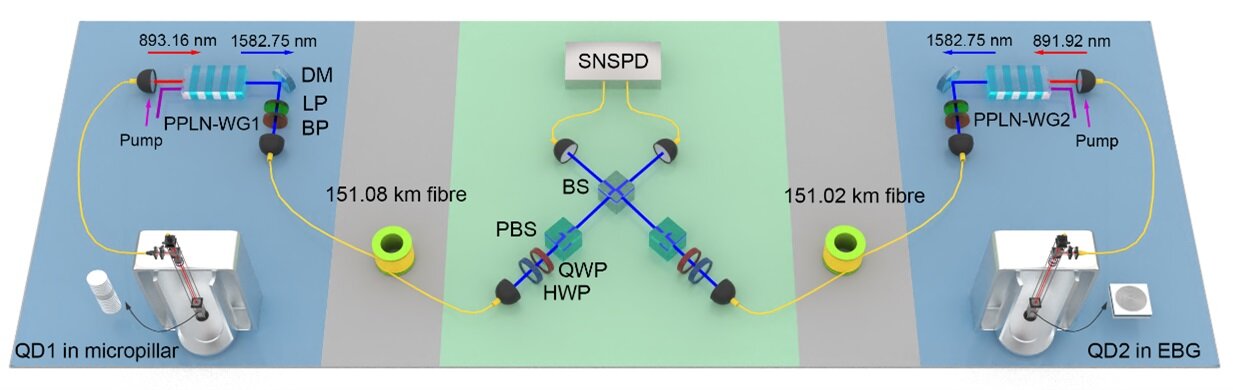
Experimental configuration of quantum interference between two independent solid-state QD single-photon sources separated by 302 km fiber. DM: dichromatic mirror, LP: long pass, BP: band pass, BS: beam splitter, SNSPD: superconducting nanowire single- photon detector, HWP: half-wave plate, QWP: quarter-wave plate, PBS: polarization beam splitter. Credit: Advanced Photonics (2022). DOI: 10.1117/1.AP.4.6.066003
This year’s Nobel Prize in Physics celebrated the fundamental interest of quantum entanglement, and also envisioned the potential applications in “the second quantum revolution”—a new age when we are able to manipulate the weirdness of quantum mechanics, including quantum superposition and entanglement...
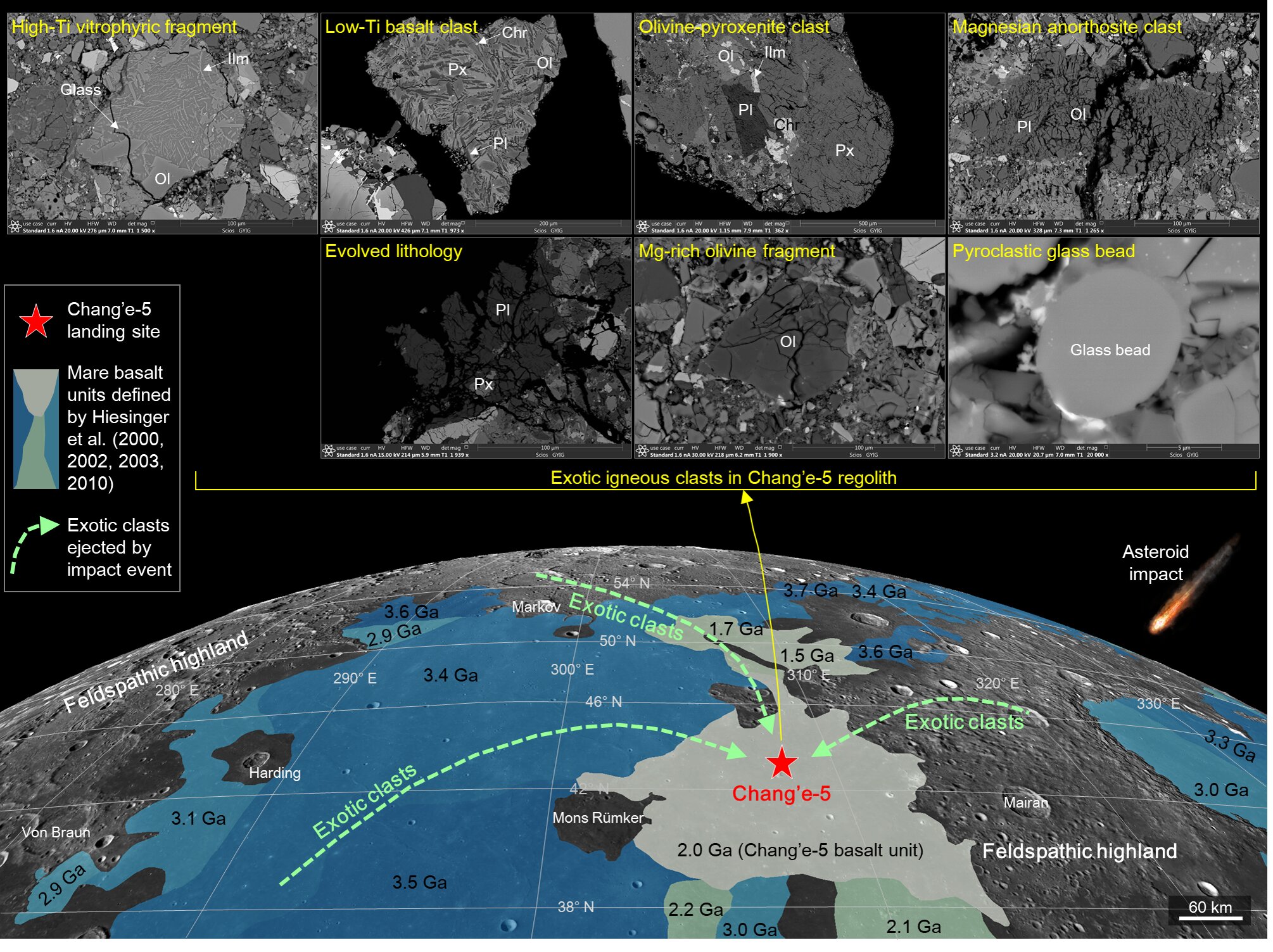
Graphical depiction of exotic igneous clasts in Chang’e-5 lunar regolith. Credit: IGCAS
The Chang’e-5 mission touched down in the Mons Rümker region of the northern Oceanus Procellarum of the moon and returned 1.731 kg of lunar regolith. Recognizing exotic clasts (i.e., non-Chang’e-5 locally derived materials) in the Chang’e-5 regolith could provide critical information about the lithological diversity and regolith gardening process in the young mare region of the moon.
Recently, Dr. Zeng Xiaojia, Prof. Li Xiongyao and Prof. Liu Jianzhong from the Institute of Geochemistry of the Chinese Academy of Sciences (IGCAS) have identified seven exotic igneous clasts in Chang’e-5 samples from more than 3,000 of Chang’e-5 regolith particles.
This work was published in Nature Astronomy on ...
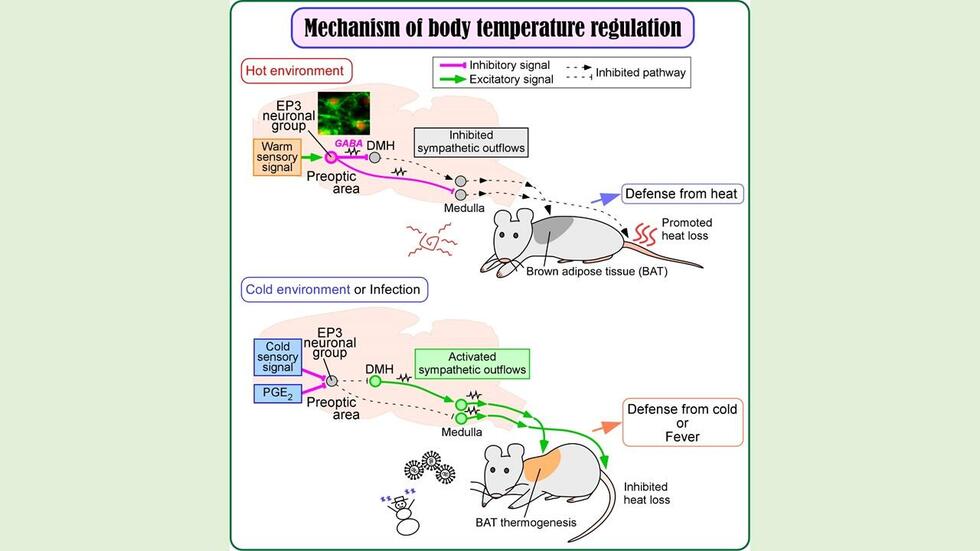
A research group at Nagoya University in Japan has reported that a group of neurons, called EP3 neurons, in the preoptic area of the brain play a key role in regulating body temperature in mammals. The finding could pave the way for the development of a technology that artificially adjusts body temperature to help treat heatstroke, hypothermia, and even obesity. The new study was published in the journal Science Advances.
Body temperature in humans and many other mammals is regulated at around 37°C (98.6°F), which optimizes all regulatory functions. When their body temperature noticeably deviates from the normal range, the functions are impaired, which could lead to heat stroke, hypothermia, and, in the worst case, death...
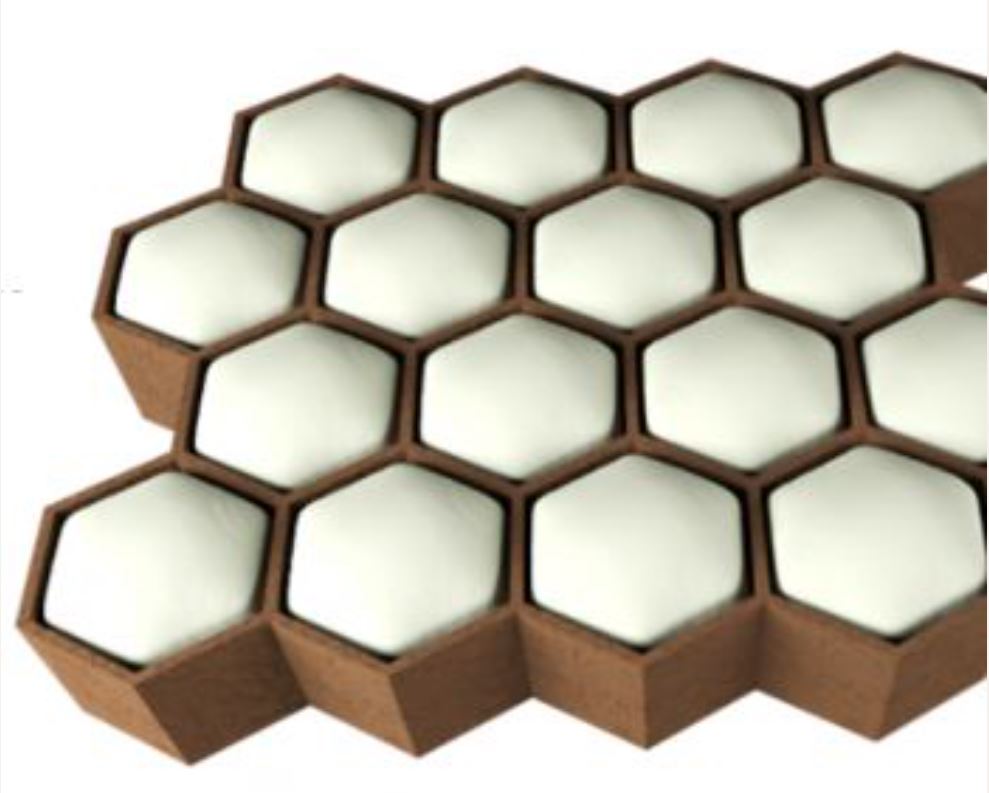
Schematic of the structure of the film with graphene oxide trapped between polymer latex sphere
In new research published in Nature Communications, University of Sussex scientists demonstrate how a highly conductive paint coating that they have developed mimics the network spread of a virus through a process called ‘explosive percolation’ – a mathematical process which can also be applied to population growth, financial systems and computer networks, but which has not been seen before in materials systems. The finding was a serendipitous development as well as a scientific first for the researchers.
The process of percolation – the statistical connectivity in a system, such as when water flows through soil or through coffee grounds – is an important component in the development of l...











Recent Comments