Center of the Coma Cluster Explored with AstroSat

Center of the Coma cluster explored with AstroSat
A Sloan Digital Sky Survey/Spitzer Space Telescope mosaic of the Coma Cluster in long-wavelength infrared (red), short-wavelength infrared (green), and visible light. Credit: NASA/JPL-Caltech/L. Jenkins (GSFC).

Using India’s AstroSat spacecraft, astronomers have investigated a central field of a cluster of galaxies known as the Coma cluster. Results of the study, presented in a paper published September 13 on arXiv.org, deliver important insights into the properties and nature of this galaxy cluster.

Galaxy clusters contain up to thousands of galaxies bound together by gravity. They are the largest known gravitationally bound structures in the universe, and could serve as excellent laboratories for studying galaxy evolution and cosmology.

At a distance of about 321 million light ...

Read More

Rheumatoid Arthritis Drug Effective against Myasthenia Gravis

Efficacy and Safety of Rituximab for New-Onset Generalized Myasthenia Gravis

Early intervention with rituximab, a drug used in the treatment of rheumatoid arthritis (RA), can reduce the risk of deterioration in myasthenia gravis, an autoimmune disease that causes loss of muscle control. This is according to a randomized clinical study led by researchers at Karolinska Institutet in Sweden and published in the journal JAMA Neurology.

“Patients with new onset myasthenia who received rituximab as a complement to standard of care showed greater improvement compared with patients who were given a placebo,” says Fredrik Piehl, professor at the Department of Clinical Neuroscience, Karolinska Institutet, and the study’s principal investigator...

Read More

Tiny Soft Robot can Split into Tinier Bits then Reassemble after Passage Through Small Spaces

Tiny soft robot can be split into tinier bits to allow for passage through small spaces
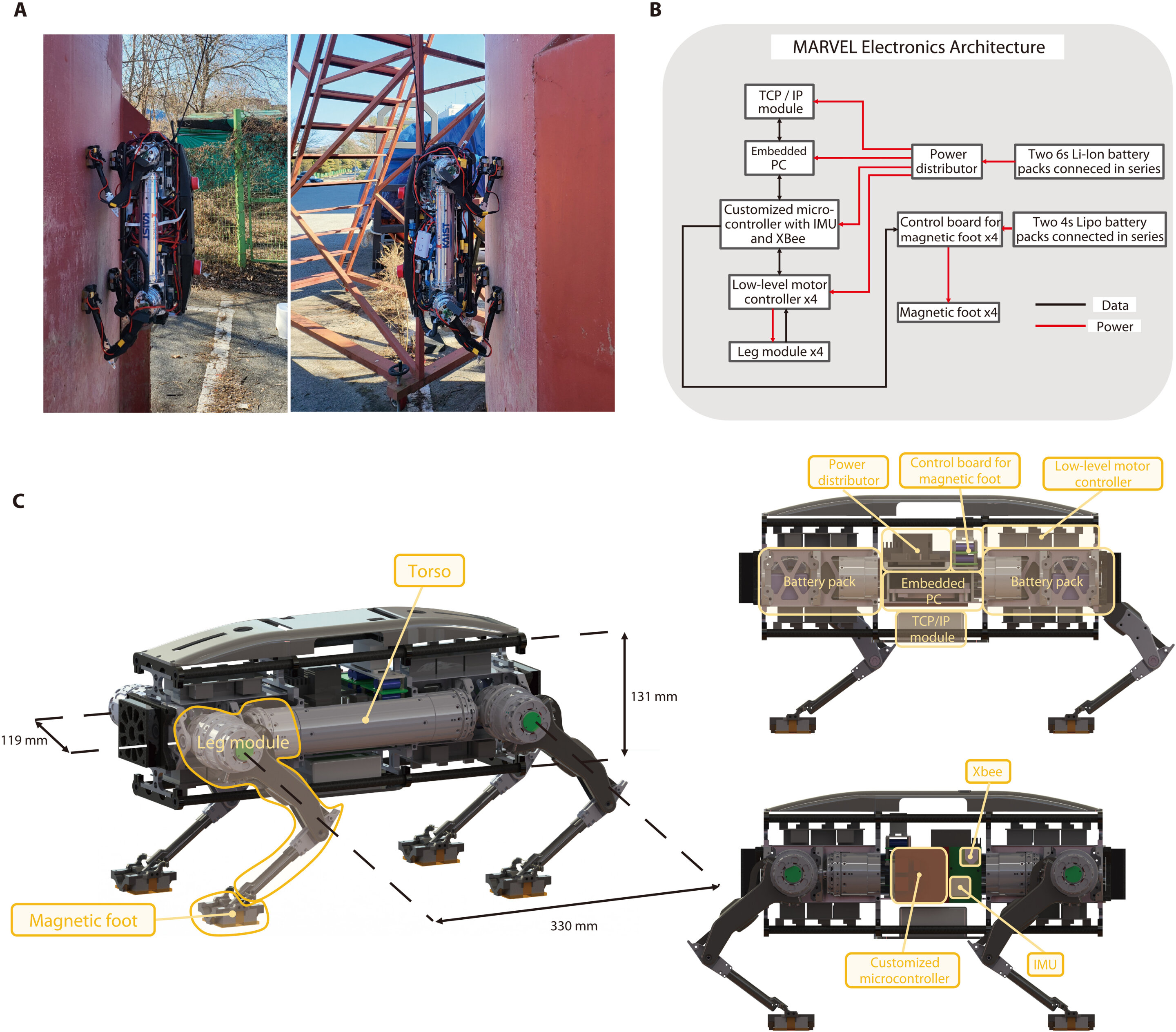
Overview of trans-scale maneuver and scale reconfiguration strategies of the scale-reconfigurable miniature ferrofluidic robots (SMFRs). (A) Trans-scale control of the SMFR: locomotion of the centi-FR, milli-FR, and micro-FR based on magnetic gradient, both magnetic gradient and torque, and magnetic torque only, respectively. (B) Response behaviors of ferrofluid droplets in magnetic fields. (C) The SMFR is manipulated by a custom-designed magnetic actuation system (the M3RA system) composed of four electromagnets, a spherical permanent magnet (SPM), and a motorized translation stage. To easily observe the internal composition of the system, we hide a quarter of the structure...
Read More

Researcher Helps Identify New Evidence for Habitability in Ocean of Saturn’s Moon Enceladus

Enceladus logo graphic
SwRI Lead Scientist Dr. Christopher Glein contributed to new findings that phosphorus in the form of orthophosphate (e.g., HPO4-2) is likely abundant in the subsurface ocean of Saturn’s moon Enceladus.

The search for extraterrestrial life has just become more interesting as a team of scientists, including Southwest Research Institute’s Dr. Christopher Glein, has discovered new evidence for a key building block for life in the subsurface ocean of Saturn’s moon Enceladus. New modeling indicates that Enceladus’s ocean should be relatively rich in dissolved phosphorus, an essential ingredient for life.

“Enceladus is one of the prime targets in humanity’s search for life in our solar system,” said Glein, a leading expert in extraterrestrial oceanography...

Read More