Quantum materials could enable the solar-powered production of hydrogen from water

Quantum materials could enable the solar-powered production of hydrogen from water
Structural characterizations of InGaN/GaN SLs. Credit: Pan et al. (Nature Energy, 2026).

Hydrogen fuel is a promising alternative to fossil fuels that only emits water vapor when used and could thus help to lower greenhouse gas emissions on Earth. In the future, it could potentially be used to fuel heavy-duty transport vehicles, such as trucks, trains, and ships, as well as industrial heating and decentralized power generation systems.

Unfortunately, most current methods to produce hydrogen rely on the burning of fossil fuels, which limits its environmental advantages. Given its potential, many energy engineers worldwide have been trying to devise more sustainable strategies to produce hydrogen on a large scale.

One proposed method for the clean production of hydrogen is known as...

Read More
Martian volcanoes could be hiding massive glaciers under a blanket of ash

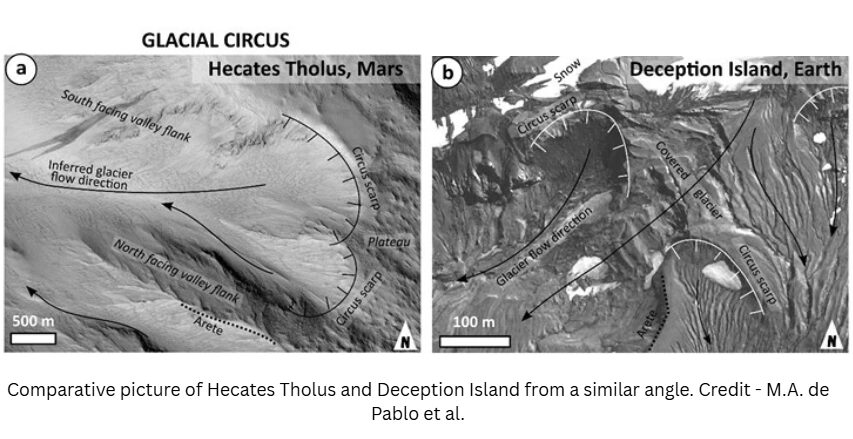
When we think of ice on Mars, we typically think of the poles, where we can see it visibly through probes and even ground-based telescopes. But the poles are hard to access, and even more so given the restrictions on exploration there due to potential biological contamination. Scientists have long hoped to find water closer to the equator, making it more accessible to human explorers. There are parts of the mid-latitudes of Mars that appear to be glaciers covered by thick layers of dust and rock.

So are these features really holding massive reserves of water close to where humans might first step foot on the red planet? They might be, according to a new paper from M.A. de Pablo and their co-authors, recently published in Icarus.

The key might be a small, volcanic island in Antar...

Read More

Closing in on a universal vaccine: Nasal spray protects mice from respiratory viruses, bacteria and allergens

Pulendran-universal-vax-square
Stanford Medicine researchers have developed an intranasal vaccine that protects mice against respiratory viruses, bacteria and allergens.
Chinamon/Adobe Stock

In the realm of medical advancements, a universal vaccine that can protect against any pathogen has long been a Holy Grail—and about as elusive as a mythological vessel. But Stanford Medicine researchers and collaborators have taken an astonishing step forward in that quest, surprising even themselves.

In a new study in mice, they have developed a universal vaccine formula that protects against a wide range of respiratory viruses, bacteria and even allergens. The vaccine is delivered intranasally—such as through a nasal spray—and provides broad protection in the lungs for several months.

In the study, published in Sci...

Read More

Largest ever radio sky survey maps the universe in unprecedented detail

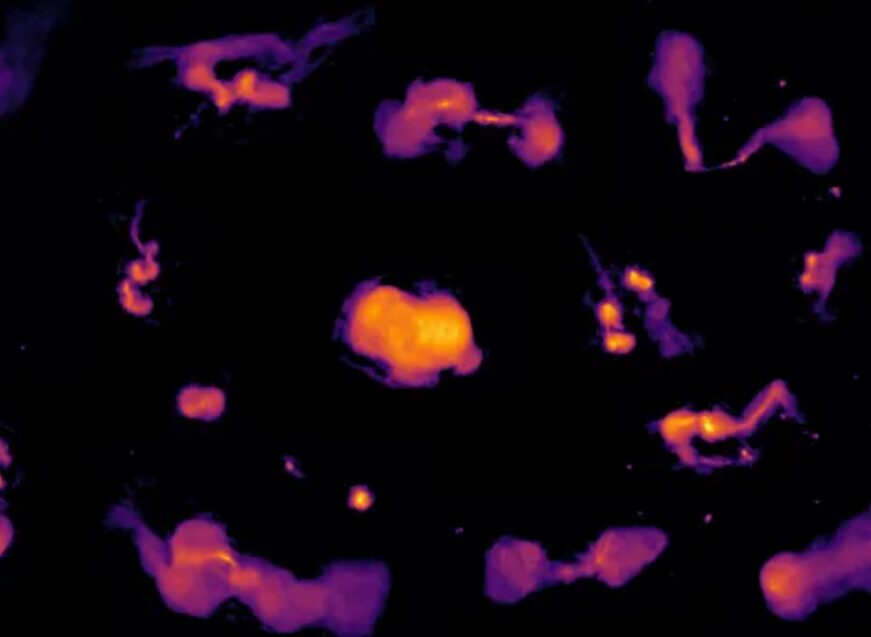
An international collaboration using the Low Frequency Array (LOFAR) has published an exceptionally detailed radio sky map, revealing 13.7 million cosmic sources and delivering the most complete census yet of actively growing supermassive black holes. It showcases an extraordinary variety of systems powered by these black holes, whose radio emission can extend for millions of light-years.

The newly released LOFAR Two-meter Sky Survey (LoTSS-DR3) marks a major milestone in radio astronomy and international scientific collaboration. The results will be published in Astronomy & Astrophysics.

By observing the sky at low radio frequencies, the survey reveals a dramatically different view of the universe than that seen at optical wavelengths...

Read More